The first person to say my name after the lawsuit arrived was my brother.
Not my mother.
Not my father.
My brother.
He called at 4:37 in the morning, when the city outside my apartment still looked unfinished and blue, when the only sounds in my room were the refrigerator humming and the rain touching the fire escape.
I knew it was him before I answered.
Not because I had saved his number.
I had deleted it two years earlier.
But there are some names your body remembers even after your mind has decided to survive without them.
“Julian,” I said.
There was a breath on the other end.
A broken one.
“Mara,” he whispered. “Please don’t hang up.”
I sat up slowly, the blanket falling from my shoulder.
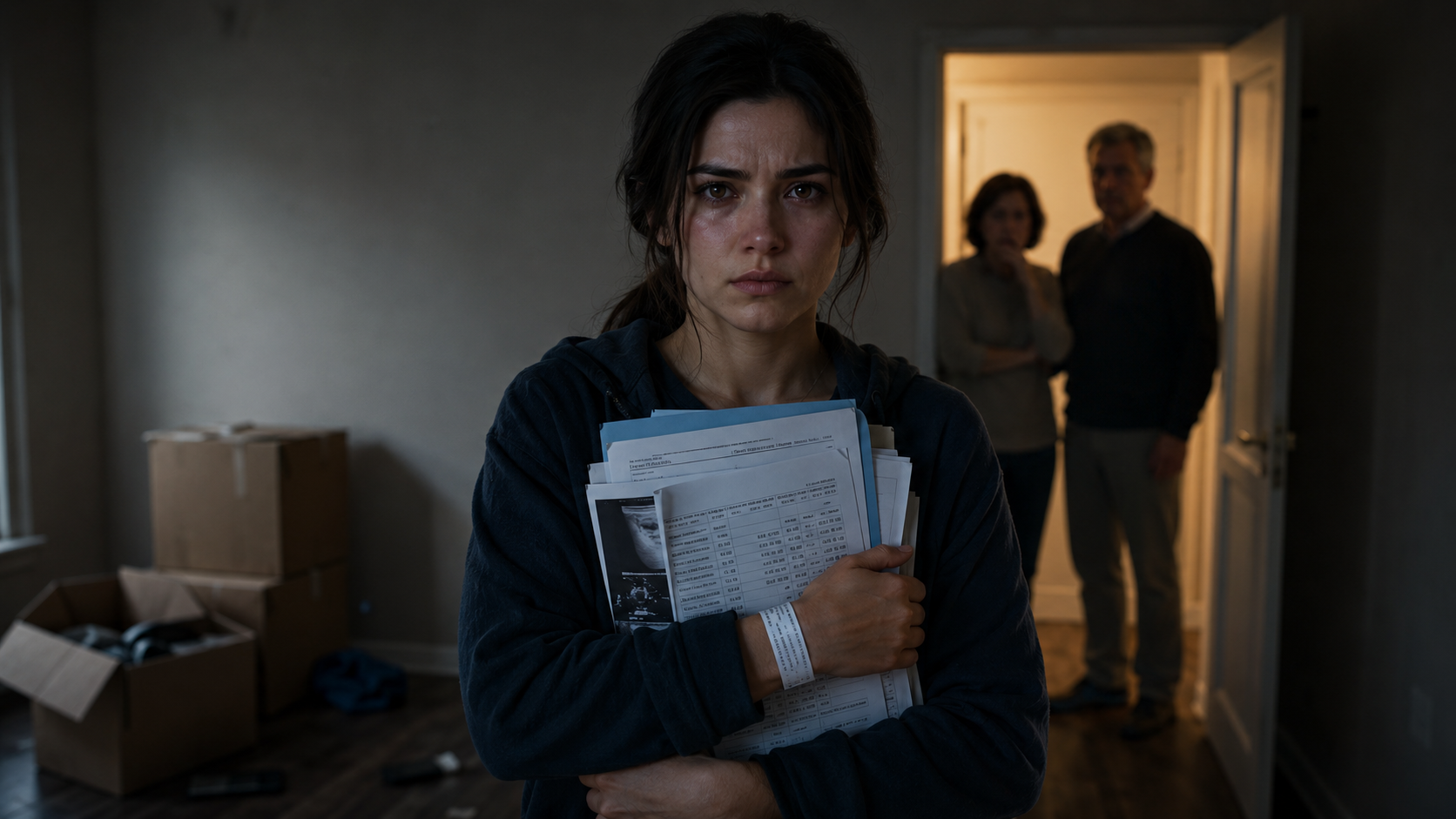
The last time my brother had called me, I had been sitting on a borrowed mattress in my best friend’s living room, six days after abdominal surgery, still walking bent over, still holding my discharge papers in a plastic folder because those papers were the only proof I had that I existed.
Back then, Julian had not asked if I was safe.
He had not asked if I needed food.
He had said, “Mom says you’re being dramatic again,” and then he had blocked me.
Now he was crying.
I listened to him cry for three seconds.
Then I said, “Why are you calling?”
“They got the papers.”
“I know.”
“Dad is losing his mind.”
“That sounds uncomfortable for him.”
“Mara, please.”
That word.
Please.
It sounded almost funny coming from my family.
They had spent my whole life treating please like a luxury I had to earn.
Please don’t embarrass us.
Please stop making your mother nervous.
Please be grateful.
Please forgive your father.
Please remember family comes first.
But when I begged for my apartment key back, there had been no please.
When I begged for my laptop, my camera, my work files, my grandmother’s watch, my medical cards, there had been no please.
When I found out my parents had told neighbors, cousins, old teachers, and church friends that I had died from “complications,” there had been no please.
There had only been silence.
A memorial post.
And a donation page.
“Say what you called to say,” I told him.
Julian swallowed hard. “I didn’t know they were going to go that far.”
I looked across my dark bedroom at the framed hospital bracelet on my wall.
People think you frame beautiful things.
Diplomas.
Wedding photos.
Awards.
I framed the plastic band they put around my wrist the night I almost died, because it had my name on it, my date of birth, my patient number, and the word discharged printed beside a date my parents later told everyone came after my funeral.
“You helped them empty my apartment,” I said.
He went quiet.
Rain tapped the glass.
“I helped Dad carry some boxes,” he said.
“You carried my life down three flights of stairs.”
“I didn’t know where everything was going.”
“You knew I wasn’t dead.”
He made a sound like someone stepping on broken glass.
“Mara…”
“No. Say it.”
He breathed hard into the phone.
“You knew I wasn’t dead,” I repeated.
“Yes,” he whispered.
There it was.
The first honest thing anyone in my family had said in two years.
It did not feel like relief.
It felt like a bruise being pressed.
I closed my eyes and saw the apartment again.
My apartment.
A narrow third-floor place above a laundromat, with yellow kitchen cabinets, uneven floors, and a window that looked into a brick wall. It had been ugly, overpriced, and mine. I had paid every deposit myself. I had painted the bedroom green. I had built my editing desk from two filing cabinets and a salvaged door.
I had been twenty-six and proud of that place in a way my parents hated.
They had always preferred me dependent.
Dependency made them generous.
Independence made them cruel.
Three nights after my emergency surgery, while I was still in the hospital learning how to stand without crying, my parents went to that apartment with the spare key I had given them for emergencies.
They told the landlord I had passed.
They told him they were grieving.
They told him they had to clear out “their daughter’s belongings.”
Then they sold what they could, threw away what embarrassed them, and kept whatever made them feel powerful.
My father sold my work computer.
My mother sold my camera lenses.
Someone pawned my grandmother’s gold watch.
Someone took my savings envelope from the kitchen drawer.
Someone deleted my name from their life and collected sympathy for it.
“You didn’t think this would reach court?” I asked.
Julian cried harder.
“I thought you’d give up.”
That answer should have shocked me.
It didn’t.
In my family, honesty only arrived when lying stopped being useful.
“You thought I’d stay gone,” I said.
“I thought you’d move away.”
“I did move away.”