By summer, people came from three streets away when bread came out of the oven.
The miller’s wife declared Eliza’s molasses rye a civic blessing. Schoolchildren spent pennies on broken roll pieces. Miners bought meat pies by the sack. Widows came for tea and stayed because Eliza never rushed them. Drifters swept the floor for supper. Women with bruises were given work before questions.
A sign hung beside the door in Jonas’s careful carving:
Nobody hungry is turned away.
People asked about Jonas’s scars. Not often, and not twice if they valued comfort. They asked about Eliza’s past even less because Willow Bend had troubles enough without making theater of someone else’s wounds.
Months passed.
The bakery grew warm with habit.
One autumn afternoon, Marshal Rowan entered with dust on his coat and tiredness in his eyes. Eliza put coffee before him before he asked.
“Creed is sentenced,” he said.
Jonas came out from the kitchen, flour on his sleeves.
Eliza’s hands went still.
“Hanging?” she asked.
“Life at hard labor. Bracken’s surviving man swung. Pike got twenty years. Mercy Ford elected a new judge and appears deeply invested in appearing moral.”
Eliza snorted.
Rowan smiled. “Thought you’d appreciate that.”
“Let them become kind when nobody is watching. Then I may be impressed.”
The marshal pushed a packet across the counter.
“What is this?”
“Final payment. The rail company discovered more bonds connected to the case. Your portion.”
Eliza stared at it.
Jonas leaned against the doorway. “You could expand.”
She looked around The Open Door: sunlight across tables, Ruth’s shawl folded in a basket upstairs, children arguing over whether raisins belonged in buns, a kettle steaming on the stove.
“Maybe,” she said. “Or maybe we build a room out back.”
“For storage?”
“For people who need somewhere safe before they know where else to go.”
Jonas’s face softened.
“That needs good walls.”
“I know someone with opinions.”
He nodded solemnly. “Many.”
That evening, after the last customers left and the floor was swept, Eliza stood in the front window watching rain silver the street. Jonas came behind her, stopping close enough that she could feel his warmth but not touching until she leaned back.
Only then did his arms settle around her.
“You built it,” he said.
“We built it.”
“No,” he said. “I built shelves. You built the door.”
She turned in his arms.
His burned face was gentle in lamplight.
“Jonas.”
He looked down.
She lifted her hand slowly, giving him the same choice he had always given her. When he did not move away, she touched the scar along his jaw.
“You are not what they called you.”
His breath caught.
“Neither are you,” he said.
For a moment, neither of them moved.
Then he asked, barely above a whisper, “May I kiss you?”
Eliza smiled through sudden tears.
“Yes.”
The kiss did not erase the past.
It did not bring back Thomas. It did not restore Ruth or Eli. It did not turn Mercy Ford brave before cowardice mattered. It did not make scars vanish or nightmares gentle.
But it was chosen.
Warm.
Free.
And for Eliza, that made it holier than any apology spoken under a church roof.
When they parted, Jonas rested his forehead against hers.
“I love you,” he said, as if the words had crossed a battlefield to reach her.
Eliza closed her eyes.
“I love you too.”
From behind the counter, a small voice said, “Does that mean the broken rolls are free?”
They turned.
Three children stood near the display case, solemn with hope.
Jonas looked mortified.
Eliza laughed so hard she had to hold his sleeve.
“No,” she said. “Love does not destroy business.”
The children groaned.
Jonas gave them the broken rolls anyway.
By the next winter, The Open Door had become the warmest place in Willow Bend.
People came for bread, but they stayed for the feeling of being allowed to arrive as they were. Ranch hands with empty pockets. Mothers with crying babies. Old men with stories no one at home wanted to hear. A runaway boy who stole two buns and returned the next day to confess because Eliza had wrapped a third in paper and left it where he could find it.
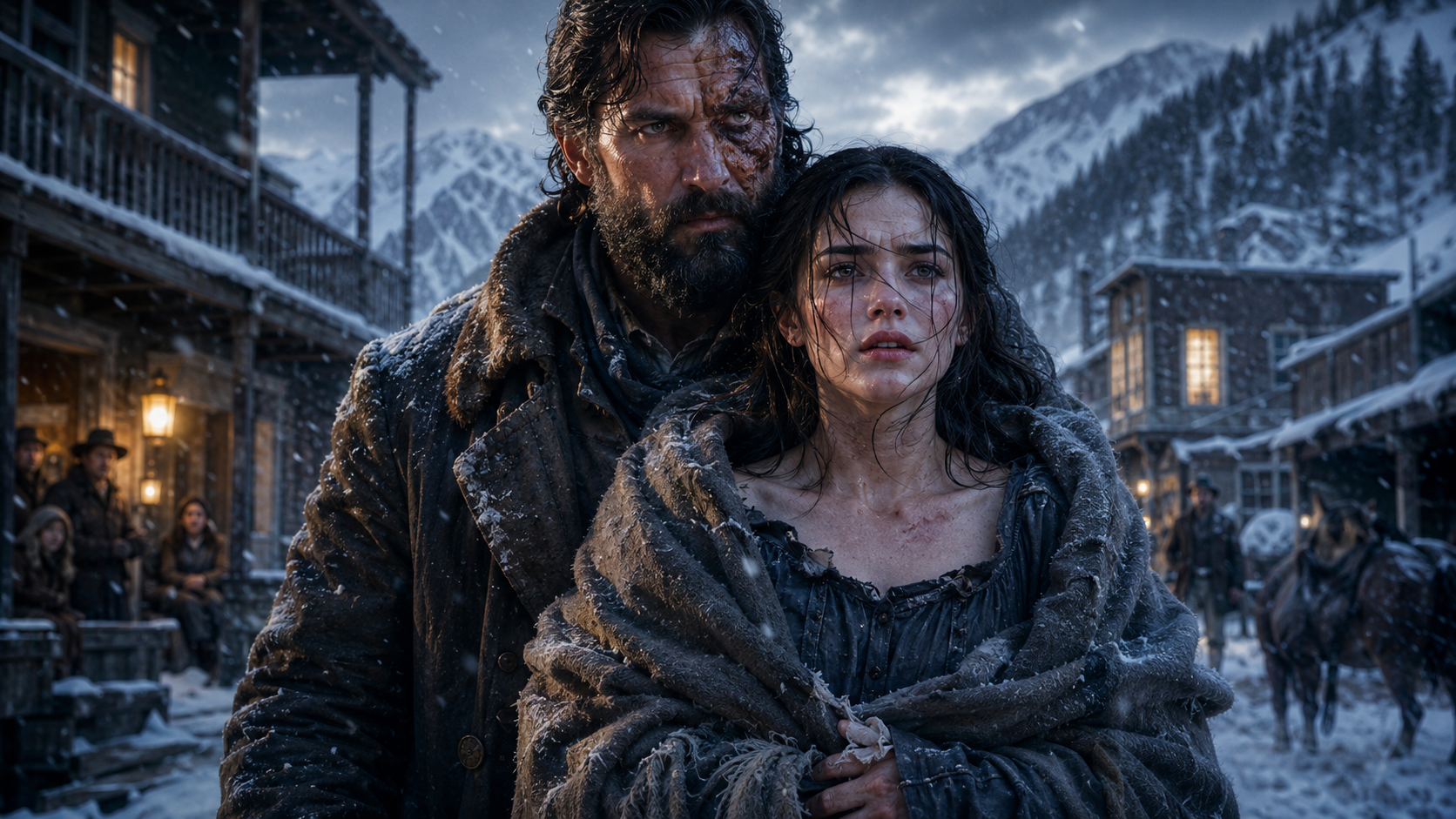
One night during the first hard snow, a young woman stood outside the bakery long after closing. She wore no hat. One sleeve was torn. A bruise darkened her cheek.
Eliza saw her from the window.
Jonas saw Eliza see her.
He said nothing.
Eliza opened the door.
Cold rushed in.
The young woman took a step back. “I don’t have money.”
Eliza stood aside.
“Then you can wash cups for supper.”
The girl looked past her at Jonas, huge and scarred in the lamplight.
He placed a fresh loaf on the counter and moved away, giving space.
The girl entered.
Eliza closed the door behind her, not to trap her, but to keep winter out.