June sat on the porch doing homework and asking questions.
“What is title washing?”
“When someone tries to make a damaged car look clean on paper,” Micah said.
“What is odometer rollback?”
“Fraud, usually.”
“What is a flood vehicle?”
“A warning people are supposed to respect.”
“What is a certified pre-owned car?”
Micah paused.
“Sometimes a promise. Sometimes a costume.”
Theo nearly choked on his coffee.
On Saturday, a local reporter named Nora Ames knocked on Micah’s door. She expected him to refuse an interview. He almost did.
Then June looked up from her math worksheet.
“If you do not tell the truth,” she said, “they will tell the mean version louder.”
Micah looked at his daughter.
“That is uncomfortably wise.”
“I know.”
So Micah spoke.
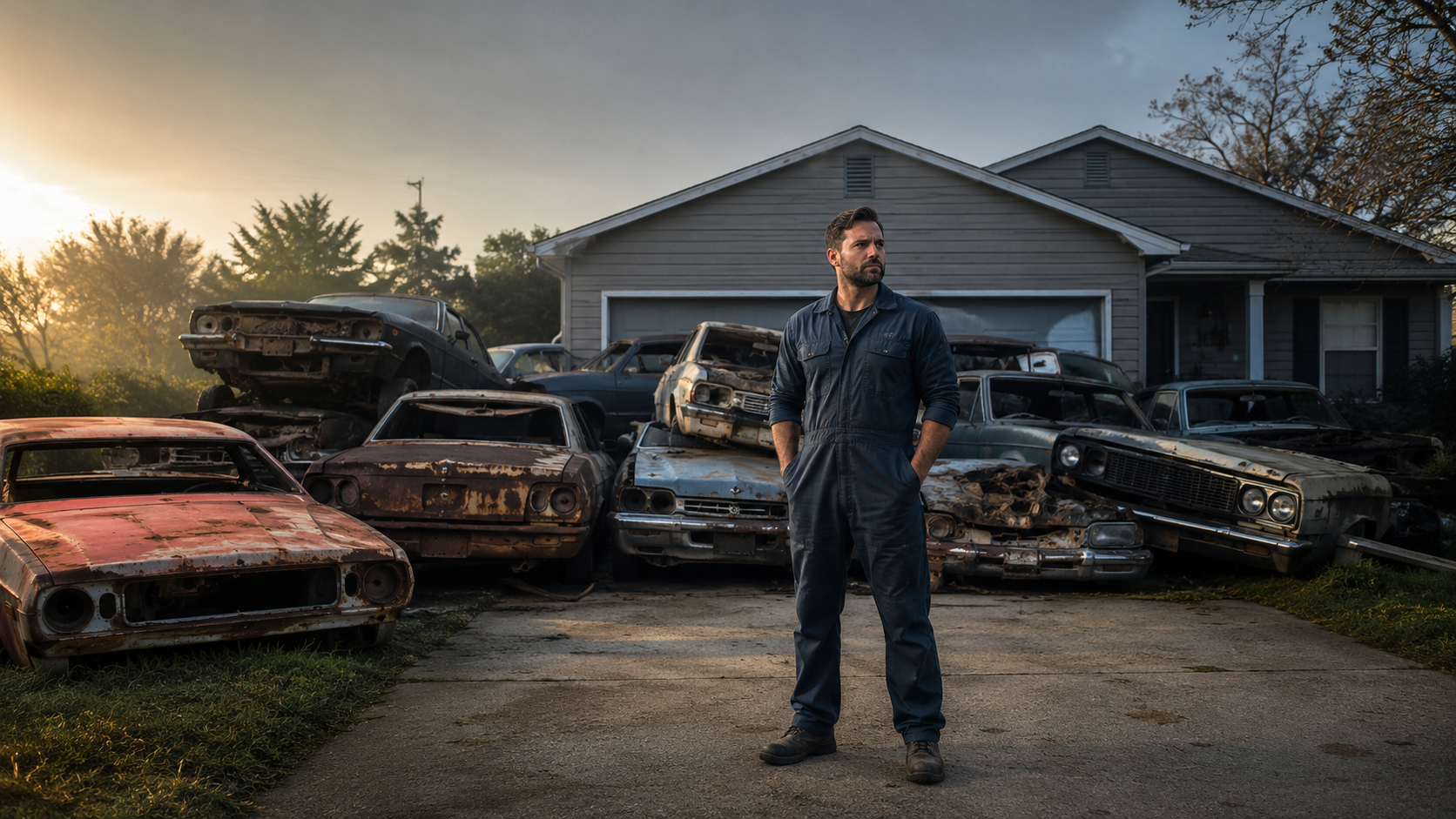
He did not shout. He did not insult Celeste. He simply stood in front of the twelve cars and explained what had happened. Harrow Automotive had delivered them without consent. Some appeared to have troubling histories. His attorney had requested records. He would not be selling his home.
Nora asked why Celeste might target him.
Micah glanced toward June, sitting beside Theo on the porch.
“Because she thought I was easy to move,” he said.
The clip aired Monday morning.
By Monday afternoon, people were no longer laughing at Micah.
They were asking questions about Harrow Automotive.
That was when the first former customer called Vivian Cross.
Then another.
Then another.
A man named Raymond Holt said he had bought an SUV from Harrow that failed electronically three weeks later. A nurse named Priya Mason said her minivan’s airbags failed inspection after being sold as safe. A retired school principal said the mileage on his truck never made sense, but the dealership told him he was confused.
Vivian created a second folder.
Then a third.
By the end of the week, she had enough to contact state consumer protection investigators.
Celeste was no longer dealing with one mechanic.
She was dealing with a pattern.
Inside Harrow Automotive headquarters, the mood changed. Managers stopped laughing in the hallways. Doors stayed closed. Celeste held meetings with lawyers and finance people who no longer smiled when she entered the room.
At 10:52 one night, Leah sat alone at her desk staring at an email Celeste had forwarded.
Remove informal communications regarding Alder Road delivery. Keep only official transfer paperwork.
Leah read it three times.
For two years, she had told herself she was just an assistant. She scheduled meetings. She prepared files. She took notes. She did not make the decisions.
But excuses, like rust, spread when ignored.
Leah opened a private folder.
Then she began copying emails.
Not deleting.
Copying.
The next morning, Micah found a small padded envelope in his mailbox. No return address. Inside was a flash drive and a handwritten note.
She planned it. Do not let her erase it.
Micah brought it straight to Vivian.
The flash drive contained delivery instructions, internal messages, edited transfer documents, and one audio recording from the meeting where Celeste ordered the cars moved to Micah’s driveway.
Her voice was clear.
“Make it public. Make it humiliating. Make him understand that refusing me has consequences.”
Vivian listened once.
Then she said, “That woman has a rare gift for helping the other side.”
Micah almost smiled.
The lawsuit was filed the following Monday.
Micah Vale v. Harrow Automotive Group.
The claims included trespass, illegal dumping, harassment, interference with property, intentional infliction of emotional distress, and potential violations connected to title history, vehicle disclosure, and consumer protection law. Vivian also referred the records to regulators.
The story became local news.
Then regional news.
Then industry news, once someone discovered who Micah Vale used to be.
That part nearly broke the quiet life Micah had built.
Reporters called him the hidden millionaire mechanic. Websites wrote about the genius inventor living in a gray house. Strangers searched his wife’s name. People who had ignored him suddenly wanted quotes, photos, interviews, explanations.
June came home from school one day angry.
“Why does everyone care about money now?”
Micah was washing dishes. He turned off the faucet.
“Because money is easier to understand than grief.”
June sat at the kitchen table.
“Were you hiding because of Mom?”
Micah dried his hands slowly.
He had never lied to June about Elise. He had told the truth in small pieces, the way a person carries heavy things one box at a time. But June was older now, and older children ask sharper questions.
“Yes,” he said.
“Did the cars make you stop hiding?”
Micah looked through the window at the driveway, where several vehicles still sat under tarps as evidence.