“Yes.”
“You sent them back to her.”
“Yes.”
“Why?”
Reverend Morrow lowered his hands.
“Because mercy required courage, and I mistook obedience for goodness.”
No one spoke for a long time.
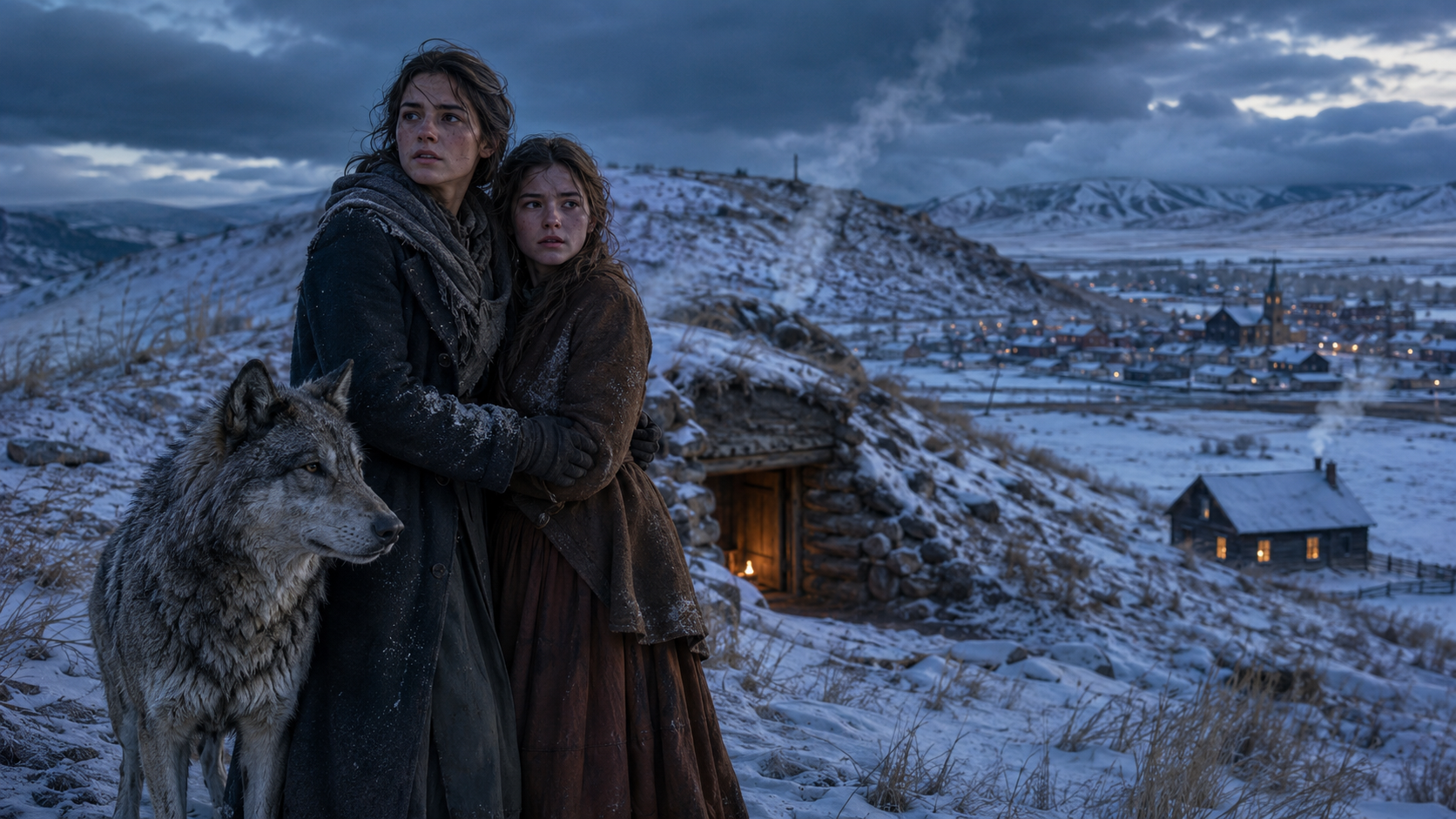
Outside, the storm screamed over the buried roof.
Inside, something colder than winter began to crack.
When the blizzard finally loosened its grip, Coldwater Crossing was nearly unrecognizable.
The church steeple had fallen. Two barns were gone. The mercantile roof had caved under snow. Smoke rose from only a handful of chimneys. Twenty-four people had died, some within sight of doors they never reached.
The earth house had saved thirty-seven.
Law came slowly, as it often does where roads vanish beneath snow. But it came.
Dr. Reed testified.
Tamsin Rook testified.
Jonah testified.
Thatcher Bell testified, and the words seemed to cost him more than frostbite had.
Pritchard confessed fully in exchange for prison instead of a rope. Reverend Morrow stepped down from his pulpit before anyone asked him to. Cora Whitlock was charged with fraud, theft, and unlawful dispossession. By the time spring thawed the creek, she had stopped calling herself a victim aloud, though her eyes still carried the old complaint against a world that had not given her everything.
Maren did not hate her as cleanly as Lottie wanted.
That became one more thing the sisters argued about.
“She deserves nothing,” Lottie said at their father’s grave.
“She deserves the truth,” Maren replied. “After that, the law can keep her.”
“You’re too soft.”
“No,” Maren said. “I’m trying not to let her finish making me.”
Lottie looked toward Broken Antler Hill, where a thin line of smoke rose in the sunset.
“I don’t know how to stop being angry.”
Maren put an arm around her.
“Then don’t stop all at once.”
Abram Keene died in April, after the first green showed through the prairie grass.
He lived long enough to see the judge declare the south hill legally Maren and Lottie’s. He lived long enough to watch Thatcher Bell and Hiram Pike bring shovels to the schoolyard and begin digging the town’s first public storm cellar. He lived long enough to hear men who had mocked the sisters ask Lottie how thick a beam ought to be.
That pleased him greatly.
On his last evening, he asked to be carried to the entrance of the earth house.
Maren, Lottie, Jonah, and Dr. Reed lifted his bed into the golden light. Bram lay across his feet. The prairie stretched before him, scarred by winter, bright with thaw.
“You built well,” Abram whispered.
Maren held his right hand. Lottie held his left.
“We had a good teacher,” Maren said.
Abram smiled.
“Then teach.”
Lottie wiped her cheek with the back of her wrist.
“Everyone?”
“Especially fools,” Abram said. “They need it most.”
She laughed through tears.
He turned his head toward the hidden doorway.
“Remember this. Earth holds what people forget. Warmth. Patience. Weight. If you build with spite, water gets in. If you build with pride, wind finds you. Build with sense.”
At sunset, his breathing slowed.
Bram lifted his head once, then laid it down again.
Abram Keene died with smoke rising behind him.
They buried him beside their mother and father on the hill Cora had thought worthless.
The next winter, Coldwater Crossing was ready.
Not proud.
Not comfortable.
Ready.
Three public shelters had been dug into hillsides. The school had a storm cellar. The rebuilt church had earth-packed walls and a lower roof. Every new family was shown the rope lines, the emergency food stores, and the south hill where the Vale sisters had lived when no one would open a door.
Thatcher Bell never again laughed at work he did not understand.
When strangers asked about the thin smoke sometimes rising from Broken Antler Hill, he would say, “That smoke saved us because two girls knew more than a town full of men. Ask questions before you mock. Better yet, bring a shovel.”
Lottie became the best shelter builder in three counties.
She took contracts from ranchers, schools, churches, and railroad camps. She spoke plainly, charged fairly, and frightened lazy men into competence. When anyone called her difficult, she smiled.
“Difficult things stand longer.”
Bram lived to be old, gray, and deeply spoiled. When he died, Lottie buried him beside Abram and carved his marker herself:
BRAM — HE GUARDED THE DOOR WHEN PEOPLE WOULD NOT.
Jonah Morrow married Maren six years after the blizzard at the entrance of the earth house. His father attended, seated in the back, older and quieter, grateful to be allowed near joy he had not earned. Tamsin Rook performed the ceremony with a Bible in one hand and a look that dared anyone to object.
“Love,” she said, “is a shelter. It needs labor, humility, warmth, and a roof strong enough for ugly weather.”
Lottie groaned.
“That is the least romantic blessing ever spoken.”