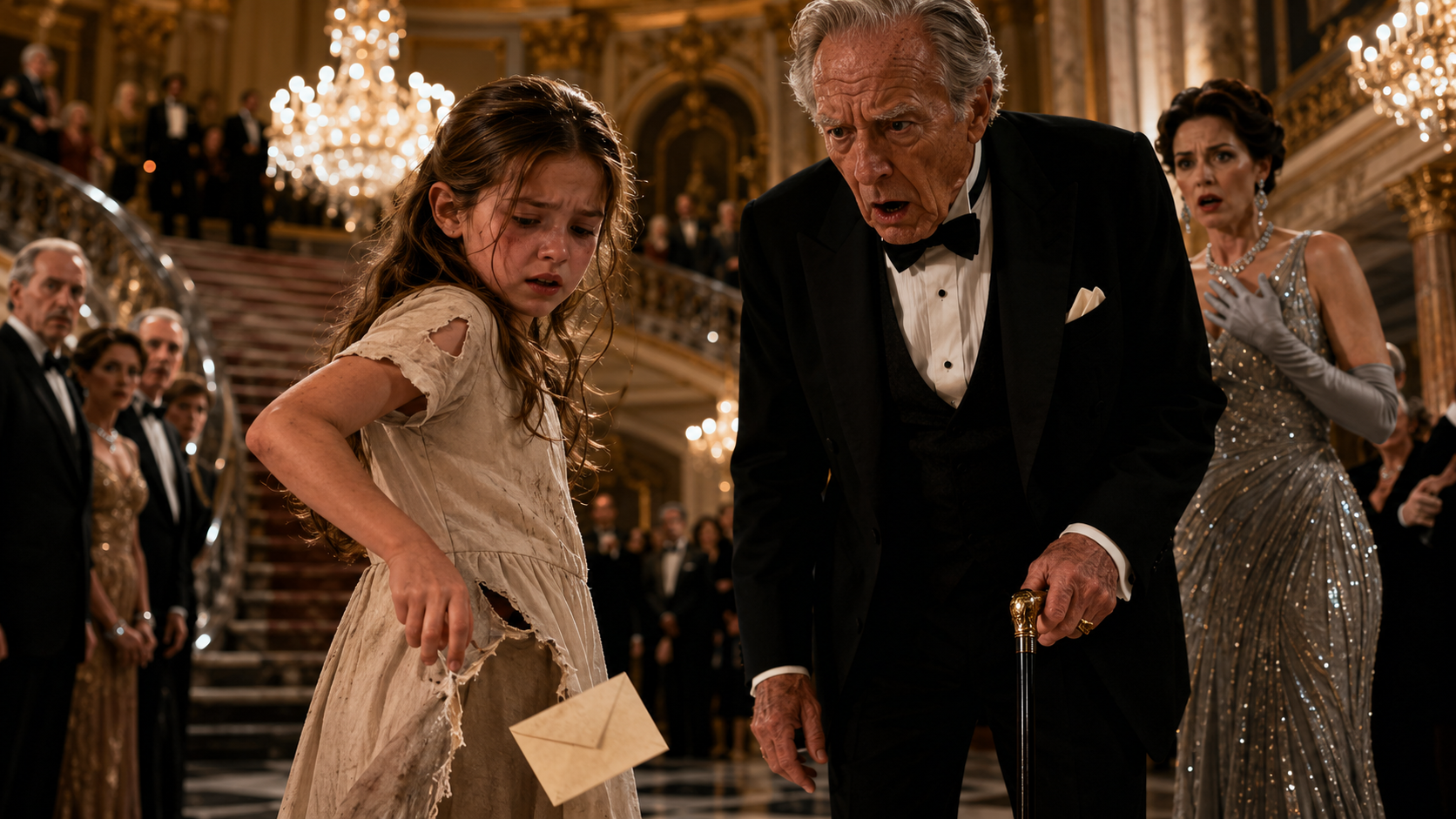
Hannah’s breath caught.
She remembered that day.
Not clearly.
She had been six.
Rain.
Iron gates.
Her mother’s hand gripping hers too tightly.
A woman in a black coat bending down and touching Hannah’s cheek with fingers cold as coins.
“What a pretty little mistake,” the woman had said.
Hannah had forgotten the words until now.
The recorder played Lydia’s final message.
“If Hannah finds this, my sweet girl, I am sorry. I wanted to give you a family, not a war. But if I am gone, remember this: you are not the lie they call you. You are the truth they feared.”
The recording ended.
The greenhouse was silent except for Hannah’s breathing.
Arthur was crying.
Not neatly.
Not quietly.
The kind of crying that made rich men look no different from poor ones.
Daniel turned to Margot.
“You threatened a child.”
Margot lifted her chin.
The mask returned, but badly.
“She was protecting a thief.”
Arthur looked at her.
“My daughter was innocent.”
“She was weak.”
“She was my daughter.”
Margot’s eyes flashed.
“She was in the way.”
The words came out before she could stop them.
The greenhouse went still.
Daniel stared at her.
Arthur’s face emptied.
Hannah felt something cold settle in her stomach.
There it was.
The truth, not hidden in letters or boxes or recordings.
Just standing there in diamonds, finally tired of pretending.
Margot looked around and realized what she had said.
“I mean—”
Arthur’s voice was quiet.
“Take her inside.”
The guards moved.
Margot stepped back.
“You would arrest me? After everything I did for this family?”
Arthur looked at the sapphire in his palm.
“You did nothing for this family. You fed on it.”
Her face twisted.
“I kept your name clean.”
“No,” he said. “You taught me to value a clean name more than a living child.”
The guards took her arms.
Margot fought then.
Not gracefully.
Not like a queen.
Like a trapped animal.
“You think this changes anything?” she spat. “Lydia is gone. The city remembers what it remembers. That girl will always be street trash in a stolen dress.”
Hannah flinched.
Arthur stepped forward.
For a second, he looked like the man people feared in boardrooms.
“No,” he said. “She is my granddaughter.”
The word struck Hannah harder than the insult.
Granddaughter.
It should have felt warm.
Instead, it felt strange.
A grandfather was supposed to know your birthday.
A grandfather was supposed to show up before hunger carved hollows beneath your eyes.
A grandfather was supposed to exist somewhere other than a locked mansion and a story your mother was afraid to tell.
Arthur turned to her.
“Hannah—”
“Find my mother,” she said.
The words came out before she could stop them.
Arthur went still.
Hannah’s voice shook.
“You want to fix something? Find her.”
Arthur looked at the box.
The sapphire.
The papers.
The recorder.
Then at Hannah.
“I will.”
“Don’t promise if rich people promises are just words.”
Daniel looked down.
Arthur took the blow.
He deserved it.
“You are right,” he said. “Then I will not promise. I will act.”
And for the first time that night, Hannah believed he might mean it.
By midnight, police cars lined the drive of Kingsley Hall.
The guests were sent home with scandal in their mouths and shame on their faces.
The reporters arrived before dawn.
Margot Ashbourne’s arrest became the city’s favorite headline.
But Hannah did not care about headlines.
She cared about one thing.
Her mother.
Arthur opened rooms that had been locked for decades.
He gave detectives names.
Records.
Access.
Money.
Not charity money.
Not the kind rich people gave loudly.
Quiet money.
Fast money.
The kind that moved private investigators, hospitals, shelters, train stations, security archives, and old police files.
For the first week, Hannah stayed in a guest room larger than their entire basement space at St. Agnes.
The bed was too soft.
The ceiling too high.
The silence too complete.
She slept on the rug the first night.
Daniel found her there at dawn.
He did not laugh.
He only brought a blanket and sat near the door until she woke.
“You don’t have to sleep on the floor,” he said gently.
Hannah pulled the blanket tighter.
“I know.”
But knowing did not make the bed feel safe.
Arthur came every morning.
He knocked before entering.
Always.
As if permission mattered now.
Sometimes he brought food.
Sometimes news.
Sometimes only guilt.
Hannah preferred the food.
Guilt was heavy.
She already carried enough of it.
One morning, he placed a small plate of toast beside her and said, “Your mother used to hate orange marmalade.”
Hannah looked at him.
“She loved orange marmalade.”
Arthur blinked.
Then he smiled sadly.
“She hated it when she was seven.”