Julian nodded.
“That sounds like expensive therapy.”
“It was.”
He smiled.
Years passed.
Mateo grew into a boy with serious eyebrows, wild curls, and a talent for asking questions at the worst possible times. He loved dinosaurs, soccer, and helping Mrs. Nela water plants.
He called Julian “Captain Uncle” until he was old enough to understand that was not actually his name.
I did not hide the truth from him forever.
Children know when silence has furniture.
When he was six, he asked why he never saw his father.
I sat with him under the lemon tree in Julian’s yard and folded my hands around his small ones.
“Your father hurt us when you were being born,” I said gently. “He made choices that were dangerous. So the people who love you made sure you are safe.”
Mateo looked down.
“Was I bad?”
The question broke my heart so cleanly I had to breathe before answering.
“No, my love. Never. You were the reason I fought.”
He leaned against me.
“Did I cry?”
I kissed his hair.
“You shouted.”
He smiled a little.
“Good.”
“Yes,” I said. “Very good.”
As he grew older, he learned more. Not all at once. Only what his heart could carry.
I made him one promise.
The truth would never be used to make him hate himself.
He was not his father’s violence.
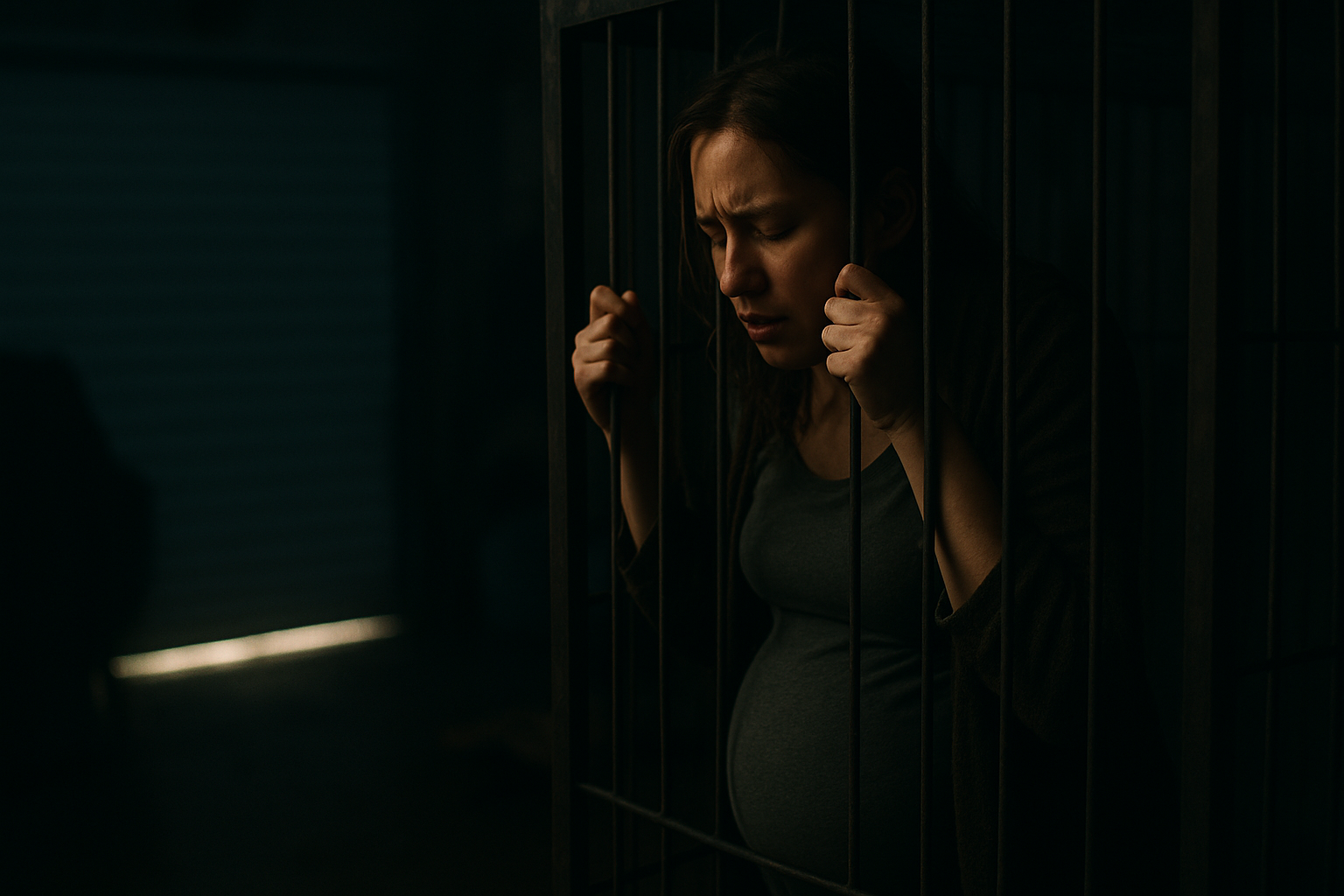
He was not the cage.
He was not the night of his birth.
He was Mateo Vega.
Born free.
Eventually, I bought a small house of my own near Valle Clara.
Yellow walls. Wide windows.
No garage.
People asked if that was on purpose.
Yes.
It was.
The front door had a simple lock. The garden had herbs and two orange trees. The kitchen was always loud.
Julian had his own key, but he knocked anyway.
Mrs. Nela came every Sunday, bringing plants I did not have room for.
Officer Salas became a close friend and came for coffee when her shifts allowed.
Irene became Mateo’s godmother and threatened legal action against anyone who gave him too much candy.
Life became ordinary.
Beautifully ordinary.
Bills. Homework. Laundry. Parent meetings. Burned rice. Birthday parties. A leaky sink Julian insisted he could fix and absolutely could not.
Ordinary life, I learned, is not boring after terror.
It is holy.
One afternoon, years after the trial, I received a letter from Dante.
It came through legal channels.
Irene called first.
“You do not have to read it.”
“I know.”
“Do you want me to summarize it?”
“No,” I said. “I’ll read it.”
The letter was three pages.
At first, it was exactly what I expected. Regret wrapped in self-pity. Childhood excuses. Mentions of pressure. Mentions of shame.
But near the end, one paragraph sounded different.
He wrote that he used to think control made him strong. Now he understood he had been terrified of anything he could not own.
“You were never weak,” he wrote. “I knew that. That is why I tried to make you small. I am sorry. I know sorry does not open doors I locked.”
I read that line twice.
Then I folded the letter.
I did not cry.
I did not forgive him.
But I did something I could not have done years before.
I felt nothing urgent.
No panic.
No need to answer.
No need to prove.
No need to explain.
I placed the letter in the box of records and closed the lid.
That night, Mateo and I made pancakes for dinner because he said rules were “sometimes suspicious.”
He spilled flour all over the counter.
I let him.
He asked why I was smiling.
“Because,” I said, “this is a good night.”
He looked around.
“It’s just pancakes.”
I kissed his forehead.
“Exactly.”
On Mateo’s tenth birthday, he asked for a camping party in the backyard.
Julian set up the tents like a military operation. Mrs. Nela supervised from a chair. The children roasted marshmallows over a little fire pit and told ghost stories that made no sense.
After everyone fell asleep, I sat alone on the porch, listening to their breathing inside the tents.
Julian came out with two mugs of tea.
“Thinking?” he asked.
“Always.”
He sat beside me.
“You okay?”
I looked at the yard. The string lights. The open gate. The tents full of sleeping children.
My son safe under the stars.
“Yes,” I said. “I think I am.”
Julian nodded slowly.
“I still think about that night.”
“So do I.”
“I wish I had gotten there sooner.”
I turned to him.
“You got there in time for me to live.”
His eyes filled.
“And you got there in time for Mateo to grow up knowing men can protect without controlling.”
Julian looked down into his tea.
“You always know how to make a soldier cry.”
“You’re welcome.”
We laughed softly.
Then he asked, “Do you ever wonder who you would have been if none of it happened?”
For years, that question had haunted me.
What if I had never met Dante?
What if my life had been softer?
“I used to,” I said. “But not as much now.”
“Why?”
I looked toward the tents.
“Because I like who I fought to become.”
The answer surprised us both.
But it was true.
I was not grateful for the cage.
I would never make pain sound noble.
Suffering is not beautiful just because we survive it.
But surviving had introduced me to a woman Dante tried very hard to bury.