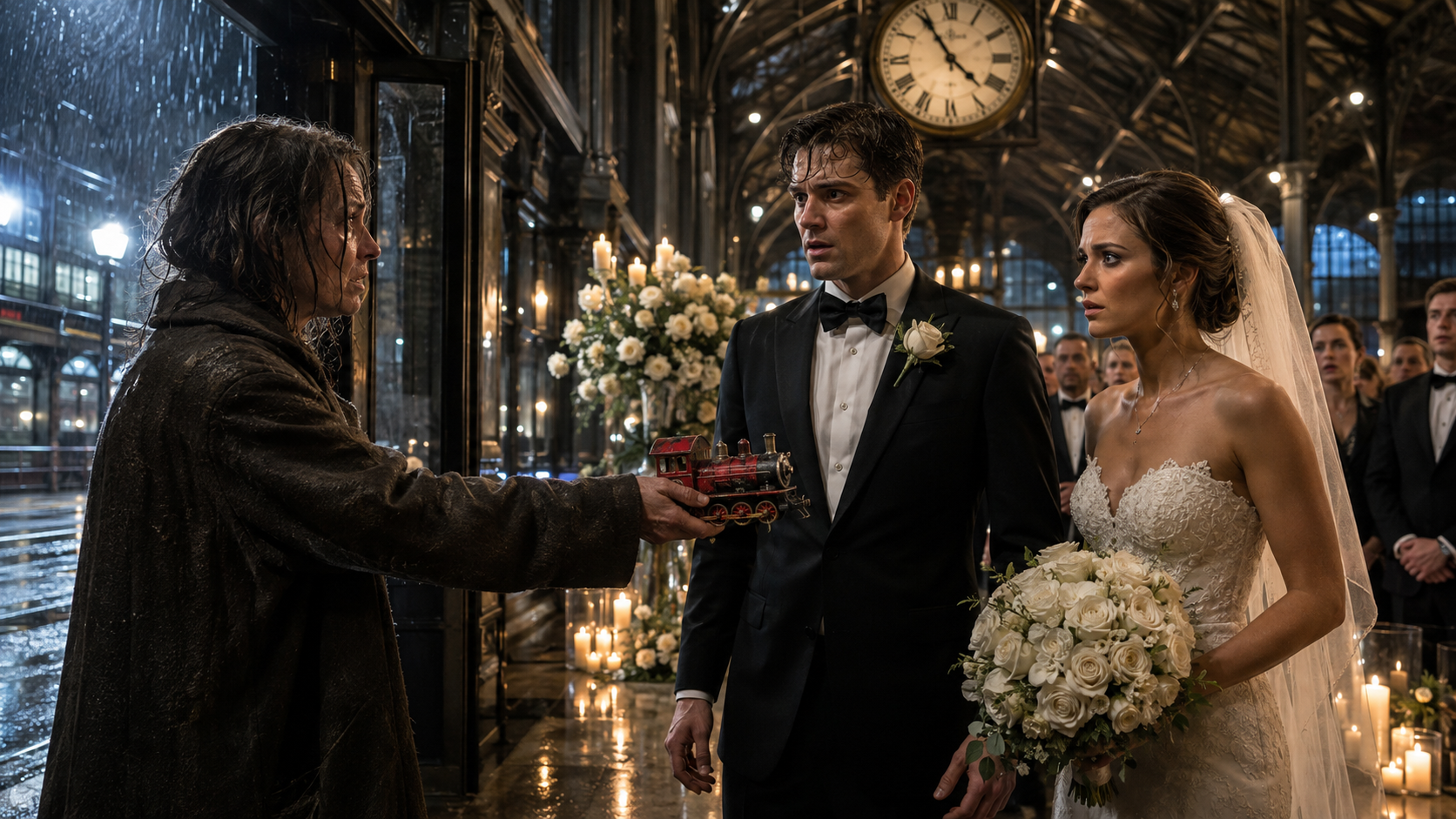
“He did more than that.”
She pulled a folded document from the plastic envelope.
“He helped change your identity.”
Richard’s cane struck the floor again.
“That paper proves nothing.”
“It has your signature.”
Elliot took it.
The document was damaged by water and age, but the typed words remained readable.
It authorized the emergency transfer of an unidentified male infant from Saint Orison Hospital to a private care facility.
At the bottom appeared the signature of a young legal representative:
Richard Marlowe.
Elliot felt suddenly cold.
“You were there.”
Richard’s jaw tightened.
“I was a junior attorney assigned to the hospital.”
“You signed this.”
“I signed hundreds of documents.”
“This one gave you a son.”
Richard looked around at the crowd.
Phones were recording from every direction. Reporters near the back of the terminal whispered into microphones.
“Elliot, think carefully. Everything we built can still be protected.”
Elliot stared at him.
“Protected from what?”
“From scandal.”
Miriam laughed once, without humor.
“He still thinks the scandal is the truth becoming public. Not what he did.”
Richard pointed his cane at her.
“You were living in shelters. You had been arrested.”
“I was arrested years later.”
“You were unstable.”
“I became unstable because I spent half my life searching for a brother everyone insisted was buried.”
Celia moved beside Elliot.
“Richard, did you know who the baby was when you adopted him?”
Richard said nothing.
Celia repeated the question.
“Did you know?”
A new voice answered from behind her.
“Yes.”
Celia turned.
Her mother, Margaret Harrow, stood near the first row of guests. Her face had lost all color.
Celia frowned.
“Mom?”
Margaret stepped onto the platform.
Richard’s expression darkened.
“Do not involve yourself.”
“I have been involved for thirty-one years.”
Miriam stared at Margaret.
Recognition slowly replaced confusion.
“You worked at the hospital.”
Margaret nodded.
“I was a records clerk.”
Celia looked between them.
“What are you saying?”
Margaret clasped her hands tightly.
“The night of the fire, the hospital was overcrowded. Several victims arrived without identification. Miriam was unconscious. The baby had no papers with him.”
She looked at Elliot.
“Richard came to the records office the next morning.”
Richard interrupted her.
“You were paid to process documents, not interpret decisions made above your position.”
Margaret turned toward him.
“I was twenty-three years old, frightened, and desperate to keep my job. That is the explanation I have given myself every day since then.”
“What did he ask you to do?” Elliot said.
Margaret closed her eyes.
“He asked me to list the baby as an unidentified orphan.”
Celia stepped away from her mother.
“You helped him?”
“I changed one form.”
“One form?” Miriam cried. “That form erased him.”
Margaret began to weep.
“I know.”
Richard’s voice became calm, almost reasonable.
“The child needed a home. Miriam had no relatives, no money, and no legal ability to care for an infant. Vivian and I had lost two pregnancies. We could provide everything.”
“You could have waited,” Miriam said. “You could have let me grow up. You could have told me he was alive.”
“And what kind of life would he have had?” Richard demanded. “Moving between temporary homes? Visiting you in shelters? Depending on strangers?”
Miriam’s eyes burned.
“Maybe it would have been difficult. But it would have been his life.”
Richard looked at Elliot.
“You had the finest education. You traveled. You inherited a company. You never went hungry.”
Elliot folded the document.
“You’re describing what you purchased.”
“I’m describing what I gave you.”
“You gave me comfort.”
Richard’s expression softened slightly.
“Yes.”
“But you took my name.”
Richard remained silent.
“You took my sister.”
“I made a decision.”
“You buried a living child and called it a decision.”
The terminal clock struck eight.
Its deep bell echoed beneath the iron roof.
Miriam looked up at it.
“I used to wait in stations,” she said quietly. “After I found the transfer record, I followed every address connected to your case. Most of them led nowhere. Sometimes I slept on platforms because I thought people who disappeared might eventually return by train.”
Elliot watched her grip the handle of her old canvas bag.
“How long have you known my name?”
“Seven months.”
“Why didn’t you contact me?”
“I tried.”
She glanced at Richard.
“Your office blocked my letters. Security removed me from your company building. Someone offered me money to leave the city.”
Every guest looked toward Richard.
He did not deny it.
Miriam continued.
“Then I saw the announcement about your wedding. The photograph showed the mark near your eyebrow. Our mother had the same one.”