“And Darius?”
“His testimony reduced his sentence. He sends me letters explaining why everything was my fault.”
“Do you answer?”
“I correct his grammar.”
Mara laughed.
A guard signaled that their time had ended.
Roman lowered his hand.
“I do not expect you to wait.”
“Good.”
“I hoped you might.”
“That is different.”
“Yes.”
Mara stood.
“Learn the difference between hope and entitlement, Roman.”
“I am beginning to suspect you intend to make me learn many things.”
“I do not intend to make you do anything.”
She looked at him through the glass.
“That is the point.”
Three years after the night of the masked gala, Bellweather Lighthouse opened its doors as the Gabriel and Evelyn Maritime Safety Center.
Rescue crews, engineers, trafficking survivors, port officials, and investigative journalists filled the restored station.
Vivienne organized the ceremony but refused to appear in publicity photographs. She now worked for a foundation helping witnesses escape coercive marriages and financially controlling families.
Mara found her outside, adjusting a silver ribbon beside the entrance.
“It is crooked,” Mara said.
“I know.”
“You have been trying to fix it for ten minutes.”
“I was waiting for you.”
“Why?”
Vivienne nodded toward the road.
A dark blue car had stopped beyond the gate.
Roman stepped out alone.
He wore a simple charcoal suit. The scar through his eyebrow remained. So did the habit of checking every roof, window, and parked vehicle before moving.
Some instincts had survived prison.
Others had not.
He waited outside the gate until Mara approached.
“You could have entered,” she said.
“I was not invited inside.”
“I invited you to the opening.”
“You invited me to the property. Doors are separate negotiations.”
“You have become annoyingly precise.”
“I had a demanding teacher.”
Mara opened the gate.
Roman looked toward the lighthouse.
“They kept Gabriel’s name.”
“It belongs there.”
“And your mother’s.”
“It belongs there too.”
They walked along the cliff path after the guests had gone.
Below them, evening light turned the water bronze. Ships crossed the bay with their routes visible through Tideglass, each movement recorded and accountable.
Roman stopped near the place where the old tunnel emerged from the rocks.
“I used to believe safety meant controlling every entrance,” he said.
“You still checked the roof before coming through the gate.”
“Growth is rarely complete.”
Mara folded her arms.
“Why did you really come?”
“To return something.”
He removed a small velvet pouch from his pocket.
Inside was the crystal clasp from the silver veil she had worn during the kidnapping.
Mara stared at it.
“I thought it was lost.”
“Darius found it in the hotel corridor. He kept it as proof that his men had taken the correct woman.”
“They had not.”
“No.”
Roman placed the clasp in her palm.
“For a long time, I called that night a mistake.”
“It was.”
“Yes. But I spoke as though the mistake belonged only to the men who confused two dresses.”
Mara waited.
“My mistake was believing another person’s freedom could become a tool in my war,” he said. “Whether we took you or Vivienne, the order was wrong.”
The honesty carried no request for absolution.
Mara closed her fingers around the crystal.
“Thank you.”
“For returning it?”
“For finally describing the crime correctly.”
Roman nodded.
They continued toward the lighthouse.
Inside, the restored lamp turned above the sea.
“I have been offered a position in Marseille,” Roman said. “Port-security consulting.”
“Legal consulting?”
“Painfully legal.”
“When would you leave?”
“Next month.”
Mara felt an unexpected pressure beneath her ribs.
He noticed.
He always noticed more than she wanted him to.
“I could refuse,” he said.
“That would be foolish.”
“I have made foolish decisions involving you before.”
“You do not make this one about me.”
Roman stopped.
“What would you have me make it about?”
“What kind of life you want when no one is forcing you to become the man you were.”
He looked toward the harbor.
“I want a life in which I do not enter every room expecting betrayal.”
“That may take time.”
“I also want dinners that are not interrupted by gunfire.”
“A reasonable ambition.”
“And I want to know whether the woman who dismantled two empires might occasionally visit France.”
Mara smiled.
“She has work.”
“Of course.”
“She also dislikes being summoned.”
“I would never summon her.”
“Invite her?”
“Often.”
“That could become irritating.”
“I am prepared to accept the risk.”
They reached the lighthouse door.
Roman did not enter.
He waited.
Mara understood what he was doing.
Three years earlier, he had dragged her through a door she had not chosen.
Now he would cross only if she asked.
She held out her hand.
“This is an invitation.”
Roman looked at it before placing his hand in hers.
“No ownership?” he asked.
“No ownership.”
“No rescue fantasy?”
“I saved myself before you arrived.”
“I remember.”
“No promises you cannot keep.”
Roman’s fingers closed gently around hers.
“Only one promise.”
“What is it?”
“When you tell me a door is closed, I will not force it open.”
Mara considered him beneath the turning light.
“And when it is open?”
“I will still knock.”
She led him inside.
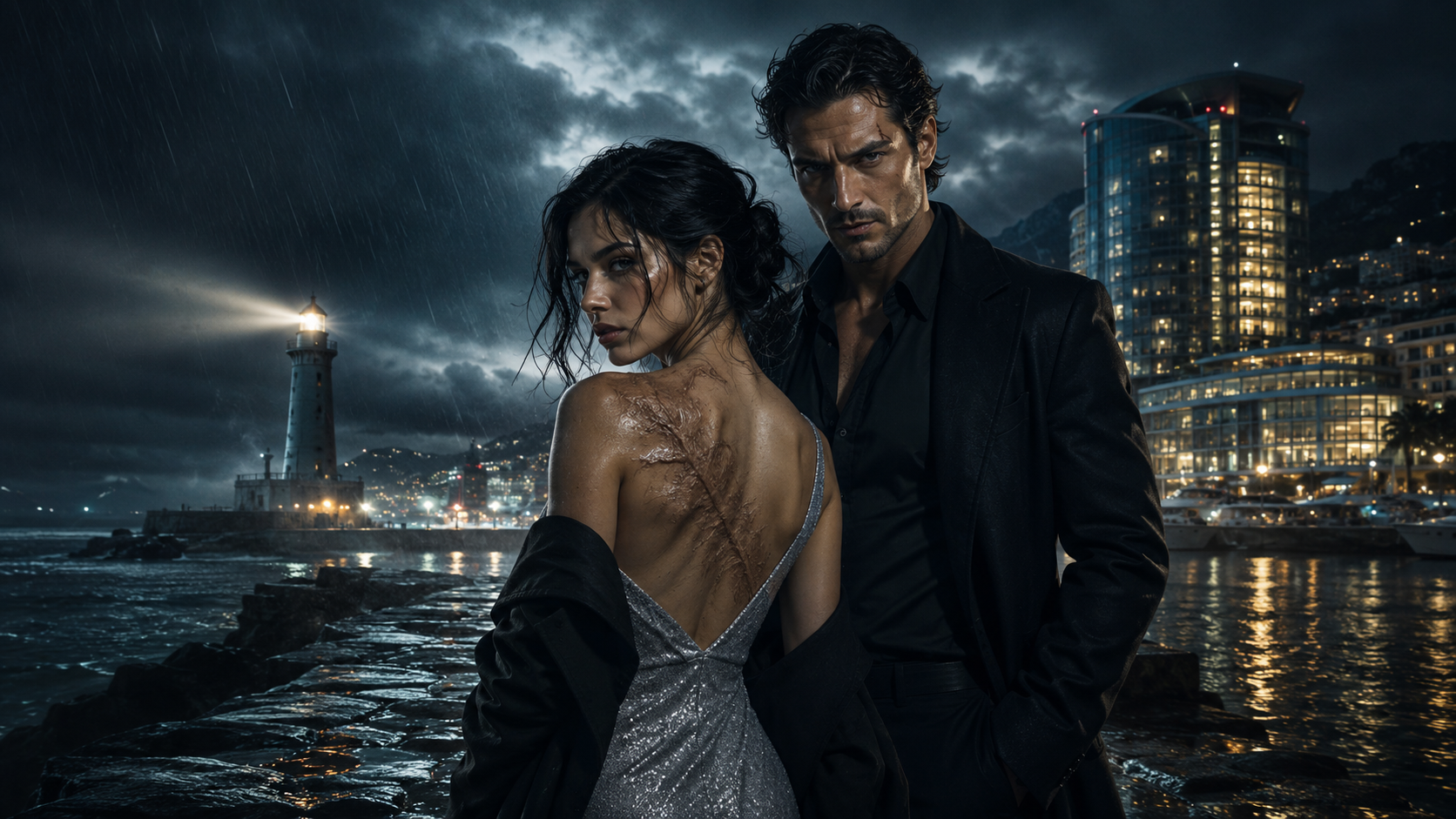
The scars across her back caught the light from the restored lamp. Once, her family had paid surgeons, photographers, designers, and publicists to make those scars disappear.
They had failed.
The scars were not beautiful because suffering had created them.
They were not shameful because powerful men had feared what they proved.
They were evidence.
Evidence that Mara had entered a burning room.
Evidence that she had escaped.
Evidence that the people who buried the truth had not buried her with it.
Outside, the lighthouse beam crossed Vesper Bay, illuminating ships that could no longer vanish without consequence.
Inside, Mara closed the door against the wind.
Not because someone had ordered her to hide.
Because she had chosen who would remain with her when the storm arrived.
THE END