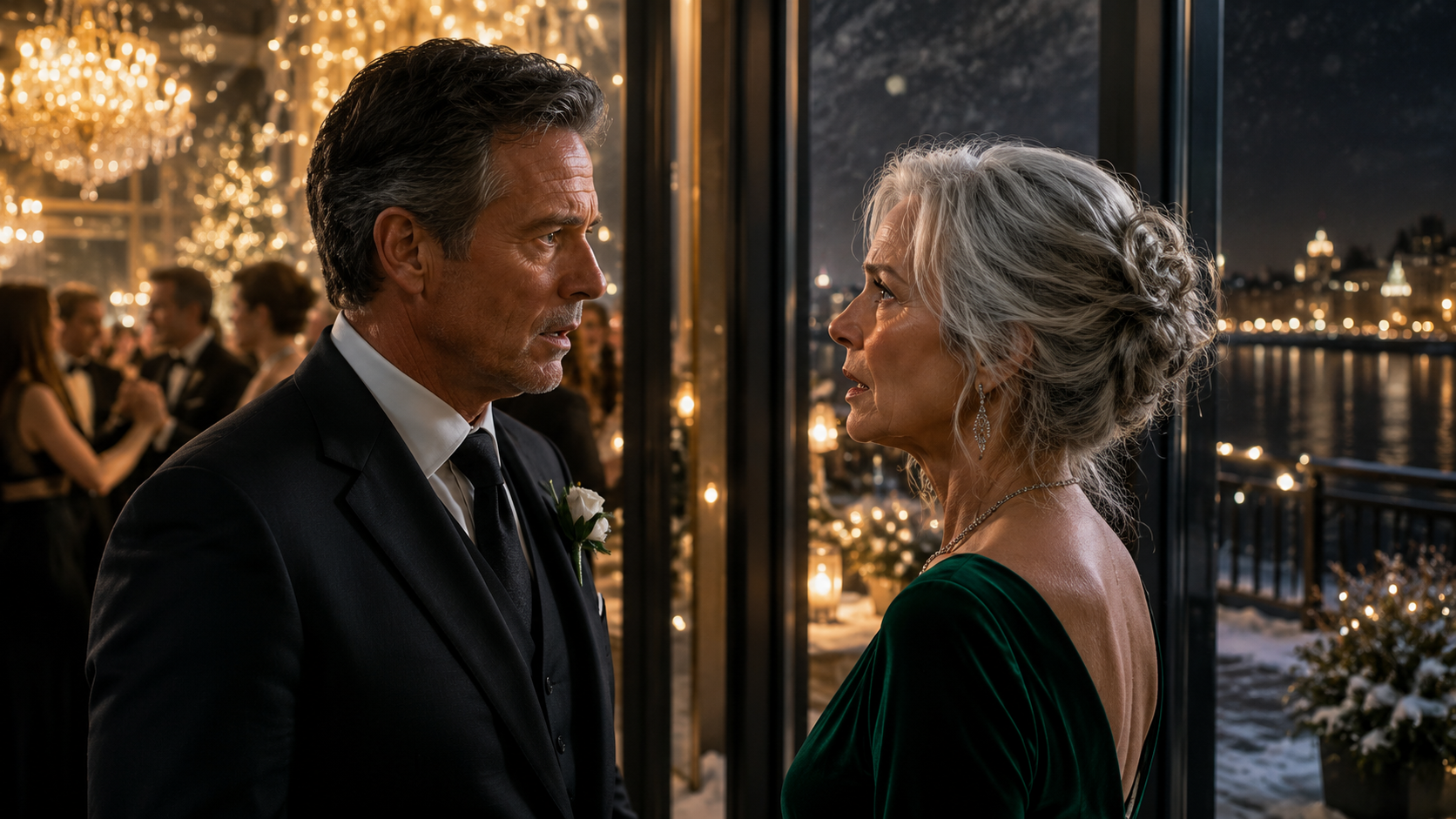
Callum looked back at Malcolm.
Then at Evie.
“You left a note.”
“Yes.”
“Why did it say without debt?”
Evie’s mouth trembled.
“Because I didn’t want whoever loved you to make you feel grateful for being cared for. Children shouldn’t owe adults for doing what love requires.”
Callum looked away.
The silence was painful, but it was honest.
Finally he stepped back from the doorway.
“You can come in,” he said. “I’m not promising anything else.”
Evie’s eyes filled.
“That is more than I deserve.”
Callum’s voice was quiet.
“Maybe. But it’s what I can do today.”
That was how they began.
Not as a miracle.
Not as a reunion wrapped in music and easy forgiveness.
As four people around a kitchen table with coffee growing cold, telling the truth in pieces because whole truths can crush a person if dropped too quickly.
Evie told Callum about the clinic, her father, her mother, the fear, the bus station, the hospital door, the note.
Callum asked hard questions.
Evie answered them.
Sometimes she cried.
Sometimes he did.
Malcolm watched his son become older in real time, not because truth stole anything from him, but because it returned a missing room in the house of his own life.
When Evie left that evening, Callum walked her to the porch.
Malcolm watched through the window but did not follow.
Hannah came to stand beside him.
“You okay?” she asked.
“No.”
“Fair.”
He glanced at her.
She smiled sadly. “But maybe okay isn’t the goal today.”
“What is?”
“Honest.”
Malcolm looked through the glass at Callum and Evie speaking under the porch light.
“Yes,” he said. “Maybe.”
The months after that were not simple.
Victor Lorne did not accept Evie’s decision to leave him with grace. Men like Victor rarely mistook freedom for something they were supposed to applaud. He called her selfish. He called her unstable. He called her past a stain she was foolish to uncover.
For the first time in her life, Evie did not fold herself smaller to make an angry man comfortable.
She moved into a small apartment above a bakery two towns away. She began teaching violin again on weekends. She sent Callum a letter every Friday, not asking for replies, simply offering pieces of the story he had never been given.
Sometimes he answered.
Sometimes he did not.
Malcolm never pushed him.
“You’re allowed to take your time,” he told Callum one night in the shop, while repairing the brass pendulum of an old grandfather clock.
Callum sat on the workbench, turning a screwdriver between his fingers.
“What if taking time hurts her?”
“It might.”
“That feels cruel.”
“It isn’t cruel to heal at the speed you can actually survive.”
Callum looked at him.
“Did you rehearse that?”
“No.”
“Sounded rehearsed.”
“I’ve had a difficult year. I’m becoming profound.”
Callum smiled faintly.
Then he said, “Do you want to be with her?”
Malcolm paused.
The shop was quiet except for the ticking of thirty clocks, each one measuring the same moment differently.
“I want to know who she is now,” he said.
“And then?”
“And then I want to be brave enough not to lie about what I find.”
Callum nodded.
“I think I want to know her,” he said. “But I don’t want another mother. Not like that. Not quickly.”
“She isn’t replacing anyone.”
Callum looked up.
“You know that includes you, right?”
Malcolm could not speak for a moment.
Callum continued, softer now.
“You’re my dad. That didn’t become less true because biology showed up late.”
Malcolm bent his head over the clock mechanism.
“I know.”
“No, you don’t. But you can.”
That was Callum’s gift. He could wound kindly. He had learned it from surviving, and maybe from being loved after.
A year passed.
Not quickly. Not cleanly.
A real year, full of awkward dinners, missed calls, careful boundaries, therapy appointments, legal papers, anger that returned without warning, and laughter that surprised everyone by arriving before permission.
Evie and Callum learned each other slowly.
She attended one of his community theater performances and cried so hard Hannah had to hand her three napkins.
Callum helped carry boxes into her new apartment and pretended not to notice the framed photograph of him and Hannah that she had placed on the bookshelf.
For his birthday, she gave him the violin she had bought years ago and never learned to sell.
“I don’t play,” he said.
“I know.”
“Then why give it to me?”
“Because it was bought with love meant for you. You can keep it, sell it, donate it, smash it dramatically in a field if that helps. I just didn’t want it sitting in my closet like a secret anymore.”
He kept it.
Not in the center of his life.
Not hidden either.
Malcolm and Evie were slower still.