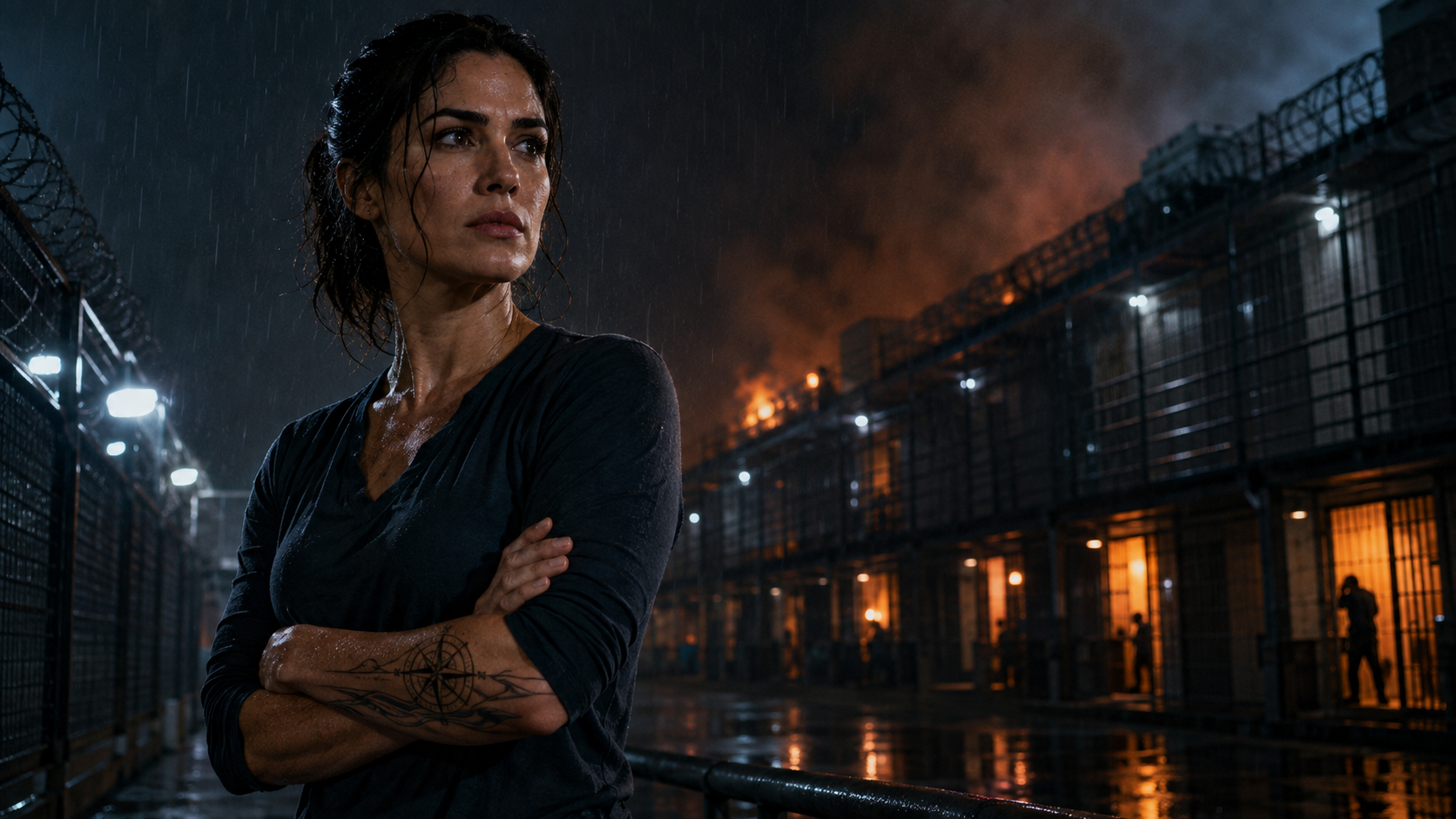
Her conviction had been vacated pending a new trial.
The prosecutor declined to pursue one.
For the first time in years, nobody told Mara when to wake, when to eat, or when to stand against a wall.
Officer Reed waited on the other side of the gate.
Her arm was still in a brace from the underground fight.
“You know,” Reed said, “most people leaving prison try not to look back.”
Mara turned.
Behind the fences stood Blackridge.
Some windows had been replaced after the fire.
New emergency lights had been installed.
The recycling facility was closed.
“Old habit,” Mara said.
“Inspecting buildings?”
“Making sure everyone got out.”
Reed nodded toward Mara’s wrist.
“I finally understand the forty-seven.”
Mara looked down at the tattoo.
Station 47.
A number she had spent years trying not to remember.
Sloane had asked her once why she kept it.
Mara had finally found the answer.
“Some things aren’t supposed to remind you what happened,” she said.
“What are they supposed to remind you of?”
“Who you were before it happened.”
A corrections van stopped near the entrance.
Sloane Mercer stepped out in restraints, returning from the courthouse after giving testimony against three former Blackridge officials.
She noticed Mara standing beyond the gate.
“You leaving without saying goodbye?” Sloane called.
Mara smiled.
“You don’t seem sentimental.”
“I’m not.”
“Good.”
Sloane looked at the open road behind Mara.
Then she lowered her voice.
“My brother still talks about that warehouse.”
Mara said nothing.
“He has two kids now.”
That stopped her.
Sloane smiled.
“He named his daughter Mara.”
For once, Mara Quinn had no answer.
She looked away, blinking against the morning sun.
Sloane laughed.
“Wow. I finally found something that shuts you up.”
“Enjoy it.”
“I will.”
A guard began leading Sloane back inside.
She stopped once.
“Quinn!”
Mara turned.
“When I get out, I’m buying you coffee.”
“You still owe me one from my first breakfast.”
Sloane grinned.
“Keep counting.”
Then the gate closed between them.
Mara walked toward the parking lot.
No cheering crowd waited for her.
No reporters.
No dramatic convoy.
Only Reed’s old sedan and a road disappearing beyond the trees.
That suited Mara.
She opened the passenger door.
Reed looked at her.
“So what now?”
Mara stared through the windshield.
For most of her life, she had known exactly what came next.
Enter the building.
Find the danger.
Get everyone out.
Then do it again.
Now there was no alarm.
No smoke.
No locked door.
Only possibility.
Mara touched the number 47 on her wrist.
Then she smiled.
“Now,” she said, “we find somewhere that isn’t on fire.”
Reed started the engine.
Behind them, Blackridge grew smaller in the mirror.
Ahead, the road opened beneath a clear morning sky.
And for the first time in many years, Mara Quinn did not turn around.