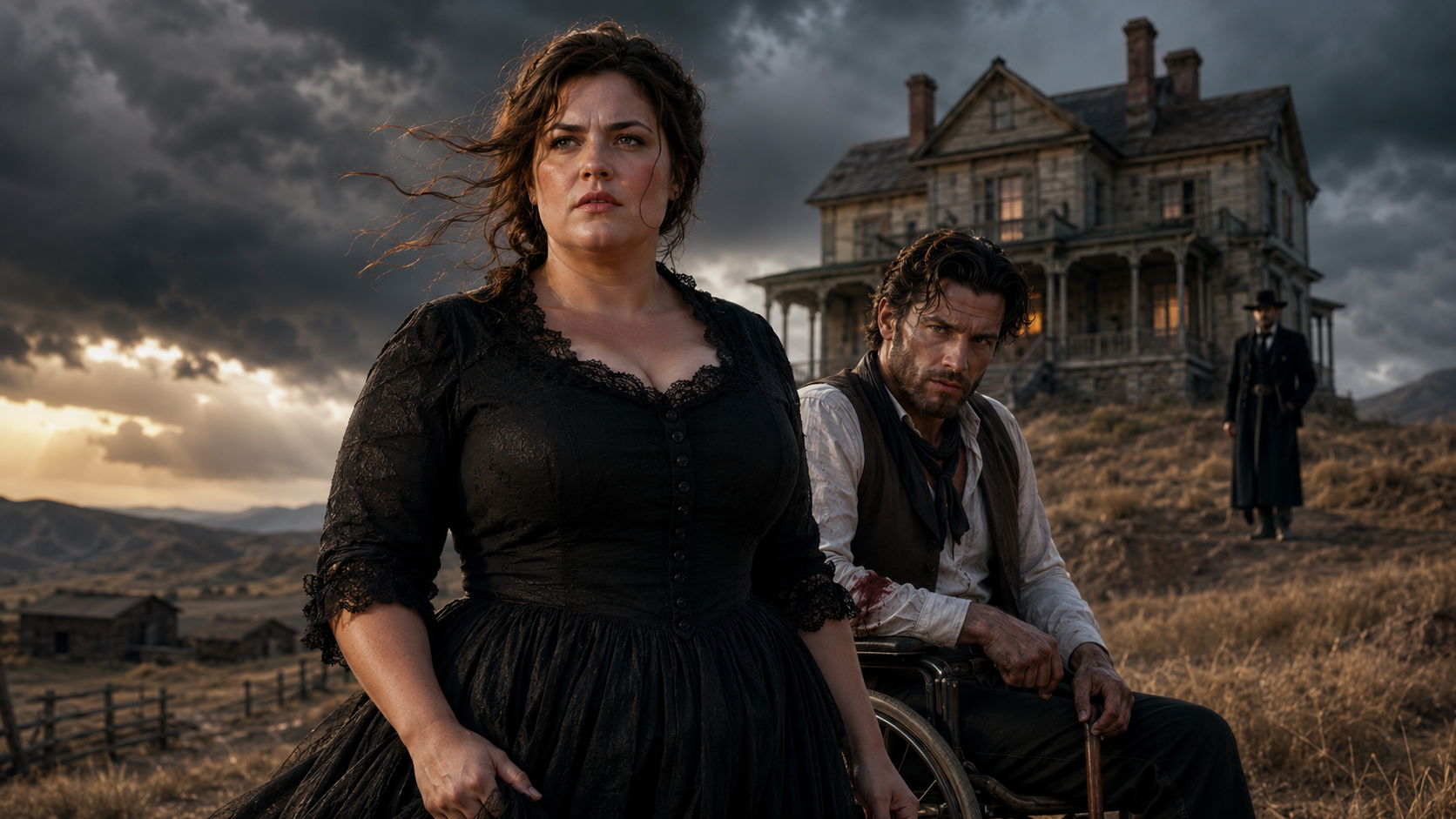
Gideon stood near the gate, leaning on his cane, watching her review the final figures with Mr. Peller.
“You look pleased with yourself,” Mara said when she joined him.
“I married a witness and accidentally acquired a manager.”
“You should be grateful.”
“I am terrified. Gratitude seems too small.”
She laughed.
He held out a horseshoe. “Throw?”
“You can barely stand.”
“I can stand enough to lose.”
“You will lose.”
“Then do not be cruel when you win.”
“I make no promises.”
He threw first. The horseshoe struck the stake and rang clean in the evening air. The yard cheered.
Mara rolled her eyes, took the next iron shoe, and felt its weight settle into her palm.
Her body was still broad. Her arms were still thick. Her hips still brushed doorframes and chair backs and the narrow opinions of the world. But she no longer confused size with shame. This body had survived hunger, marriage, widowhood, fear, rage, rain, and truth. It had lifted Gideon from the floor. It had stood between a thief and a stolen life. It had refused to vanish.
She threw.
The horseshoe flew crooked, wild, and perfect.
It struck the stake with a ringing note.
For one heartbeat, the yard went silent.
Then Gideon shouted with delight, and everyone laughed.
Later, when the guests had gone and the lanterns burned low, Mara stood at the porch rail looking over the dark fields. Gideon came to stand beside her, leaning more heavily on the cane now that no one was watching.
“Do you ever think about leaving?” he asked.
“Ironford?”
“All of it. The town. The ranch. The place where people failed you.”
Mara watched the moon silver the north ravine. “Sometimes. When I pass the grain exchange. When someone praises me now and I remember how easily they would have let me freeze. When kindness arrives late and expects a medal.”
Gideon nodded.
“Do you?” she asked.
“Sometimes. When my legs give out. When I dream of the fall. When I remember Silas was my brother before he became my enemy.”
Mara took his hand.
“Then why stay?” he asked.
She looked at the repaired barn, the lit windows, the fields that had nearly been stolen, and the road that had once brought her here like a punishment.
“Because leaving would let Silas decide what this place means,” she said. “I will not give him that.”
Gideon turned toward her. “And what does it mean?”
Mara leaned against him, careful of his balance, trusting him with some of hers.
“It means I was not rescued,” she said. “I chose. I fought. I stayed. I built.”
“And me?”
She smiled. “You are part of what I built.”
“Only part?”
“A troublesome part.”
His laugh was quiet and warm. “Mara Harrow, I am grateful every day you became more than my witness.”
She looked at him then, this stubborn man with his pain, his pride, his remorse, and his steady hand in hers. Love had not arrived like lightning. It had come like weather after drought, slow and difficult and real.
“I love you,” she said.
“I love you too.”
Below them, the horseshoe stake caught the moonlight.
Mara thought of the day Ironford tried to trade her future for convenience. She thought of the room where men called hunger hardship and cages mercy. She thought of the locked door Gideon gave her, the truth he withheld, the truth she forced into daylight.
Beginnings did not have to be clean to become beautiful.
Seeds went into dirt. Bread began under fists. Iron had to be heated before it could be shaped.
Mara had spent years waiting for someone to decide she was worth keeping.
Now she knew better.
Worth was not granted by a husband, a town, a judge, a church, a body, or a name on a deed.
Worth was the quiet fact of being alive.
And sometimes, if a woman was angry enough, brave enough, and tired enough of being handed cages, she could take the bars apart and build a home from them.
Mara stood beside Gideon until the last lantern burned low.
For the first time in her life, she did not feel like a woman waiting to be chosen.
She felt like a woman who had chosen herself.
And that was enough.