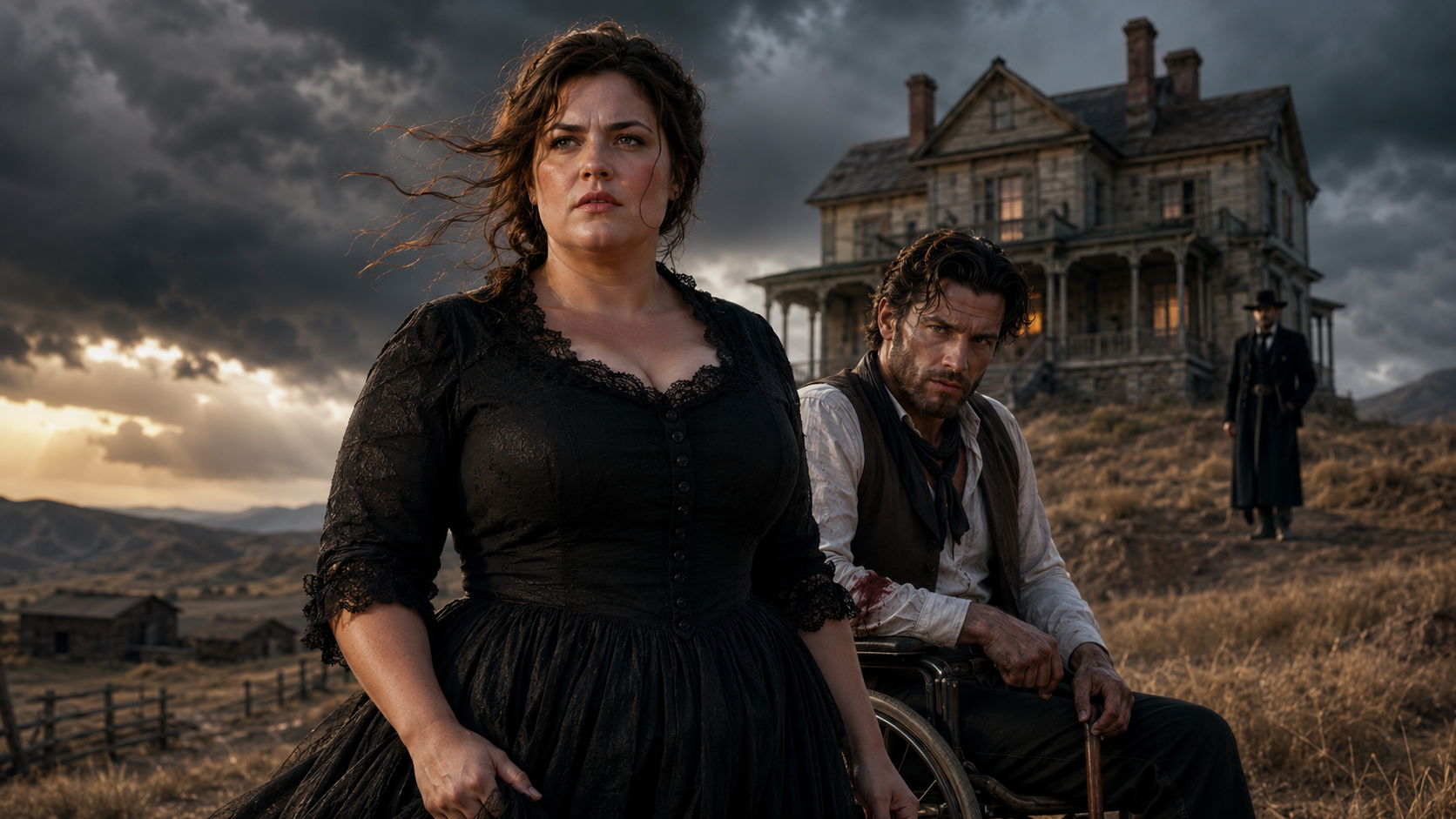
“I bought your debts because you needed a way out and I needed someone brave enough to stand inside a lie without becoming part of it. But I should have told you everything.”
“Yes,” Mara said. “You should have.”
She left him there.
That night, Mara packed her mother’s trunk.
She had nowhere to go. That did not matter. Sometimes a woman packed not because she had a road, but because she needed proof that her hands still belonged to her.
At the bottom of the trunk lay Tobin’s old work coat. She had kept it only because the lining could be cut into patches. When she lifted it, something knocked against the wood.
Mara searched the lining and found a seam sewn shut with black thread.
Inside was a small brass claim tag from the Ironford Savings Bank.
On the back, scratched crookedly, were five words:
MARA, TAKE THIS TO LIGHT.
She sat on the floor until dawn with the tag in her palm.
By morning, the storm arrived.
Rain hammered the roof and turned the yard to black mud. Gideon came downstairs despite the pain, pale and sweating, his cane biting into the floor with each step. Mara did not tell him about the tag. Trust was not a door that opened because someone knocked once.
At noon, Silas arrived with Sheriff Lyle, Dr. Merrow, a clerk from Judge Ansel’s office, and two ranch hands carrying rifles under their coats.
Mara met them on the porch.
Silas removed his gloves. “This ends today.”
“Most men say that right before they start losing,” Mara said.
The clerk unfolded a paper. “Mr. Gideon Harrow is to be examined for temporary guardianship due to physical incapacity, suspected narcotic dependence, and paranoid delusion.”
Gideon stood behind Mara, one hand on his cane, the other on the porch rail.
Dr. Merrow would not meet his eyes. “Gideon, this may be for your own good.”
Mara turned on him. “How often does his own good arrive with armed men?”
Silas sighed. “You see? She encourages his condition.”
“I encourage his breathing. You seem opposed.”
Sheriff Lyle shifted uncomfortably. “Mrs. Harrow, step aside.”
“No.”
“Mara,” Gideon said softly.
“No,” she repeated. “I stepped aside when Tobin sold my wedding china. I stepped aside when creditors counted my blankets. I stepped aside when this town decided I was too large to pity and too poor to protect. I will not step aside while a thief puts a pen in your hand and calls it law.”
Silas’s mouth hardened. “Very moving. Still useless.”
A voice called from the road.
“Not useless if there are witnesses.”
Everyone turned.
Through the rain came Elsie the maid, holding her skirts above the mud. Behind her walked Mr. Peller, Reverend Hale, old Mrs. Greaves from the laundry, two fence riders, a blacksmith, three wives, four shopkeepers, and nearly half the town Silas thought he owned.
Mara stared.
Elsie climbed the porch steps and stood beside her. The young woman was trembling, but her chin was up.
“I heard Mr. Silas say he would bring papers,” Elsie said. “So I brought people.”
Silas looked at the crowd. “This is private business.”
Mrs. Greaves laughed. “That is what powerful men call public crimes before they are caught.”
Then people began to speak.
The blacksmith spoke of invoices Silas had doubled. A fence rider spoke of being paid once while Silas charged Gideon three times. Mr. Peller, sweating hard, admitted he had extended credit under pressure from Silas and falsified dates to protect him. Elsie said she had seen Silas open Gideon’s mail and burn letters before breakfast.
Sheriff Lyle’s face changed slowly, like a man watching a bridge rot beneath him.
Mara reached into her pocket and lifted the brass tag.
“There is more,” she said.
Silas went still.
The bank was opened under protest. The manager, Mr. Voss, insisted that rules existed for a reason until Mrs. Greaves asked whether hiding evidence for rich men was one of them. The lobby filled with wet coats, muddy boots, and the smell of rain.
Mara handed over the tag.
Mr. Voss took it into the vault. When he returned, he carried a small iron box.
“It was left by Tobin Whitcomb,” he said. “Claimable only by his wife.”
Mara opened it.
Inside were a letter, a receipt, and a pocket ledger.
She read the letter with the whole town watching.
Mara, if I am dead, then I finally crossed a man worse than me. Silas Harrow paid me to cut the cinch and loosen the south fence. He said Gideon would be frightened, maybe hurt, not ruined. I was a coward and a fool. Afterward he paid me to keep quiet. When I asked for enough money to take you away, he threatened me. If I turn up drowned, drunk, or gone, believe none of it. The ledger has names, dates, payments, and the north ravine plan. I cannot fix what I did. I can only leave you the match.
Mara could not breathe.
Gideon’s hand covered hers, not to take the letter, only to steady it.