“I don’t know if I deserve to believe that.”
“Deserving has little to do with grief. Believe it because it is true. Then live in a way that honors the cost.”
He nodded.
Peter did change.
Not magically. Real change is rarely theatrical.
He was still anxious. Still ashamed. Still tempted to avoid hard conversations. But now he noticed the temptation. He worked a modest inventory job. He lived with thrift-store furniture. He paid small honest bills and said they were teaching him about the large dishonest ones.
He and Cassandra divorced quietly while she served her sentence.
He visited her once, then told me, “I wish her healing, but I cannot be her ladder out of consequences.”
That was when I believed my son might survive himself.
Lenora and I did not become close. Life is not tidy enough for every wound to become a reunion.
But she wrote letters.
Real letters.
She wrote about her court-ordered service at a senior legal aid clinic. She wrote about women who reminded her of me. Once she wrote, “I spent years thinking I got less than you. Now I wonder if I simply made less out of what I had.”
I answered some.
Not all.
Boundaries, I learned, are not walls unless you build them from hatred. Sometimes they are fences with gates that open only when safety has returned.
On the anniversary of Thomas’s death, I hosted dinner.
Peter came early and repaired a loose cabinet hinge. Mabel brought a store-bought pie and announced honesty was now the theme of the house. Reverend Ellis brought flowers. Helena brought sparkling cider because, she said, lawyers should never be trusted with wine at emotional gatherings.
We ate at the dining room table Cassandra had once marked with a yellow sticky note that said:
SELL.
I had kept that note.
Not out of bitterness.
As a reminder of how easily people label what they do not understand.
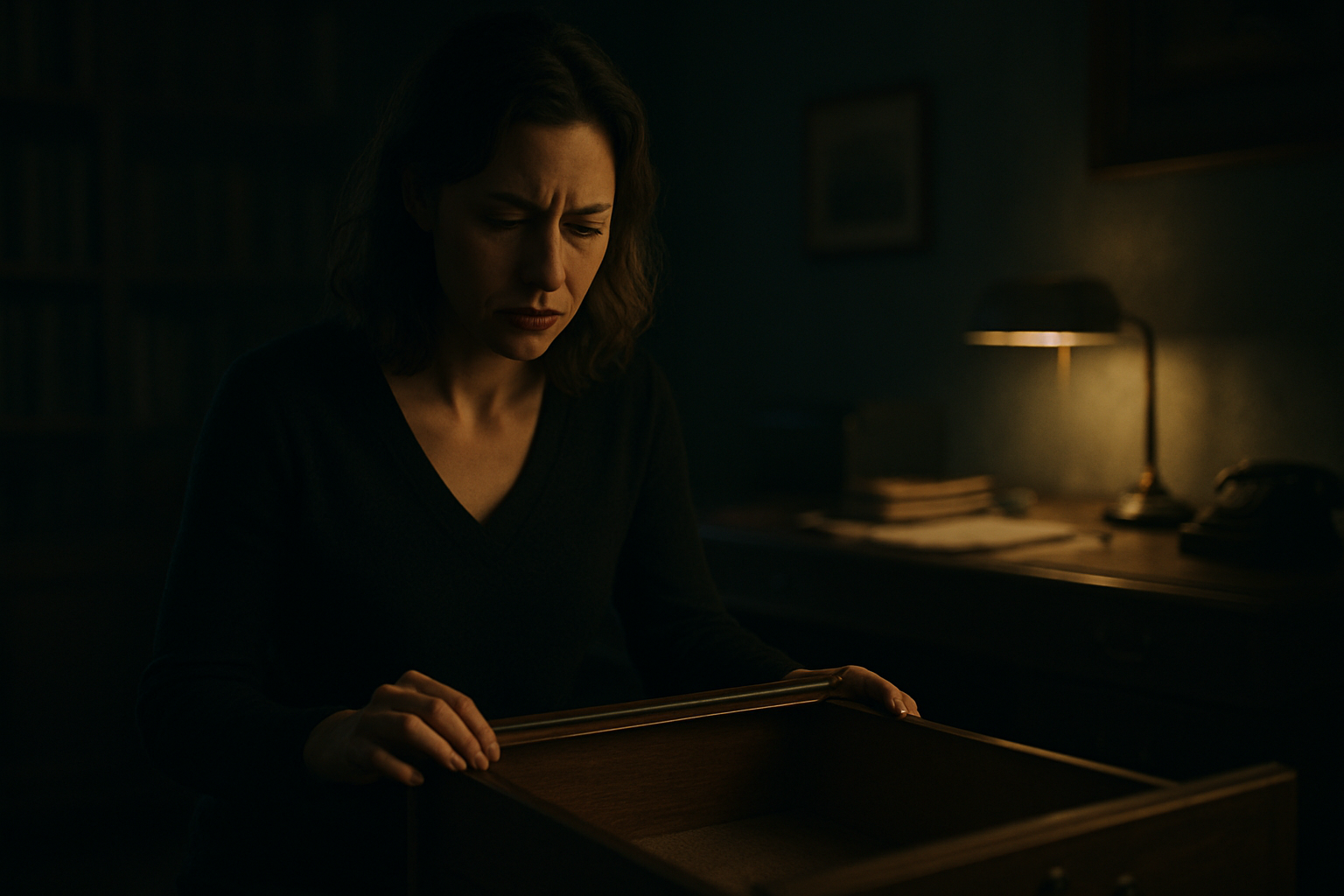
Later, after everyone left, I opened Thomas’s desk drawer. Inside were new property records, trust documents, his letter, and that yellow note.
SELL.
DONATE.
TRASH.
Beside it, I placed a new note in my own handwriting.
PROTECT.
RESTORE.
GIVE.
Then I closed the drawer.
Two years later, the Thomas Mercer Home Fund opened its first transitional cottage.
A small white house with blue shutters.
Nothing fancy.
Sturdy.
We named it Maple House, after the tree Thomas planted when Peter was born.
The first resident was a widow named Beatrice, whose stepchildren had tried to sell the house she had lived in for thirty years. She arrived with two suitcases, a wedding photograph, and a distrust so deep she apologized before asking where the bathroom was.
I recognized that look.
I had not been homeless. Thomas’s planning saved me from that.
But I had stood in my own living room while someone tried to make me feel temporary.
I knew what it meant to have your place questioned.
On move-in day, Peter carried boxes. Lenora sorted pantry items quietly. Mabel pretended to inspect the mailbox when Beatrice cried, giving her the dignity of not being watched.
On the kitchen counter, we left bread, tea, a notebook, and a card.
I had written the words myself.
You are not a burden. You are not a problem to be moved. You are home for as long as you need to become steady again.
A week later, I received a letter from Cassandra in prison.
She wrote that she was not asking forgiveness. She said a counselor had asked when she first confused safety with control.
I watched my mother lose everything slowly, she wrote. First money, then friends, then dignity. I decided being feared was safer than being pitied.
When I met you, I saw a woman with a real home who did not worship it. I wanted to prove it could be taken from you, because then it would mean it had never been real.
I am sorry I tried to erase you from your own life.
I folded the letter carefully.
That evening, Peter came to fix a porch railing.
“How do you feel?” he asked.
That question, from him, was proof of change.
“Sad for her,” I said. “Still angry. Relieved those feelings do not have to become action.”
“Will you answer?”
“Not now.”
“Maybe someday?”
“Maybe.”
We stood beneath the maple tree. Its leaves shifted in the summer air.
“Dad would like Maple House,” Peter said.
“Yes,” I answered. “He would.”
On the third anniversary of Thomas’s death, I took flowers to his grave.
“I kept the house,” I told him. “I kept myself too.”
The wind moved softly through the grass.
“Peter is trying. Lenora is learning. Cassandra wrote. I don’t know what comes of any of it. But I am not afraid of the unfinished parts anymore.”
I touched the stone.
“And you were right about the ring. Not everything lost stays lost forever.”
When I came home, late sunlight lay across the hardwood floors.
The same floors Cassandra had crossed as if she owned my future.
The marks of that day were gone, polished away by time and care, but I remembered where she had stood.
I adjusted Thomas’s photograph on the mantel and looked around my home.
It was not silent anymore.
It held grief, yes.
But it also held laughter from dinners, calls from people Maple House had helped, Peter’s uneven progress, Lenora’s careful letters, and my own footsteps moving freely from room to room.
For years, I thought surviving betrayal meant becoming hard.
I was wrong.
Hardness would have been easy.
Hardness would have let me punish everyone and call it justice.
What saved me was clarity.
Clarity let me say no without hatred.
It let me love Peter without rescuing him.
It let me hear Lenora’s remorse without handing her keys to my life.
It let me read Cassandra’s apology without absolving her too soon.
And it taught me this:
A home is not protected by locks alone.
It is protected by the courage of the person inside who refuses to be moved.