“Freight. Seed. Tools. Men don’t always tell their wives everything.”
The words struck with precision. That was Gideon’s gift. He did not swing wildly. He found the seam and drove the wedge.
“Bring proof,” Mara said.
“I can.”
“Then bring it.”
“If I do, you may wish you’d sold when I was feeling generous.”
Mara stepped closer to the fence.
“Mr. Pike, if you ever feel generous, I expect the sun will rise in the west just to see it.”
For one second, Gideon’s face emptied.
Then he laughed.
It was not a pleasant sound.
“You’ll come to me before February,” he said. “You and that girl. Cold makes beggars honest.”
Mara met his eyes.
“No,” she said. “Cold makes liars visible.”
He rode away hard.
That night, after Lottie climbed into the loft, Mara sat at the kitchen table with Edward’s old ledger open beneath the lamp.
She knew the accounts. She had counted them until numbers followed her into sleep. But Gideon’s words moved inside her like a draft under a door.
Men don’t always tell their wives everything.
She hated him for placing doubt beside grief.
Near midnight, she took down Edward’s tool chest. The brass latch stuck. She forced it open and lifted the tray.
Under the auger bits and a folded rag lay a flat oilskin packet.
Her name was written across it.
Mara’s hands began to shake before she opened it.
Inside were two receipts and a letter.
Mara,
If I have put this somewhere foolish and you find it after scolding me in your head, know that you are right to scold. Pike tried again for the north slope. I paid the last of the freight account and made him sign the receipt in front of Rowan and Reverend Hale. Keep this safe.
Also, I walked the hill this morning. You were right about the wind. That old drying trick your father used would work there. I should have listened sooner. Come spring, we’ll cut a tunnel together.
E.
Mara read it once.
Then again.
Then a third time, though the words blurred.
She did not cry because Edward had paid the debt.
She cried because he had believed her.
In the morning, she showed Lottie.
The girl traced the edge of the letter with one finger.
“Pa knew the tunnel would work?”
“He thought it would.”
“And Mr. Pike lied?”
“He tried to.”
Lottie looked toward the hill. Something in her young face settled into place.
“Then we finish it for Pa.”
Mara folded the letter carefully.
“No,” she said. “We finish it for us. That is what he would have wanted.”
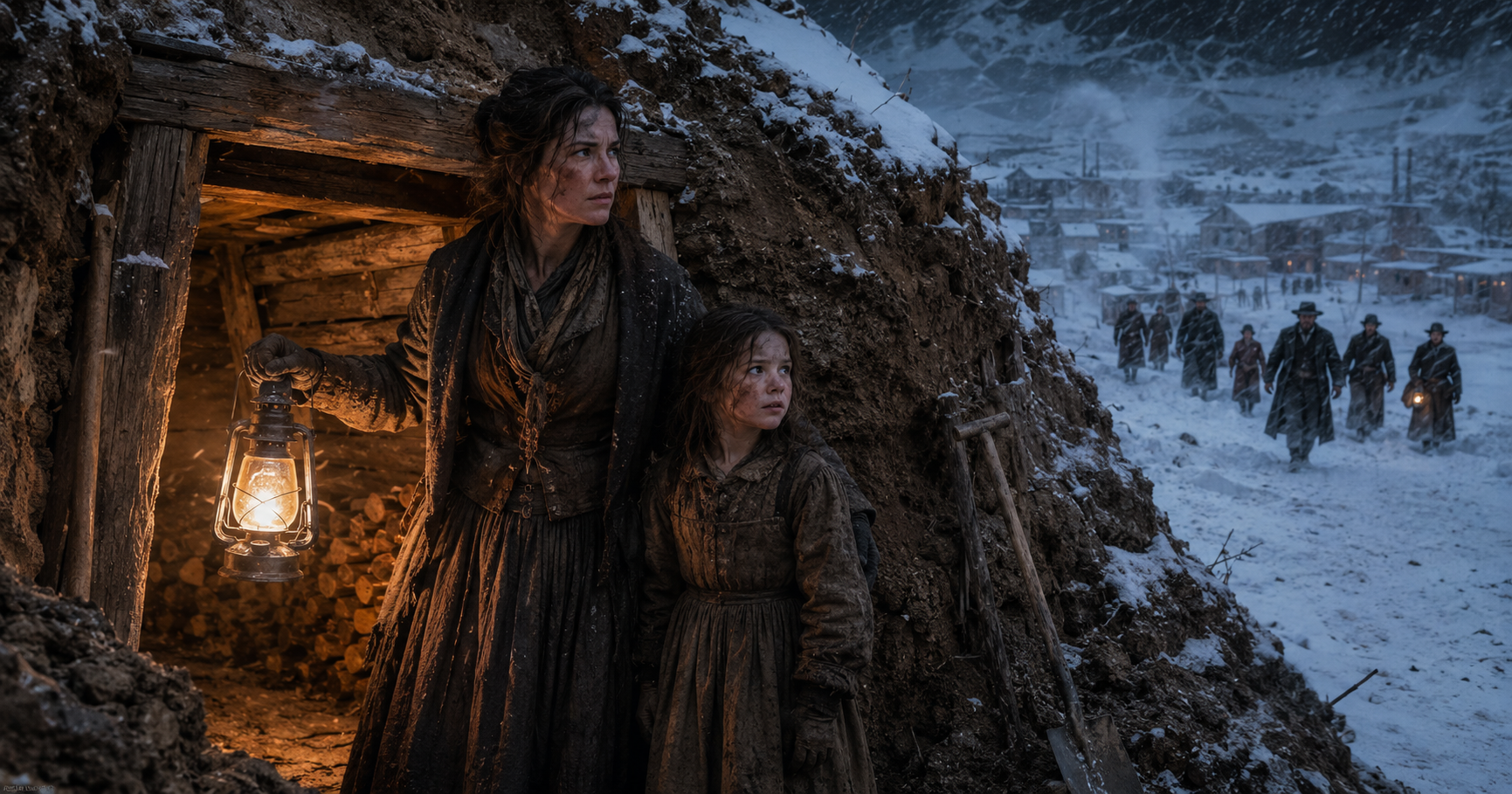
By late October, the tunnel changed.
The wood nearest the rear had lost its green weight. Sap smell faded into clean resin. Bark loosened. The cut ends showed tiny cracks like pale stars. When Lottie struck two pieces together, they rang instead of thudding.
She froze.
“Ma.”
Mara turned from the vent shaft.
Lottie held up the wood. “Listen.”
She struck it again.
The sound was small, bright, impossible.
Mara took the piece and weighed it in her palm.
The hill was working.
The town still laughed, but the laughter had begun to wobble. At church, women lowered their voices when Mara passed. Men nodded with the careful politeness given to people one still thinks wrong but no longer finds amusing.
Mrs. Branson asked, “Still tending your grave, Mara?”
Mara smiled. “Every day. It’s getting healthier than your gossip.”
That ended the conversation.
The first hard cold came in November.
Mara carried three pieces of tunnel wood into the cabin, laid them over kindling, and let Lottie strike the match.
The fire caught fast.
No hiss.
No sap popping.
No lazy smoke choking the stove pipe.
The flames climbed clean and yellow, and within minutes heat rolled from the iron belly of the stove.
Lottie stepped back, laughing in disbelief.
“It’s too hot.”
Mara held her hands toward the warmth.
“Too hot,” she repeated. “That is a fine complaint.”
That night, she banked the stove before bed. In other winters, dawn had always arrived like punishment: dead ashes, frozen wash water, breath white in the air, Lottie curled under every quilt they owned.
But that morning, Mara woke to warmth.
The coal bed still glowed.
She stood in the dark, staring.
From the loft, Lottie whispered, “Ma?”
“The fire held.”
A pause.
Then the ladder creaked as Lottie climbed down in her nightdress, hair wild, eyes wide.
“It held?”
Mara smiled.
“It held.”
By Christmas, Cold Hollow began to understand that something was wrong.
Not at the Whitlock place.
Everywhere else.
Wet wood burned badly. Chimneys clogged. Stoves smoked. Families burned twice as much fuel for half the heat. Men chopped emergency trees from frozen slopes, but green wood was heavy with locked water. It hissed, spat, and died unless fed constantly.
At Gideon Pike’s freight yard, wood stacked under tarps had not seasoned at all. He sold it anyway, calling it “winter-ready,” because fear paid well when snow buried the roads.