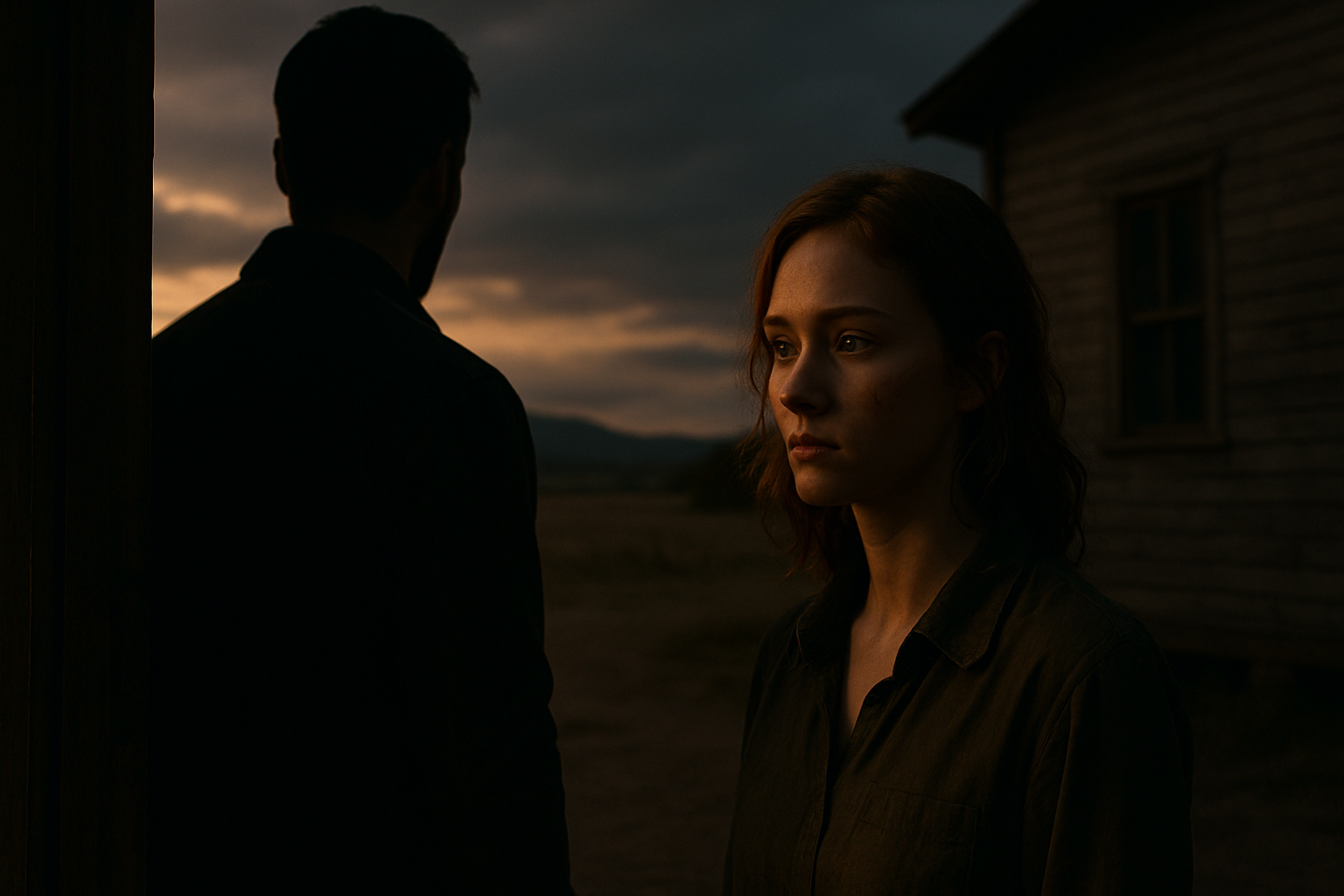
He dropped the ring into the fire.
Gold did not melt at once. It endured, glowing red amid the coals, defiant.
Cassian took the iron poker and pressed it down until the crest warped.
The gryphon twisted.
The broken crown collapsed.
Lady Isolde made a sound as if he had put the poker through her own heart.
“You will leave Veyr Hall before sunset,” he said.
Her eyes widened. “You cannot cast out your mother.”
“I can.”
“I bore you.”
“And Seraphine bore my contempt because of you.”
Lady Isolde’s face hardened. “That girl bewitched you even from the grave.”
“No,” Cassian said. “She freed me from it.”
He did not send her to prison. Some said later that he should have. Others said exile was too merciful.
Cassian knew only this: he would not let Lady Isolde turn a trial into theatre, would not let her stand in widow’s black before the court and weep about family honor. The law would have Edric. The records would name her. Society would do the rest with the cruelty it usually reserved for women like Seraphine.
By sunset, Lady Isolde left Veyr Hall in a closed carriage with two trunks, no jewels beyond what the law allowed her, and no escort except the old footman who had served her too long to know how not to follow.
She did not look back.
Cassian watched from the upper window with Liora in his arms.
His daughter had woken an hour before and asked, in the small uncertain voice that had become the measure of his remaining world, “Is Mama coming home?”
Dahlia had turned away, unable to bear it.
Cassian knelt before Liora, took both her hands, and told her the first clean truth he had given anyone in years.
“No, little star,” he said, the old name Seraphine had given her. “Mama cannot come home.”
Liora’s lower lip trembled.
“But we can go to her,” he whispered. “And we can speak to her. And we can love her loudly now.”
So they went.
Not that night, because the storm returned and shook the windows like a grieving thing. Not the next day, because magistrates arrived and clerks took statements, and men who had once grinned at Seraphine across dinner tables now lowered their heads and claimed they had always suspected her innocence.
Cassian learned then that cowardice had many costumes.
Concern.
Politeness.
Regret.
By the third morning, the sky cleared.
He carried Liora to the cemetery beyond the yew trees, where Seraphine’s grave had been closed again with gentler hands.
The marble angel still stood above it, though its base had been broken to reach the lockbox hidden beneath. Cassian had ordered it repaired, but not replaced. He wanted the fracture visible.
Some things, once broken, should not pretend otherwise.
Dahlia walked behind them with a basket of white roses and rosemary. Dr. Havel came too, leaning heavily on his cane. Father Auren waited by the gate, not intruding, not performing grief for the family, only present in case prayer was wanted.
Cassian set Liora down before the grave.
The child stared at the carved name.
SERAPHINE AMARA VEYR
Beloved Mother
Beloved Truth
Cassian had argued with the stonecutter over the words.
The man had suggested beloved wife.
Cassian had stood very still and said, “No. I did not earn that inscription.”
So beloved truth it became.
Liora placed one rose on the grave, then another, arranging them with grave concentration.
“Mama liked the yellow ones,” she said.
Cassian’s breath caught.
“Yes,” he managed. “She did.”
“Then why did you bring white?”
Because white was what mourners brought when they wanted to look innocent.
He almost said it.
Instead, he looked at Dahlia.
The maid reached into the basket and, with a sad little smile, drew out a cluster of yellow tea roses hidden beneath the rosemary.
Liora brightened. “Those.”
She placed them at the center of the grave.
Cassian sat on the damp grass beside her, careless of his coat.
For a while, he said nothing.
The wind moved through the yews. Somewhere beyond the hill, a blackbird called. Morning light spilled over the cemetery, touching the angel’s cracked wing, the wet grass, the small hand of his daughter resting on the stone.
Finally, Cassian took a folded letter from inside his coat.
It was the last one.
Not evidence.
Not testimony.
A letter addressed simply:
For Cassian, if he ever comes to me without anger.
He had found it in the lockbox beneath the angel, tied with blue thread.
He had not been able to open it in the house.
Now, beside her grave, with Liora leaning against his arm, he broke the thread and unfolded the page.
Seraphine’s handwriting rose before him like a voice returned from a distant room.
Cassian,
If you are reading this, then some part of the truth has survived me.
I am sorry for the pain it took to reach you.
No—do not argue with a dead woman. Let me say sorry where I wish to. I am sorry for every night we spent on opposite sides of a door. I am sorry for every silence I mistook for patience. I am sorry I did not find a way to make you hear me sooner.
But I will not apologize for surviving as long as I did.