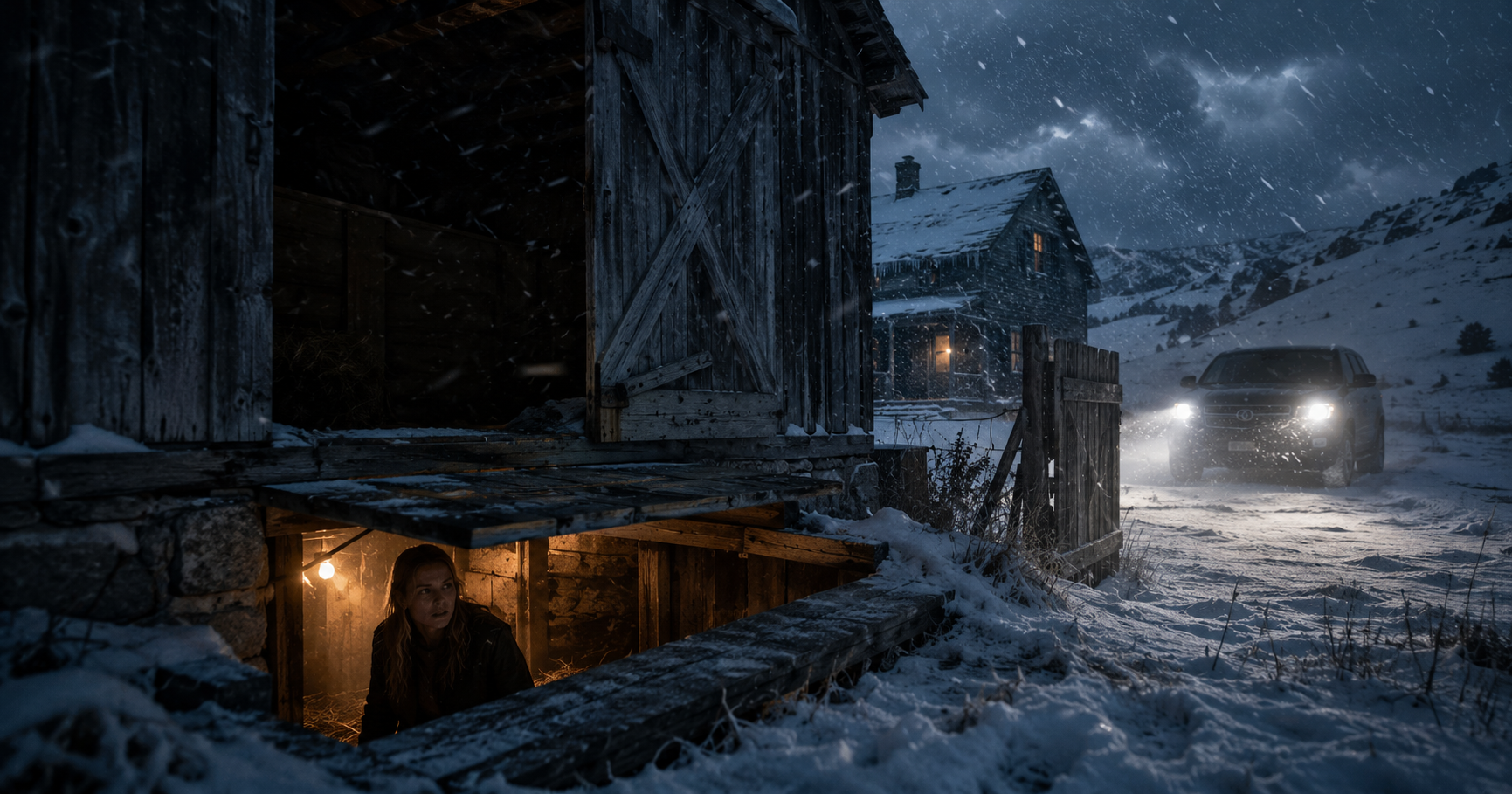
By the time winter found the valley, Lena Harrow had already learned how to disappear.
Not the dramatic kind of disappearance people imagined when they watched crime shows and whispered over coffee. Not a midnight bus ticket, not a motel under a false name, not a dyed haircut and sunglasses at a gas station. Those things belonged to people who were running from ordinary danger.
Lena had been running from Victor Caine.
Ordinary danger got bored. Ordinary danger made mistakes. Ordinary danger forgot.
Victor never forgot.
He owned glass towers in three cities, private roads in two states, and enough lawyers to turn truth into paperwork. Newspapers called him a visionary investor. Charity boards called him generous. Judges called him persuasive. Men who owed him money called him sir. Women who feared him learned to call him nothing at all, because even his name felt like a hand closing around the throat.
Lena had once called him husband.
Now she called him a weather system.
Because Victor did not chase. He arrived.
He appeared in places where he should not have known to look. He sent white orchids after she changed hotels. He paid the manager of a shelter to say whether a woman with gray eyes had come in. He knew when she opened a bank account, when she bought a prepaid phone, when she paid cash for a winter coat in Helena. He found the church basement where she attended one support meeting and sent a donation large enough to have his name engraved near the door.
So Lena stopped asking the world to hide her.
She built a hiding place herself.
The old Alder Creek property had been abandoned for almost twelve years when she bought it through a company with a name so dull even she forgot it twice. A farmhouse with a sinking porch. A stable with a leaning roof. Forty acres of frozen grass, cottonwoods, and wind. The nearest neighbor lived six miles away and hated visitors. The county road closed whenever the snow got serious. No one came out there unless they were lost, desperate, or born there.
Lena liked it immediately.
In spring, she patched the farmhouse enough to survive rain. In summer, she repaired fences she did not need and planted potatoes she barely knew how to grow. By August, she began work beneath the stable.
She chose the last stall, the one where the floorboards had already rotted soft. Each night, after the sky turned purple and the valley went quiet, she pried boards loose, dug earth into feed sacks, and carried the sacks into the dry creek bed behind the property. She worked with a headlamp, gloves, a shovel, and the stubborn fury of a woman who had been told too many times that she was fragile.
The room took shape slowly.
First a hole. Then a chamber. Then a shelter.
Twelve feet long. Nine feet wide. Deep enough that a man standing above it would hear only old wood and winter wind.
She reinforced the walls with block and steel. She poured a rough concrete floor with shaking arms and bloody knuckles. She sealed the seams against water. She framed a ceiling strong enough to hold the stable’s weight. She installed a narrow cot, shelves, a folding table, jugs of water, food tins, batteries, flashlights, a hand-crank radio, a small heater, a chemical toilet behind a canvas curtain, and a lockbox filled with copies of everything Victor had done.
Threatening emails. Medical records. Photographs of bruises. Bank documents. A notarized letter from her father’s estate lawyer, the letter Victor had spent two years trying to steal.
The shelter had two air pipes disguised outside as broken drainage lines. Power came from batteries hidden under old tack trunks above. A tiny camera watched the stable aisle. A microphone caught sounds through the floor.
The entrance was the hardest part.
Lena built a steel hatch, covered it with reclaimed boards, rubbed dirt into the cracks, and placed a cracked stone water trough over the seam. The trough was empty, but it looked impossibly heavy. To open the hatch, she had to slide out a hidden pin, press a pedal under the feed bin, and lift from below. Anyone else would see only a dead stall in a dead stable on a dead farm.
When she finished in late November, Lena climbed down the ladder, shut the hatch, and sat on the cot while one amber lamp glowed over her knees.
No windows.
No footsteps.
No orchids.
For the first time in four years, she slept without dreaming of Victor’s voice.
The blizzard came thirteen days later.
It started as a warning on the radio. Then another. Then a third, sharper than the rest.
A storm system had turned north faster than expected. Temperatures would fall below zero by evening. Wind gusts could reach seventy miles an hour. Power failure was likely. Roads would become impassable. Sheriff Amos Reed came on the emergency channel just after noon, his voice flat and tired.