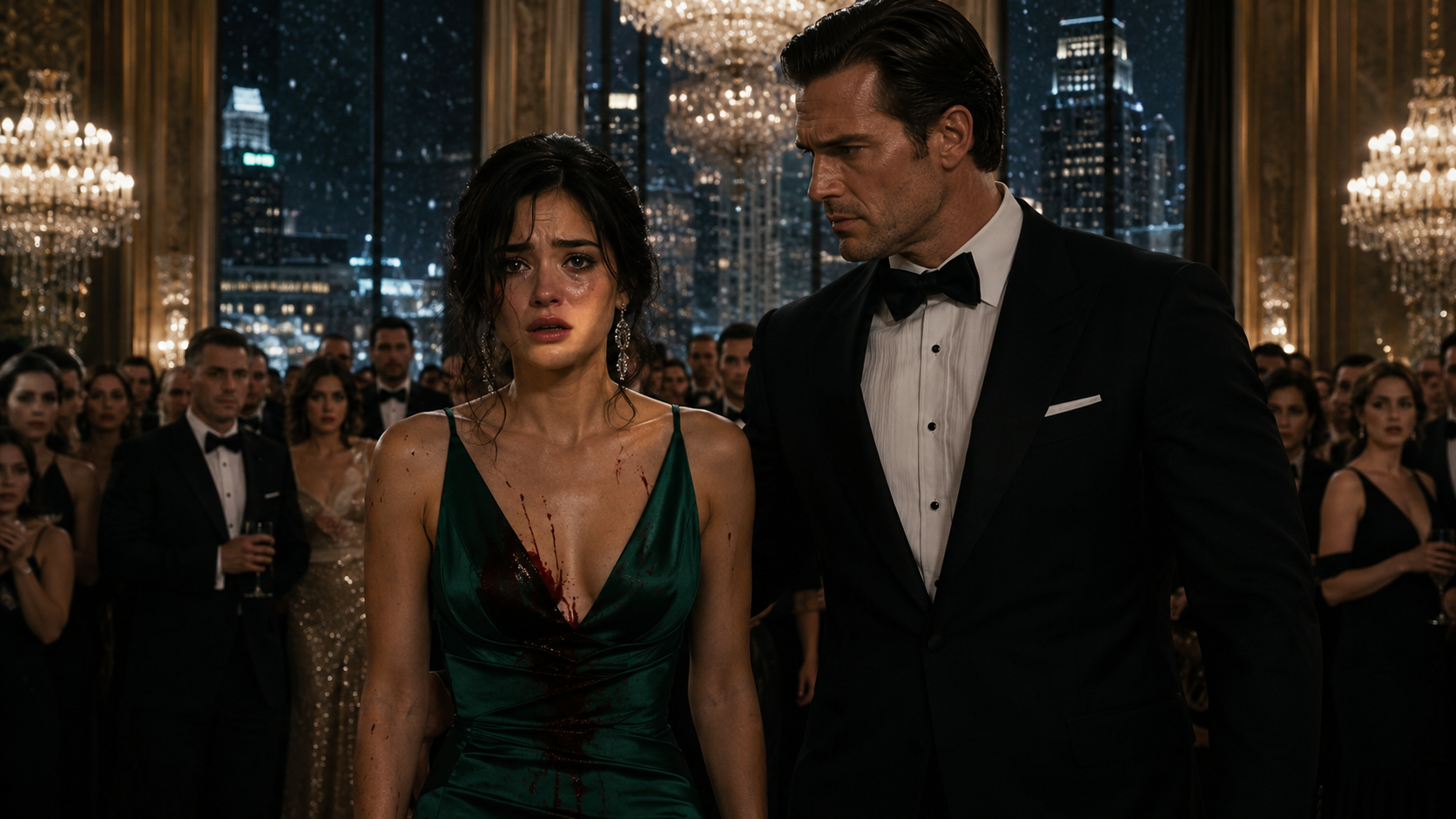
Every chandelier in the ballroom glittered as if it had been paid to lie.
Crystal light fell over black tuxedos, champagne towers, silk gowns, polished marble, and the smiling faces of people who had mastered the art of cruelty without ever raising their voices. The winter gala of Pierce & Hallow Financial was supposed to be a celebration of success, charity, influence, and the sort of old Chicago elegance that looked beautiful in photographs and rotten up close.
Mara Ellison stood near the far end of the ballroom with a glass of water in both hands, trying to make herself smaller.
She had not wanted to come.
Her manager had insisted. Her department had insisted. Human Resources had sent three cheerful reminders with glittering fonts and words like team spirit, family culture, and executive visibility. Mara knew what those words meant. They meant the analysts who did the work were expected to smile while the men who stole the credit toasted themselves in public.
So she had come.
She had worn the only formal dress she owned, a deep green gown she had bought from a consignment shop after three careful weeks of saving. It did not have a designer label. It did not shimmer like the dresses around her. But it fit her well, and for one hour before she arrived, looking at herself in the mirror of her small apartment, she had allowed herself to believe she looked beautiful.
That belief had lasted until Bryce Ward saw her.
Bryce was the kind of man who had never confused confidence with competence because he had been born with enough money to avoid learning either properly. He was a senior associate at Pierce & Hallow, though everyone in the audit department knew Mara corrected his reports before they went upstairs. He smiled too easily, touched people’s shoulders without permission, and called women “brilliant” in the same tone one used for obedient dogs.
He found Mara beside the ice sculpture.
“Well,” Bryce said, loud enough for the nearest circle to hear, “look at this. The archives finally sent someone to represent them.”
A few people laughed.
Mara’s fingers tightened around her glass.
“I’m in forensic review,” she said quietly.
“Of course you are.” Bryce looked at her dress. “That explains the crime scene.”
The laughter grew sharper.
Mara turned to walk away, but Bryce stepped into her path with a full glass of red wine. His smile widened. For one second, she saw the decision happen in his eyes.
Then the wine spilled.
It poured down the front of her green dress in a dark, violent splash. The cold soaked through the fabric and hit her skin. Around her, the ballroom gasped, then broke into laughter. Not everyone laughed. Some people looked away. Some covered their mouths. Some pretended not to see.
But no one helped.
Bryce lifted both hands as if he were innocent.
“Oh, Mara,” he said. “You really should be more careful.”
Her throat closed.
The music kept playing.
The waiters kept moving.
The partners kept smiling.
Mara looked down at herself and felt something inside her fold. She had spent years in quiet rooms doing impossible work for people who forgot her name until something went wrong. She had stayed late through snowstorms, found hidden losses in impossible ledgers, corrected fraud models that men with better offices did not understand, and swallowed every insult because she needed the job, the insurance, the paycheck, the proof that she belonged somewhere better than the life she had escaped.
And now three hundred people were laughing at her because a weak man wanted to feel tall.
“Don’t cry,” someone whispered nearby, though not kindly.
That was when the ballroom changed.
Not loudly.
Not dramatically.
It changed the way a forest changes when every bird suddenly stops singing.
The laughter died one person at a time.
Mara noticed the silence before she noticed him.
A man stood at the entrance to the ballroom, dressed in black evening clothes with no flower in his lapel and no attempt at charm in his expression. He was tall, broad-shouldered, and still in a way that made movement around him seem nervous. His hair was dark with a touch of silver at the temples. A thin scar marked the edge of his jaw. His eyes were the gray of winter steel.
Gideon Vale.
Everyone in Chicago knew his name, even if they pretended not to.
He owned shipping companies, private banks, security firms, half the riverfront, and pieces of businesses that never appeared under his name on paper. Politicians did not mention him unless they had to. Judges spoke carefully when his attorneys entered a room. Men like Richard Pierce smiled too brightly around him because they feared what they owed him.
Mara knew more than most.