“But you sent none.”
“No.”
Thomas walked to the window.
Rain streamed across the glass, blurring the garden.
He had imagined this impossible reunion many times during the first months after Rebecca’s death. In those fantasies, she returned through the front door, and he embraced her without asking how or why.
But fantasies did not contain nine years of silence.
They did not contain another name, another house, or a little girl sleeping upstairs.
“Did you love him?” Thomas asked.
Rebecca was silent for a long time.
“I depended on him before I understood who he was. I mistook dependence for love.”
“Did he love you?”
“In the way a jailer might love the prisoner who makes the cell feel like a home.”
Thomas closed his eyes.
“Why did you never come to the cemetery?”
“I tried once. I reached the gate and saw you beside the grave. You looked so much older. You were talking to the stone.”
She covered her face.
“I couldn’t breathe. I ran.”
“When?”
“Last winter.”
Thomas remembered that day. He had felt watched and had turned toward the entrance, but there had been no one there.
“Lily saw the photograph afterward,” Rebecca said. “She began asking questions. I told her only that you had once been important to me.”
“Important?”
“I didn’t know what word I had the right to use.”
The anger inside Thomas remained, but something beneath it had changed. He no longer saw a woman who had simply abandoned him. He saw someone whose mind had been broken, rebuilt around lies, and then trapped by fear.
That understanding did not erase what she had done.
It only made the pain more complicated.
“Why today?” he asked. “Why did Lily come today?”
Rebecca looked toward the staircase.
“Last night, I told her the truth.”
“All of it?”
“Enough. I said there was a man who deserved to know I was alive. I planned to visit you tomorrow.”
“But she didn’t wait.”
“No.”
For the first time, Rebecca gave a real smile.
“She has never been patient.”
Thomas almost smiled in return.
Almost.
He left before sunset.
Rebecca did not ask him to forgive her. She did not ask him to return.
At the garden gate, Lily ran after him.
“Are you angry with my mother?”
Thomas looked back at the cottage.
“Yes.”
The child lowered her head.
“But I’m also grateful she is alive,” he added.
“Will you come back?”
“I don’t know.”
Lily considered this answer.
“Mother says ‘I don’t know’ can mean there is still hope.”
“Your mother has always been good at finding hope where it causes trouble.”
Lily smiled uncertainly.
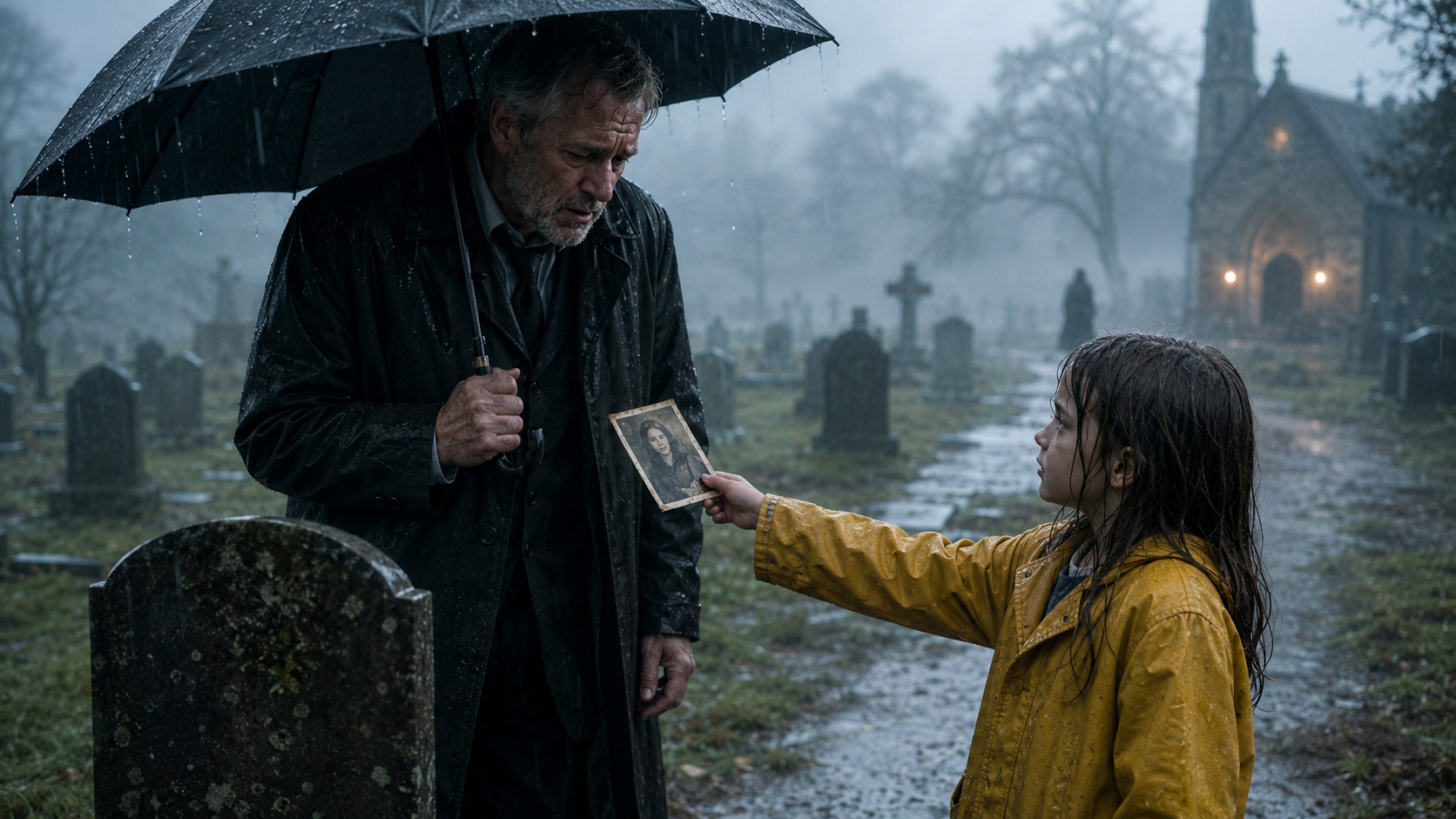
Thomas handed her the photograph.
“You can keep this.”
“But it belongs to you.”
“It belongs to the moment. Neither of us can go back there.”
He walked away through the rain.
For the next three weeks, Thomas told no one.
He continued repairing furniture in his workshop. He bought groceries on Thursdays. He fed the black kitten that had decided to live beneath his porch.
At night, he opened Rebecca’s old boxes.
He found letters, dried lavender, receipts from forgotten holidays, and a list of possible names for children they had never been able to have.
He had once believed grief was a locked room.
Now he understood that grief could change shape. It could become anger, hope, guilt, or even relief without asking permission.
On the twenty-third day, a letter appeared beneath his front door.
It was from Rebecca.
She wrote that the authorities had reopened the investigation into the train disaster. Nathan Cole had been arrested in another country while traveling under a false identity. The records Rebecca once copied had been recovered from a railway locker registered in her name.
At the end, she wrote:
I do not expect our old life back. That life ended, even if neither of us did. But Lily asks about you every morning. I think she believes she found you for a reason.
Thomas read the letter twice.
Then he placed it on the kitchen table.
He made tea.
He waited until the tea was cold.
Finally, he put on his coat and walked to the blue cottage.
Rebecca opened the door before he knocked.
She wore the red scarf from the photograph.
It had faded with time, and one end had been repaired with uneven stitches.
“I thought you might never come,” she said.
“So did I.”
Lily appeared behind her carrying a chessboard.
“Do you know how to play?”
“Very badly.”
“Good. Mother plays badly too.”
Rebecca laughed.
The sound struck Thomas with both joy and pain.
He stepped inside.
They did not embrace.
Not that day.
Instead, they sat at the kitchen table while Lily arranged the chess pieces incorrectly. Rebecca made tea, and Thomas told them about the black kitten beneath his porch.
It was not a reunion.
It was a beginning.
The grave at Saint Margaret’s Cemetery remained for another year.