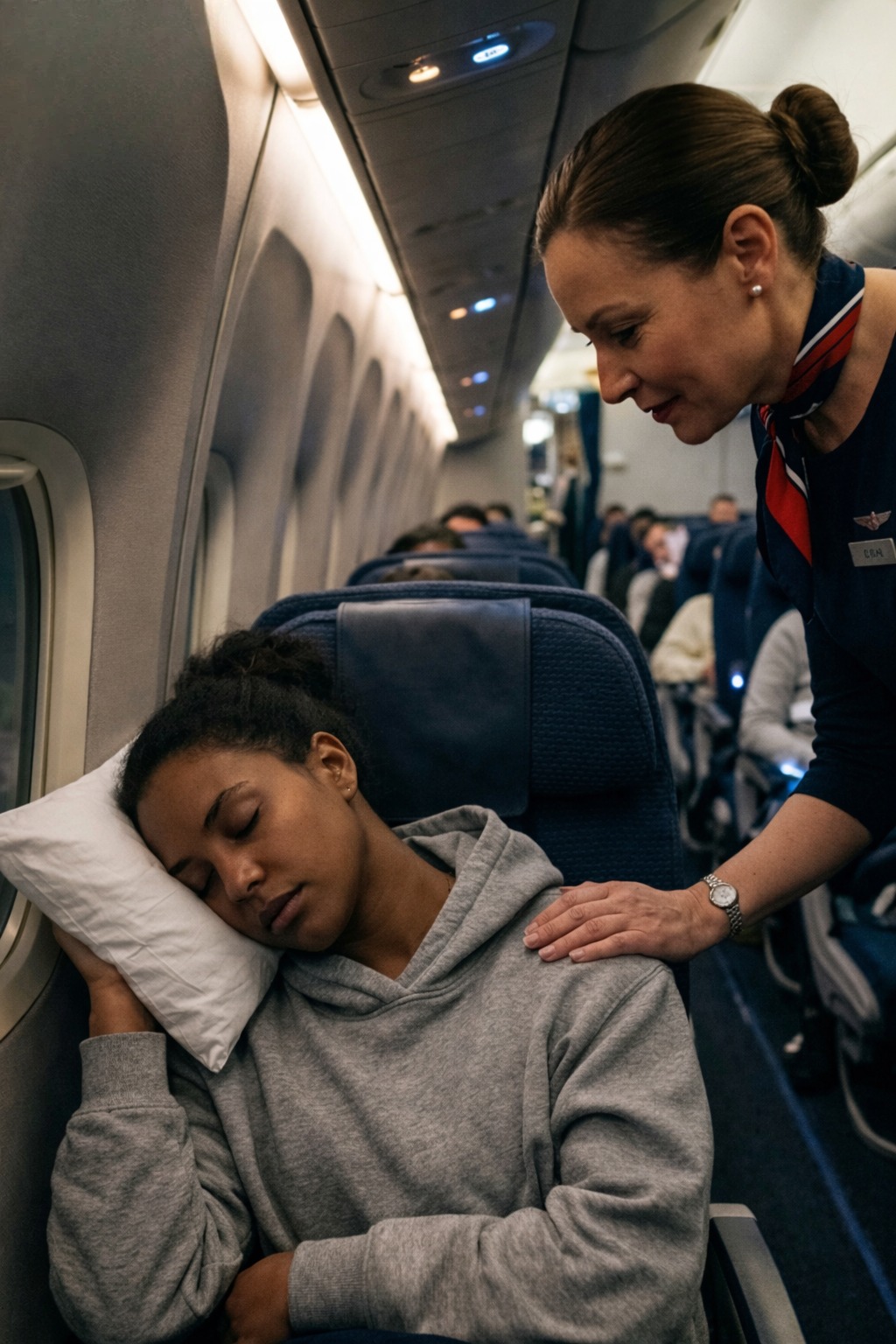
She was asleep in seat 8A – until the captain made an announcement that changed everything
That morning, when Mara Dalton walked into Kennedy Airport, she looked no different from the hundreds of other passengers rushing across the Atlantic on a typical Tuesday. A plain green jumper, jeans, a small carry-on suitcase. Nothing about her appearance suggested that she had fifteen years in the cockpit behind her, that she had flown more hours in combat conditions than many pilots accumulate in their entire careers, and that the manoeuvres she had once performed would have made most civilian pilots grip the control column nervously even before take-off.
She was doing her utmost to look ordinary.
That was exactly what she had been doing for the past six months — ever since she left the service, handed in her resignation, closed the door of the military base behind her, and told everyone who knew her the same thing: it’s all over. No more army. No more adrenaline. No more of that particular fear you feel when you take off, unsure whether you’ll ever return.
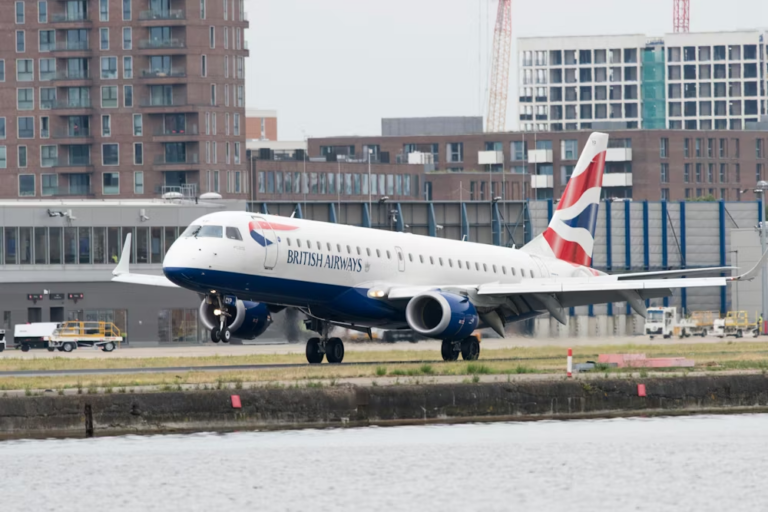
The crowd at JFK moved to its familiar rhythm. People walked quickly, confidently, as if they’d walked this path a hundred times before. They had their own routes, their own connections, their own boarding passes, and the habit of not getting lost in the airport bustle. Mara moved with them — blending in, becoming one of the many, inconspicuous, unremarkable. That was exactly what she wanted.
Boarding had already begun for her flight. London. A week in a city where no one knows her name, where she can wander slowly through museums, sit in a café by the window and pretend she’s never looked down from thirty-five thousand feet, knowing that the ground beneath the wing is set on killing her.
She took her seat, 8A by the window, and closed her eyes, listening to the familiar pre-flight background noise of the aeroplane. The low hum of the engines outside. The measured footsteps of the flight attendants in the aisle. Calm voices checking seatbelts, luggage, trays, drinks — all in that tone of voice that comes only after thousands of identical flights.
The usual rhythm. A sense of order. Of safety. That very normality she had longed for over six long months.
Mara took a slow breath, trying to keep the memories at bay. The very ones that come at two in the morning when sleep won’t come. The ones in which words, decisions and faces play out over and over again — moments when you realise that your choice has changed someone’s life forever.
She was already drifting into that light drowsiness that sometimes overtakes you at the start of a flight, when consciousness wavers between reality and dreams, when suddenly the cabin speaker clicked.
‘Ladies and gentlemen, this is the captain speaking.’
The voice was even, businesslike, the sort usually used to announce altitude, weather or arrival time. But beneath that familiar professional façade, Mara immediately heard something else.
Something that made her snap her eyes open.
— If there is a pilot with combat training on board, please identify yourself immediately. This is not a drill. I repeat: this is not a drill.
Those words seemed to physically rip through the cabin.
Conversations fell silent. People exchanged glances. A woman across the aisle stared at her husband in bewilderment. The man in front turned round, trying to make sense of what he’d just heard and why a civilian flight over the ocean would need a combat pilot.
Mara felt a familiar tightening inside. It was a tension she knew all too well: her body already understood that something was wrong, even before her mind had had time to process it.
For fifteen years, she had taken to the skies precisely for situations like this. She knew all too well what such a request meant. It meant one thing: something had gone very wrong. And the captain was running out of options.
But that was all over now.
She had promised herself that — standing in her former commander’s office and signing her discharge papers. She’d promised she wouldn’t come back. That someone else would carry that burden now. That she’d learn to live a normal life — normal flights, normal cities, normal days.
But when the flight attendants began moving quickly down the aisle, and the urgency on their faces was impossible to hide, Mara realised: this was serious.
One of the flight attendants stopped by her row and, glancing at the passengers, asked:
‘Excuse me… is there anyone here who knows how to fly? The captain needs to know if there’s at least one person on board with flying experience.’
Mara froze.
She could have said nothing. Pretended she hadn’t heard. Stayed in seat 8A and let someone else step forward. Let someone else take responsibility for what was coming.
That was exactly what she had been trying to do all these months — to no longer be that person. To let go of the identity that had defined her since she was twenty-two.
But, looking at the anxious faces around her — at the woman clutching her daughter’s hand tightly, at the elderly man who seemed to be praying, at the couple who had suddenly frozen mid-conversation — she felt something stirring inside her that had never truly gone away.
You can leave the army. You can hand in your uniform. You can go to the other side of the world.
But you cannot stop being yourself.
‘I’m a pilot,’ she said quietly. Her voice was soft but firm. ‘US Air Force. Combat training. I flew an F-16.’
The stewardess exhaled as if, for the first time in the last few minutes, she’d been able to breathe.
‘Thank God. Please, come this way. The captain is waiting.’
A muffled murmur rippled through the cabin. People turned, trying to reconcile what they’d heard with what they saw before them: an ordinary woman in a green jumper — and suddenly a former fighter pilot. Someone who could have passed for a teacher, a doctor, a neighbour on the landing, but who had in fact spent her adult life making split-second decisions in the sky.
At that moment, she ceased to be simply Mara.
She became Captain Dalton once more.
When she entered the cockpit, everything became clear almost instantly.
The captain and co-pilot looked exhausted and deeply concerned—that’s the look of people who’ve already realised that something dangerous has happened, and they might not have the skills to deal with it.
“Thank you for coming,” said the captain. “We’ve got a partial failure of the control systems. The autopilot went down about twenty minutes ago. We’re flying manually at the moment, holding on for now… but that’s not the only problem.”
He pointed to the screen.
Mara leaned forward. Her pilot’s instincts kicked in immediately: the information was coming together faster than the words could be spoken.
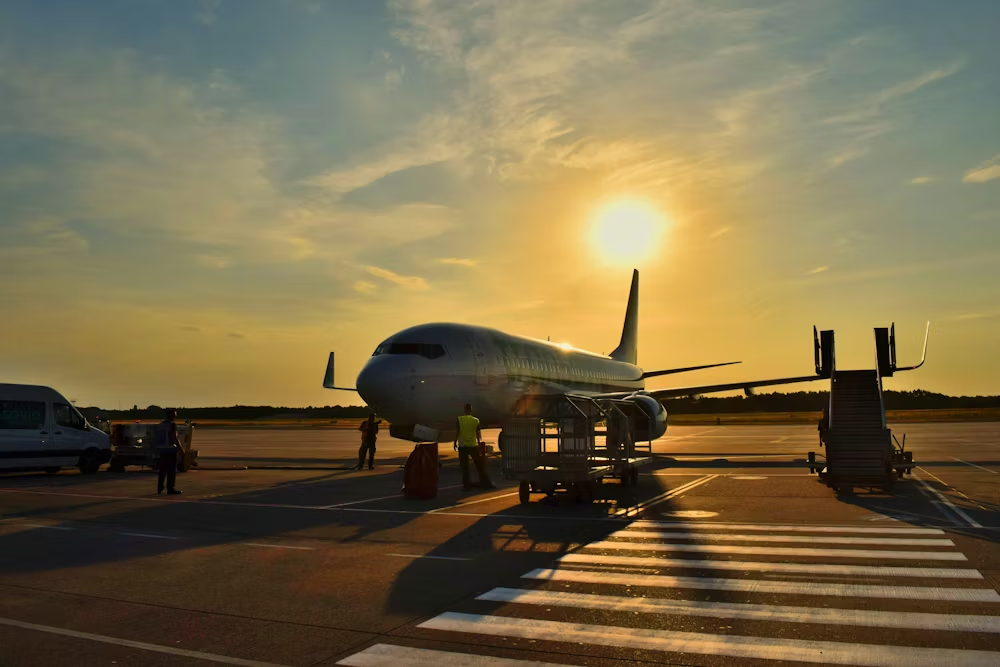
There was another blip on the radar.
An alien aircraft.
Too close.
“How long has it been flying alongside us?” she asked calmly. Her voice had already taken on that particular cold clarity that comes only after many years of crises.
“About fifteen minutes. The transponder’s silent. Not responding to calls. Flying at our speed and altitude. Too precisely. Almost in tactical formation.”
Mara recognised the pattern instantly. The position. The distance. The behaviour.
This was no accident. Not a navigational error. Not a mix-up in the corridors.
It was deliberate.
‘Have you contacted air traffic control?’ she asked, without taking her eyes off the screen.
‘Yes. They can’t see anything. They think the equipment is malfunctioning. They told us to reboot the systems, double-check the data. But I can see this is a real target.’
Mara remained silent for a few seconds, studying the reading.
To an ordinary civilian pilot, such aggression might not have been obvious. But she read it unerringly. She knew the tactics of military interception.
‘This isn’t a civilian aircraft,’ she said quietly. ‘And it’s certainly not friendly.’
The co-pilot’s face paled noticeably.
And at that moment, the radio crackled with static again.
The voice that cut through the cockpit was cold, precise, military.
‘Flight 417. You have deviated from your course. Immediately change your route to the coordinates being transmitted. Otherwise, there will be consequences.’
Mara didn’t hesitate. She grabbed the microphone at once.
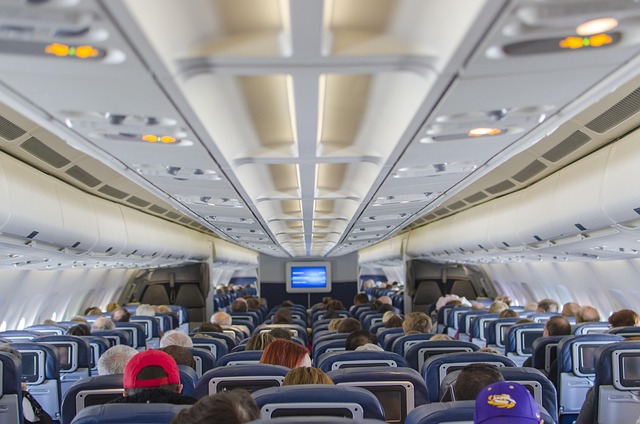
‘This is a civilian aircraft on a scheduled international flight. Identify yourselves immediately. I repeat: identify yourselves.’
The reply came instantly:
‘Obey the order… or face the consequences.’
Then the airwaves fell silent.
The unknown aircraft suddenly closed in and made an aggressive manoeuvre, causing the airliner to shake violently. The overhead lockers rattled. Inside the cabin, glasses and belongings were probably already flying about.
“They’re putting psychological pressure on us,” Mara said calmly. “Testing our reaction. Every time we panic or start to panic, they gain the upper hand.”
The co-pilot looked at her as if he himself was barely holding it together.
‘We won’t be able to get away from them. This isn’t a fighter jet. We’re unarmed. We’ve got three hundred passengers.’
Mara was already running through her options with the speed that only comes from being in pressurised air.
“So we’re not going to run away,” she said firmly. “Do you have full manual control?”
“Yes, but…”
“Then help me. And just trust me.”
The captain looked into her eyes. He didn’t know her. He’d never flown with her before. But now he saw before him a person who understood what was happening far more deeply than he did.
‘I trust you,’ he said.
Mara sank into the co-pilot’s seat.
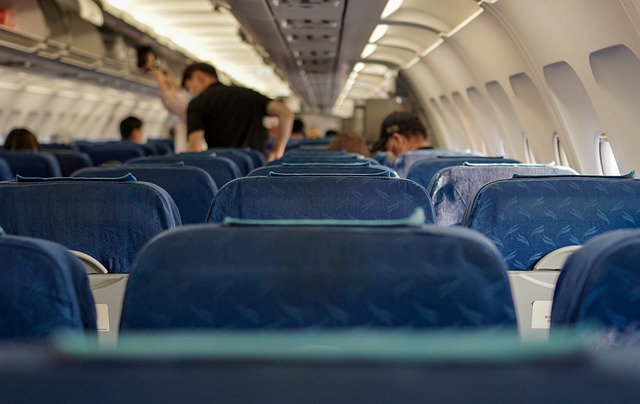
The enemy aircraft began closing in again. Its manoeuvres were designed for one thing: to impose dominance, to force the civilian airliner to play by its rules.
‘They’ve got us on their radar,’ Mara said. ‘So we need to show we haven’t lost our nerve.’
The radio crackled to life again:
‘You have one minute.’
She ignored the threat.
Instead, she watched the target’s trajectory closely, calculating the next pass.
‘It’ll come in from the left again,’ she said. ‘And at that moment, we’ll make a sharp change in altitude and speed. Not like a fighter. Smarter. That’ll be enough to throw him off course.
The captain turned pale.
‘There are three hundred people on board. We can’t be performing combat manoeuvres…’
‘We won’t,’ she replied calmly. ‘We’ll simply stop being an easy target.’
The enemy aircraft drew closer.
“Now!”
She pushed the control column forward, and the airliner plunged sharply downwards. There must have been a cry in the cabin; items flew from their seats, trolleys slid down the aisle.
But the enemy aircraft shot past, having lost its advantageous position.
Immediately afterwards, Mara pulled the airliner back up and shifted its course slightly northwards.
“We’ve bought ourselves a little time,” she said. “But they’ll be back. And every move we make teaches them something.”
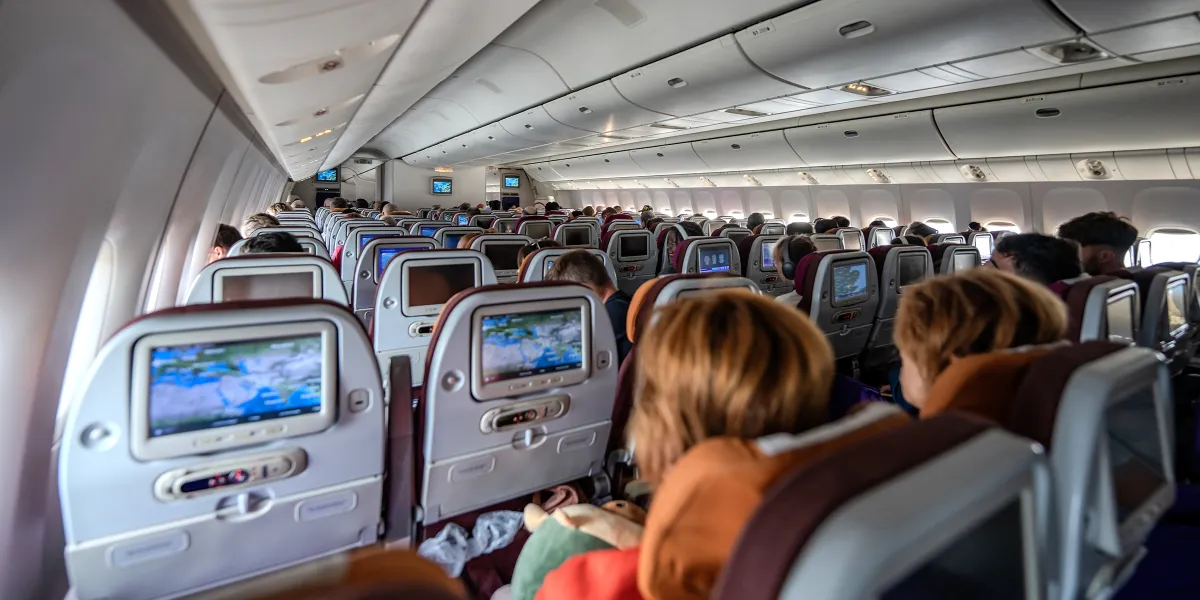
She activated every possible signal and identification system.
“Now they’ll see us,” said the captain.
“Exactly. Until now, we were like a blank spot. As soon as we’re visible on the radar, the military will know where we are. We won’t be alone any longer.
And then the internal intercom came to life.
‘This is Julia from the cabin,’ came the flight attendant’s tense voice. ‘Two passengers in business class are behaving suspiciously. They’re trying to get into the crew rest area. There’s something strange in their bags.
Mara felt a chill grip her insides.
So the threat wasn’t just from outside.
‘Don’t let them near any crew compartments,’ she said quickly. “Keep them under surveillance. Alert the entire crew. From this moment on, they are potential security threats.”
The captain looked at her in utter shock.
“This is planned…”
“Yes,” Mara replied. “There’s more than one person working on the plane from the outside. Someone on board is acting in concert with them.”
A minute later, the situation in the cabin erupted. One of the suspicious men jumped up and brandished a weapon — not enough to bring down the plane, but quite enough to intimidate and take control of the passengers.
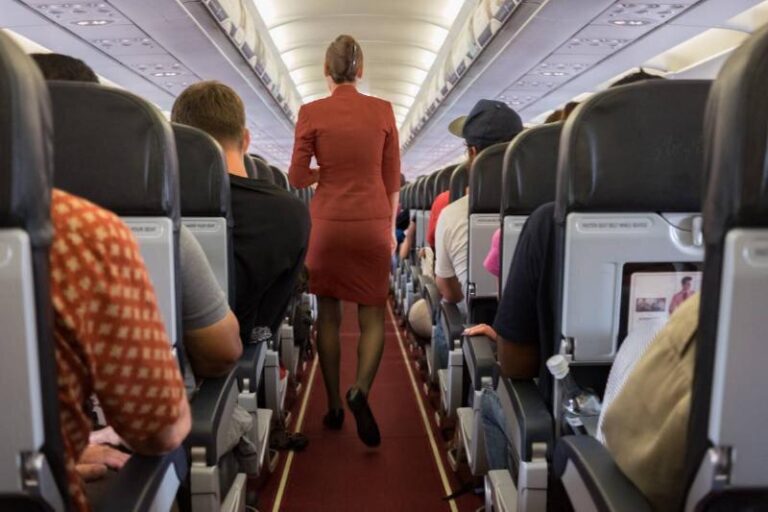
‘Everyone stay in your seats!’ he shouted. ‘The plane is changing course. We’re in control now!’
But from seat 24D, a large man in a business suit—who had been quietly reading papers throughout the flight—stood up.
‘I don’t think so,’ he said.
And immediately lunged at the attacker.
The weapon flew down the aisle. Almost at the same moment, the second suspect was subdued by an elderly passenger—a former police officer travelling with his grandson. Within seconds, the flight attendants, seatbelts, straps and the hands of other passengers joined in. The internal threat had been neutralised.
In the cockpit, Mara felt a powerful, almost painful surge of something profound.
Not pride.
Something more important.
The realisation that bravery does not reside solely in people with special insignia and training. Sometimes it suddenly arises where no one expected it.
The radio crackled again.
But now the voice was no longer merely hostile.
It was personal.
‘Captain Dalton… I know you’re on board.’
Mara froze.
She recognised him instantly, even though she hadn’t heard him for years.
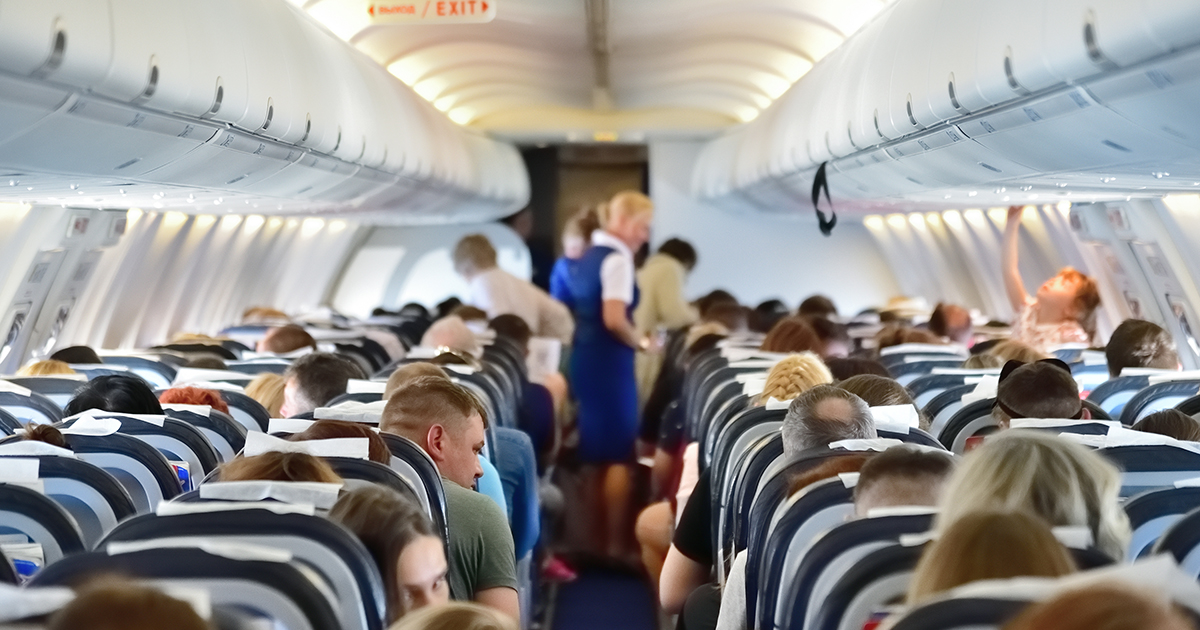
Some voices never fade away — those that harbour fear, death, and the memory of a man who once wished you would never return.
‘Victor Klov…’ she murmured.
A pilot from the past. An enemy she’d assumed was either dead or gone for good.
So this wasn’t a coincidence.
Not a fluke.
This was personal.
‘Hello, Mara,’ said the voice. ‘I was waiting for you to leave the service. Waiting for you to decide you could leave all this behind. Waiting for the moment when you’d become vulnerable.’
She picked up the microphone.
‘Victor, I don’t know how you intend to end this, but I’ve got three hundred people on board, a crew, and time is not on your side. And military aid is already on its way.’
‘We’ll see who’s better in the air,’ he replied. ‘Just like old times, Captain. Almost like old times.’
He began a new approach.
But now Mara was ready.
She had already read his style, anticipated the pattern of his attacks, and remembered his habits. When he tried to squeeze the airliner again, she abruptly pulled back on the throttle and banked the plane down just enough for him to miss once more.
This time she wasn’t just reacting.
She was leading the fight.
And yet now she wasn’t alone.
A few minutes later, two fighter jets appeared on the horizon — F-22s scrambled after the airliner’s signals finally became visible to the system. The military aircraft made visual contact almost immediately.
‘Flight 417, we see you,’ a voice crackled over the radio. ‘Hostile aircraft identified. You are under our protection. You are safe now.’
Victor understood everything instantly.
His advantage was gone.
The foreign aircraft veered sharply to one side and vanished into the Atlantic sky.
The captain exhaled loudly.
‘You’ve saved us all.’
Mara shook her head.
‘We’ve all saved each other,’ she said. ‘Everyone here.’
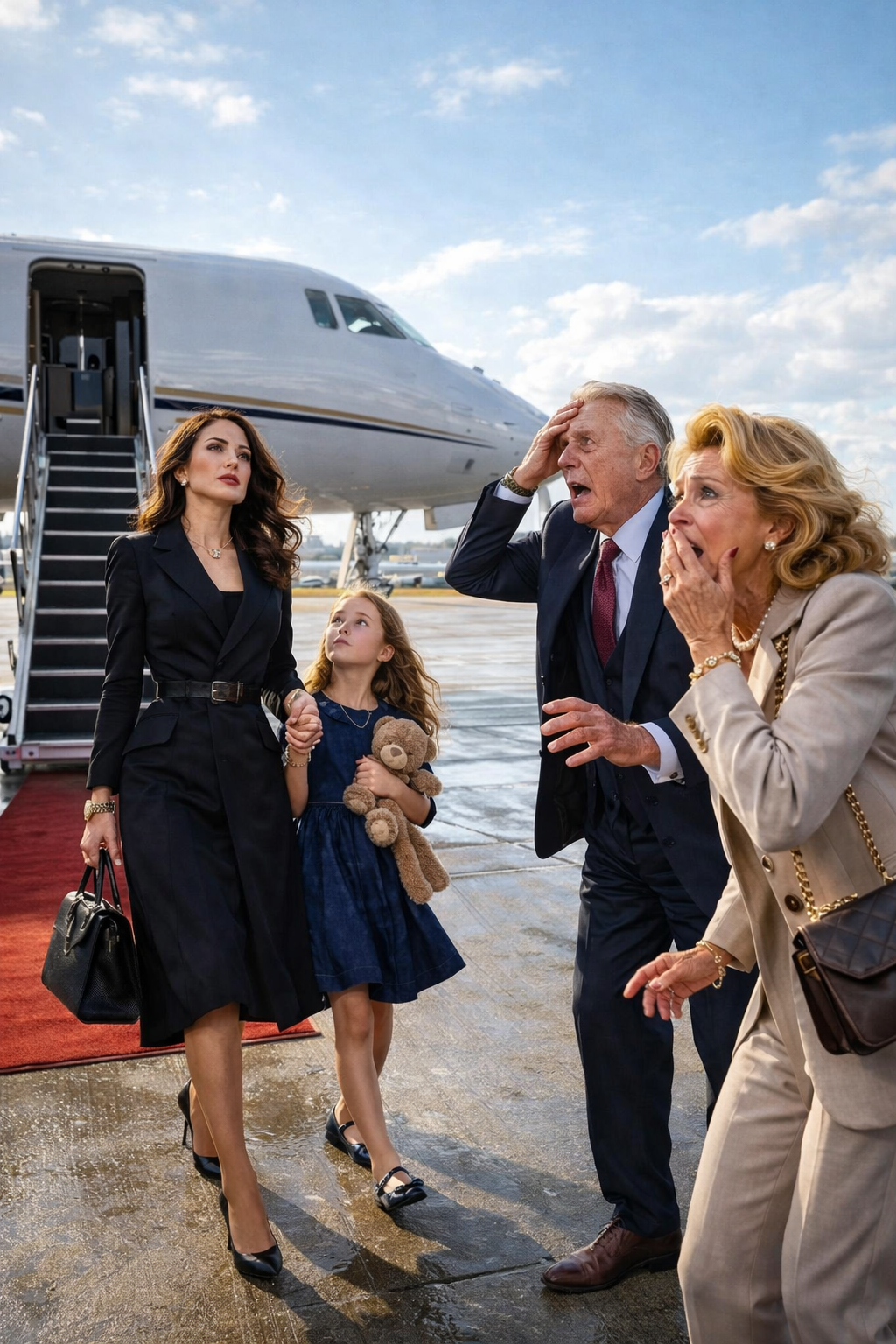
When, eight hours later, the plane landed safely in London, the passengers already knew who the woman in the green jumper was. Somehow, news on board always spreads quickly: from row to row, from whisper to whisper. People surrounded her, thanking her, reaching out to shake her hand. Some asked for a photo. Others simply looked at her with that special respect that comes after a shared experience of fear.
She accepted their gratitude quietly. She signed a few autographs. She had her photograph taken with the very businessman who had been the first to rush at the intruder.
But she did not feel like a heroine.
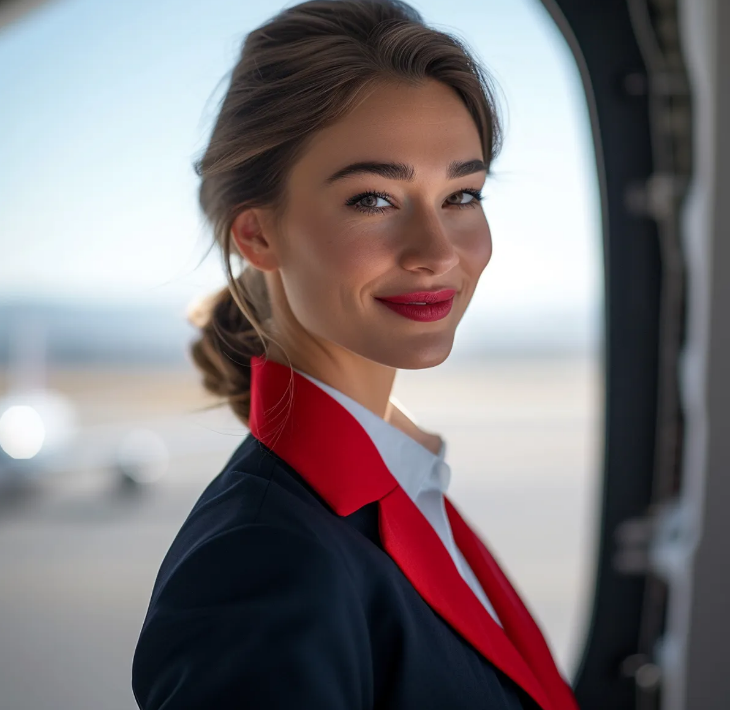
Rather, she felt like someone who had suddenly been reminded of who she really was.
That same evening, back in her hotel room in London, she dialled her former commander’s number. The very man who had accepted her resignation calmly, but who, it seemed, had never really believed she could disappear for good.
‘Sir,’ Mara said when he answered. ‘I’m not going to run away anymore.’
He paused for a second.
‘I know,’ he said. ‘I saw the news. You did the right thing.’
‘Yes,’ she replied. ‘And I think I’ve only just realised: I need to carry on.’
Six months later, Captain Mara Dalton was back in uniform. But now her job looked different. Instead of combat missions, she had joined a unit dedicated to protecting civilian flights and responding to threats like the one she had encountered in the skies over the Atlantic.
During her months away from active duty, she had learnt one thing.
You can spend a long time telling yourself that the past is behind you. You can keep repeating that someone else will now carry that burden, that you’ve already done enough and earned the right to step aside.
But when people really need you — when lives are at stake, when fear and courage stand side by side, and everything depends on who you are in the most critical moment — your true nature still rises to the surface.
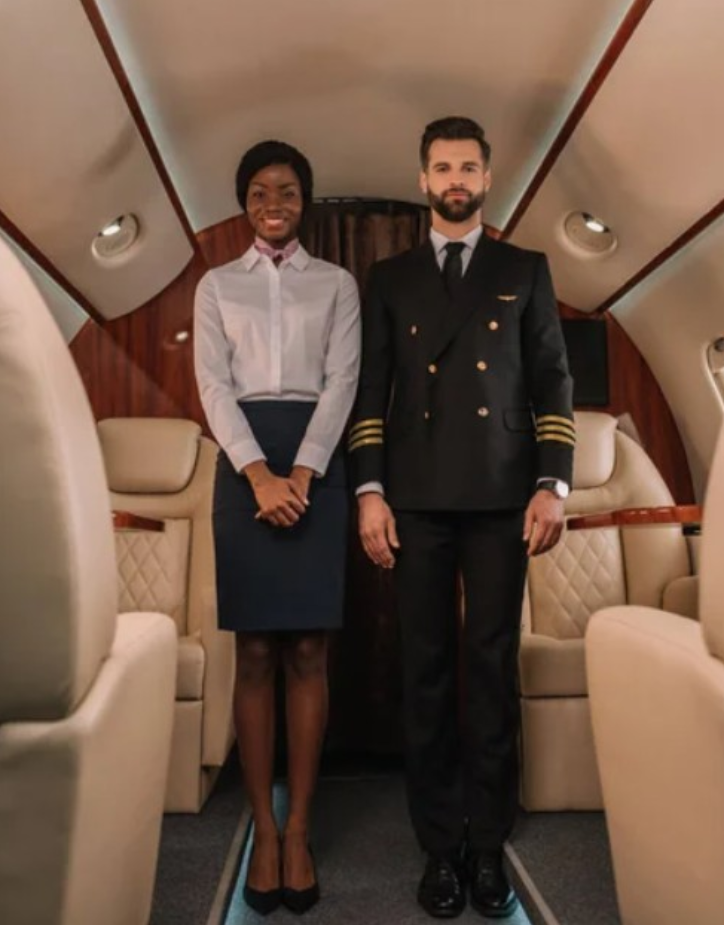
And there are people just like Mara.
Those who always rush towards danger, rather than away from it.
Not because they have to.
But because that’s just the way they are.
That’s exactly who they become when it really matters.