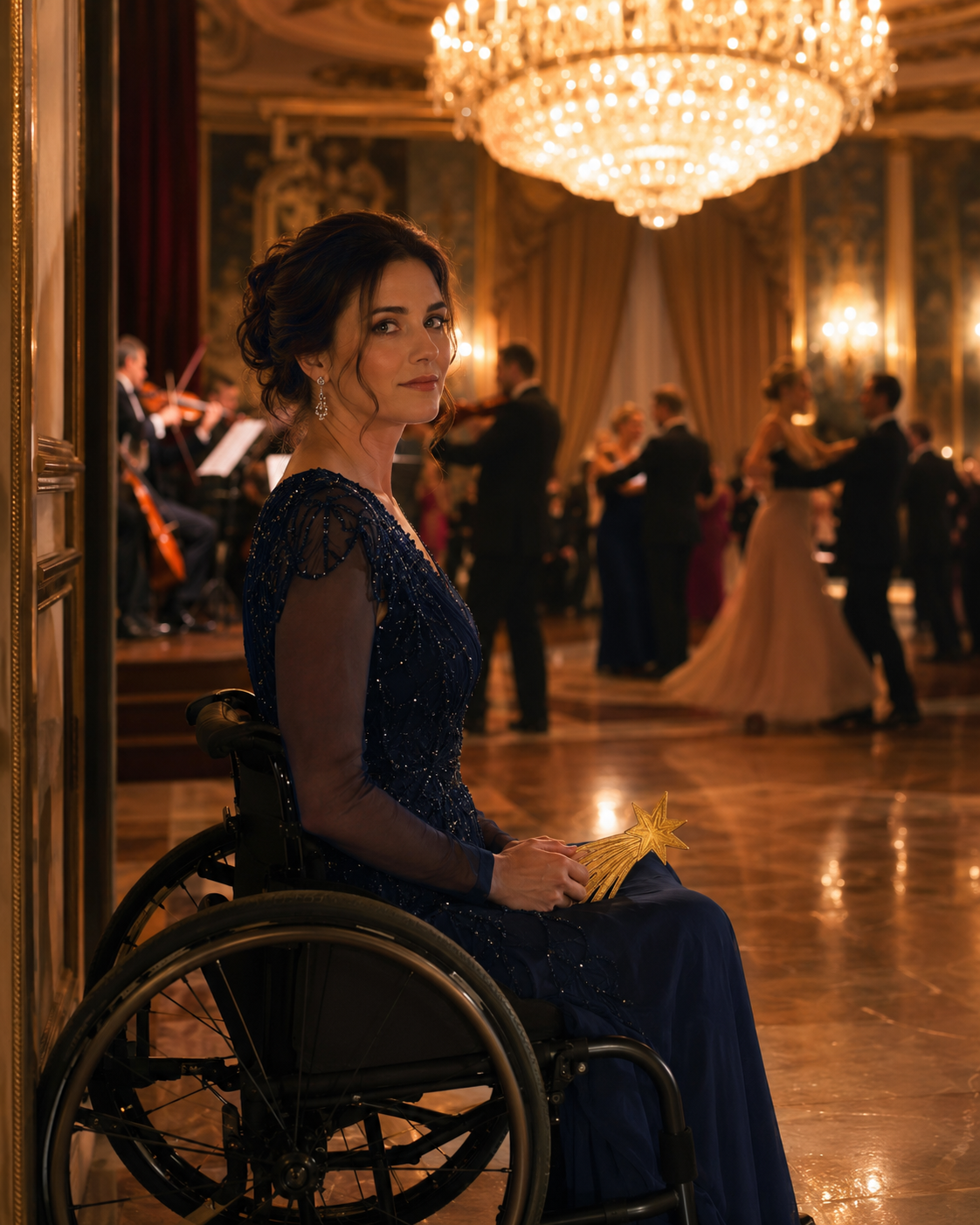
“The part with the cellos?”
“Yes.”
“That is the best part.”
“You don’t need to flatter me.”
“I don’t. The beginning is too polite.”
Mara looked toward the orchestra again.
The cellos began the transition she had written at twenty-two. The notes moved downward before rising unexpectedly, like a flock of birds turning against the wind.
Her fingers responded before she could stop them.
One.
Two.
Hold.
Release.
Theo watched her hand.
This time he said nothing.
Mara allowed herself to continue.
Her movements remained small, almost hidden against the dark fabric of her dress. She knew Samuel could not see her from the orchestra platform.
But one of the violinists could.
A young woman in the second row glanced toward Mara. Her bow changed direction exactly as Mara’s fingers opened.
A cellist noticed.
Then the first violin.
The section became softer.
Mara froze.
The musicians continued playing, but several were now watching her instead of Samuel.
Samuel noticed the shift.
His baton remained in motion, yet his eyes followed theirs across the ballroom.
He saw Mara.
For a moment, neither of them moved.
Then Samuel smiled.
It was barely visible, but she recognized it.
He altered his tempo and gave the musicians more room. Not enough to expose what was happening. Just enough to invite her.
Mara shook her head.
Samuel continued smiling.
Theo leaned toward her.
“He sees you.”
“I know.”
“What are you going to do?”
“Nothing.”
“Why?”
“Because this is not my concert.”
“Did you write the music?”
“Part of it.”
“Do they know?”
“Some of them.”
“Does everyone here know?”
“No.”
“Why not?”
Mara looked around the ballroom.
Most guests were still dancing. Her father had moved closer and was now speaking with Vivian. Their expressions were controlled, but Mara knew them well enough to recognize concern.
“Because tonight is about the hotel restoration,” she said.
“The hotel has enough people looking at it.”
“Theo.”
“You don’t.”
Mara turned back to him.
He did not look away.
“You should go before my father reaches us,” she said.
“Are you afraid of him?”
“No.”
“Is he afraid of you?”
The question was so unexpected that Mara nearly answered honestly.
Instead, she said, “My father is afraid of almost everything that might happen to me.”
“That sounds exhausting.”
“It is.”
“For him or for you?”
“Both.”
Richard and Vivian were already crossing the ballroom.
Theo picked up the paper comet from the chair.
“I should return to the linen room.”
Mara felt a sharp disappointment.
“You gave that to me.”
“I’m borrowing it back.”
“Why?”
Theo looked toward Samuel Crowe.
“Because stars stay where people put them.”
Before Mara could stop him, he walked away from the table.
He did not head toward the service curtain.
He headed toward the orchestra.
“Theo,” Mara called.
The music covered her voice.
The boy passed between two tables, avoiding a waiter carrying champagne. Several guests noticed him now. His poorly fitted jacket and determined expression made him impossible to mistake for one of the invited children.
Richard reached Mara’s table.
“Who is that boy?”
“His name is Theo.”
“Why is he walking toward the orchestra?”
“I don’t know.”
Vivian touched the wireless earpiece hidden beneath her hair.
“I’ll have security intercept him.”
“No,” Mara said.
Both of them looked at her.
“He hasn’t done anything.”
“He is crossing the ballroom during a formal performance,” Vivian replied.
“He’s twelve.”
“Which means he may not understand how dangerous this room can be.”
Mara stared at her.
“Dangerous?”
“With trays, cables, equipment and a crowded dance floor.”
“He crossed it more easily than half the donors.”
Richard rested a hand on the back of Mara’s wheelchair.
The gesture was habitual.
Mara hated it.
“What was he doing beside you?” he asked.
“Talking.”
“About what?”
“Music.”
Richard watched Theo approach the orchestra platform.
“Vivian, ask security to bring him to the service corridor. Quietly.”
“Dad.”
“We don’t know who he is.”
“I just told you who he is.”
“We don’t know why he approached you.”
“He heard music.”
“Mara, please don’t make this difficult.”
The old anger rose inside her.
It was rarely dramatic. It did not explode.
It accumulated.
Every moved chair.
Every canceled invitation.
Every event where the word accessible meant someone had measured a doorway but forgotten to ask whether she wanted to attend.
Every time Richard answered a question addressed to her.
Every time he placed a hand on her chair as if her body and his fear were connected by the same handle.
“Take your hand away,” she said.
Richard looked down as though he had not realized it was there.
Then he removed it.