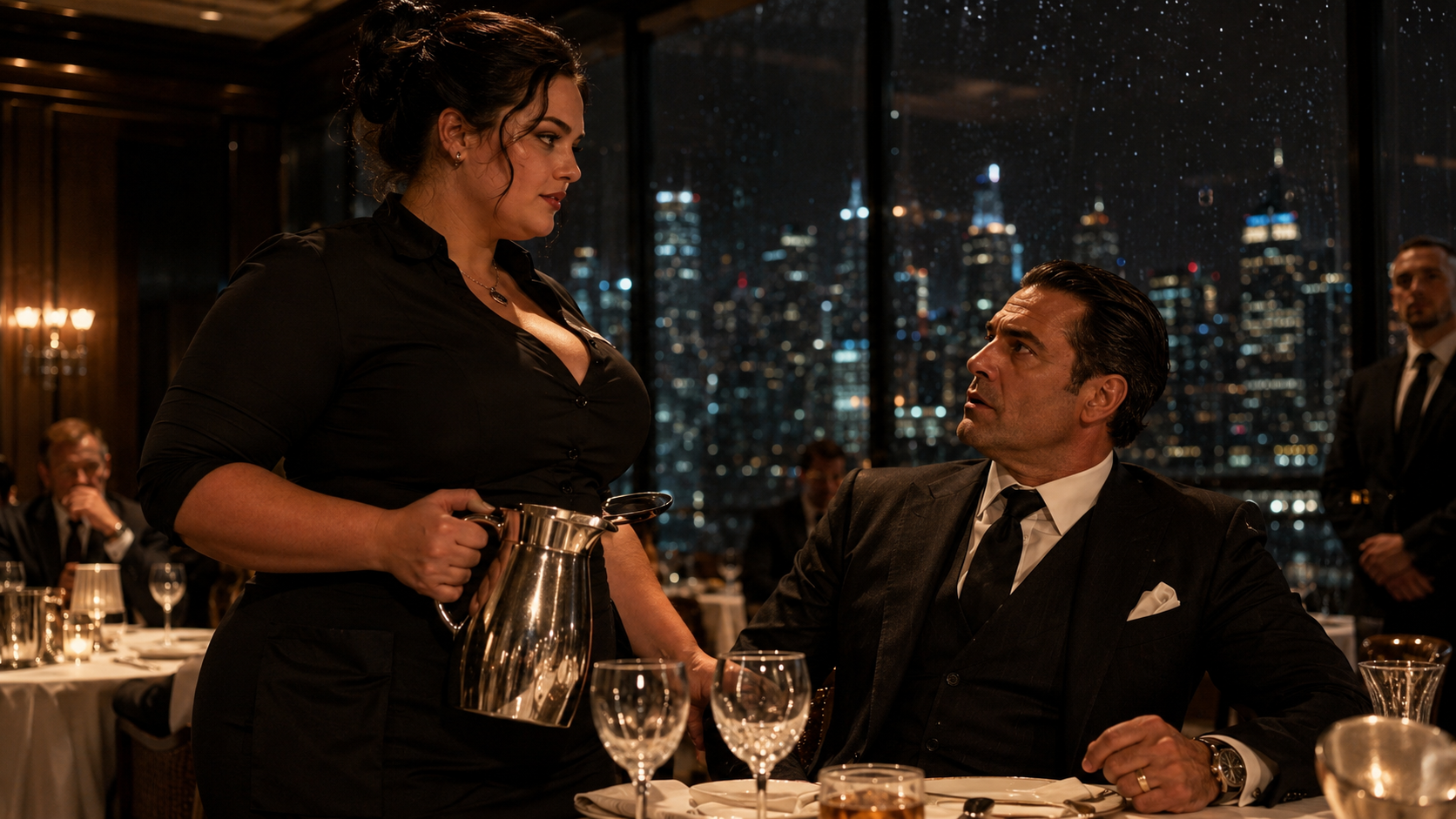
Dante’s eyes darkened. “You think I brought you here because of what I said?”
“I think you brought me here because I answered.”
“Yes.”
“At least you’re honest.”
“Not often.”
Lena leaned back. “Then enjoy the rare experience and keep going.”
Dante reached into his jacket.
Nora made a sound from the bar.
He withdrew an old photograph and placed it on the table.
Lena stopped breathing.
The photo showed her father twenty years younger, standing outside a courthouse beside a dark-haired man in a cheap suit. Behind them was a banner in Arabic and English. Human Rights Documentation Project. Beirut. 2004.
Her father’s smile was tired but alive.
Lena touched the edge of the photograph.
“Where did you get this?”
“The man beside him was named Elias Haddour.”
“I don’t know him.”
“You should. He died three days after this picture was taken.”
“My father said a lot of people died then.”
“Your father tried to give evidence to federal investigators after he returned to New York. The evidence vanished. So did the case.”
Lena looked up slowly.
“My father was a translator. A teacher.”
“He was also a witness.”
The restaurant felt suddenly too high above the city. Too far from the ground. Lena heard the hum of the refrigerators behind the bar, the distant rain against the windows, Nora’s frightened breathing.
“What do you want from me?”
Dante placed a small recorder on the table.
“Tomorrow night, I meet with a man named Kareem Sayegh. He believes he can speak freely in Arabic because my people only understand enough to negotiate. I need someone who hears what he does not intend me to hear.”
“Why me?”
“Because when I insulted you, you did not just understand the words. You understood the cowardice inside them.”
Lena swallowed.
“That almost sounded like an apology.”
“It was not.”
“Then try harder.”
The room held its breath.
Dante looked at her for a long moment.
Then he lowered his eyes.
“What I said was vile. It was small. It was beneath you, and it should have been beneath me.”
Lena had expected threats.
She had expected money.
She had not expected a criminal king to apologize like each word cost him blood.
It did not soften her.
It made her angrier, because it meant he knew better.
“No,” she said.
Dante’s gaze lifted.
“No?”
“No meeting. No translation. No secret jobs. Whatever you and Kareem Sayegh are doing, leave me out of it.”
She stood.
Dante said one sentence before she could turn away.
“Kareem Sayegh ordered the attack that destroyed your father’s hearing.”
The world narrowed.
Lena gripped the back of the chair.
Dante continued quietly. “Your father survived because the device was placed badly. Others did not. Sayegh has lived under different names for years. Tomorrow, he comes to New York to move money through my docks.”
Lena looked at the photograph again.
Her father had been gone for four years now. Heart failure, the doctors said. Too much stress. Too many years of pain. In his last months, he had forgotten names, dates, and sometimes his own kitchen, but he never forgot Arabic songs. He would hum them softly while Lena cut his food into small pieces and pretended not to cry.
“What happens if I help you?” she asked.
“I get what I need. You walk away.”
“And Sayegh?”
Dante’s expression became unreadable.
Lena understood.
“No,” she said. “If I help, he goes to prison. Not a river. Not a warehouse. Not an unmarked hole.”
Dante almost smiled. “You believe prison can hold men like him?”
“I believe men like you use that argument whenever law is less convenient than murder.”
Imani looked down.
Dante stared at Lena.
For a moment, the man behind the empire appeared. Not good. Not gentle. But tired. Deeply tired.
“You ask for a clean ending in a dirty world,” he said.
“No. I ask you to stop pretending dirty is the only world available.”
He stood. “Tomorrow night. Ten o’clock. Wear flat shoes.”
“I said no.”
“You said prison. I heard a condition.”
Lena hated him for being right.
The meeting happened in an abandoned ferry terminal near the river, where broken ticket windows reflected the moon and rainwater dripped steadily through the roof.
Dante sent a car. Lena almost did not get in.
Then she thought of her father in the photograph.
She got in.
Inside the car, Imani sat beside her.
“Do you trust him?” Lena asked.
“No.”
“That was fast.”
“You asked the wrong question.”
“What’s the right question?”
“Do I trust what he wants tonight?”
“And do you?”
Imani watched the wet streets slide past the window.
“Tonight, yes.”
At the terminal, Dante waited beneath a dead clock. His coat was black. His face was calm. Men stood in the shadows with hands folded, eyes moving, weapons hidden but not hidden enough.
“You came,” he said.
“I came for my father.”
“I know.”