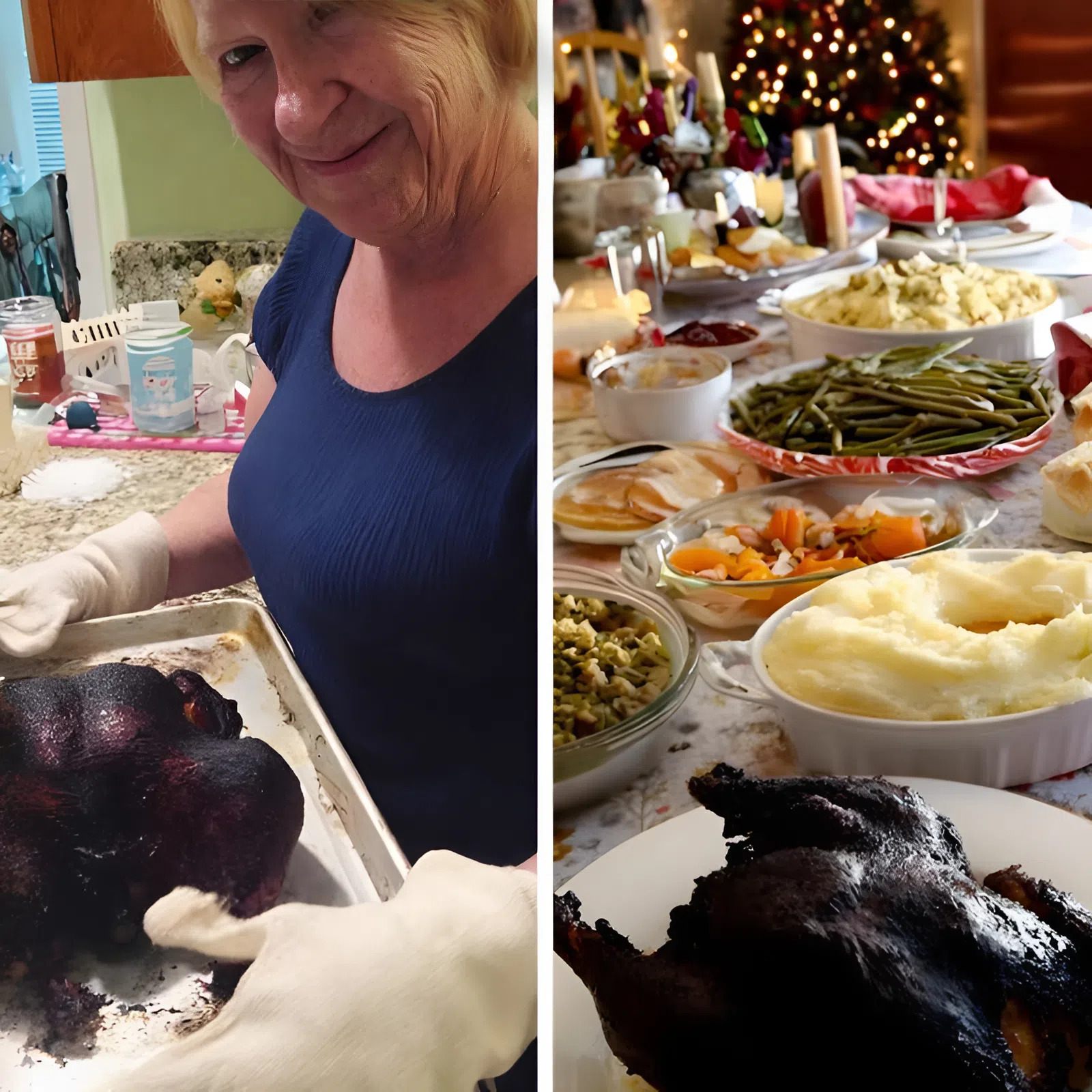
After my divorce and losing my job, I rented a small cottage to relax and mourn in peace. However, my elderly neighbour kept bringing me her failed culinary creations, disguised as meals. I pretended to like them until her husband caught me throwing one of the bowls away. What he told me about his wife changed my perception of every burnt meal.
My name is Rachel, and last year my life fell apart in ways I could never have imagined. Twelve years of marriage ended when my husband decided he wanted a ‘new life’ with someone younger. Within a week of signing the divorce papers, my company was bought out and I lost my job.
Last year, my life fell apart in ways I could never have imagined.
No severance pay, just a cardboard box and a formal letter thanking me for my service. I felt devastated.
My friends didn’t know what to say and stopped calling. I was suddenly short of money. Every morning I woke up with the same thought: ‘What’s the point?’ So I did something I had never done before: I just ran away.
I found a tiny cedar house in Vermont, in a village where time flows differently. It was a place where everyone knew everyone else, and strangers stood out like spots.
I felt empty.
I planned to hide there for a few months, perhaps read books, cry a lot, and try to understand who I was now, without the life I had built. However, less than 24 hours later, Evelyn and her husband George knocked on my door.
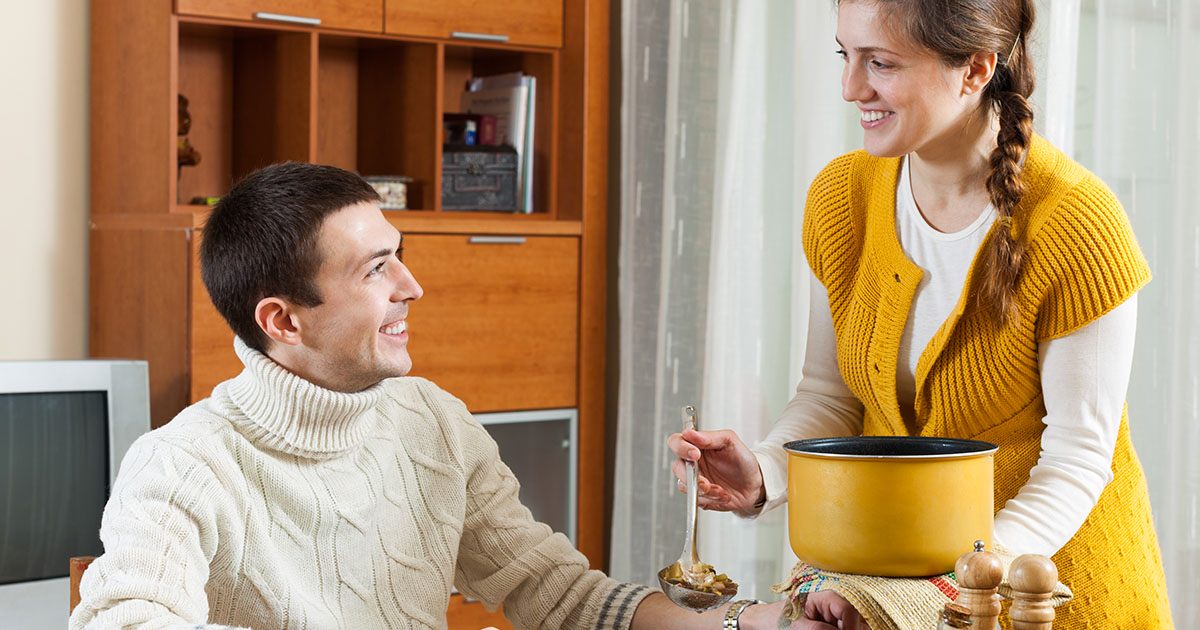
They were probably around 75, Evelyn with white hair tied back in a neat bun and an embarrassing smile, and George with kind eyes and a gentle smile. She was holding a pot wrapped in a towel, steam rising from it.
‘Welcome to the neighbourhood, dear! You look too fragile to live here alone,’ she said.
I thanked her and accepted the pot, because what else could I do? But when I opened it later, I realised I had made a terrible mistake.
She was holding a pot wrapped in a towel, steam rising from it.

The lasagne had somehow fallen inside, forming a strange funnel in the middle. It smelled of oregano mixed with something indefinable, but clearly not Italian.
I took a bite and immediately knew I was in trouble. It was both mushy and crunchy, too salty and not salty enough, and the cheese had a rubbery texture. But Evelyn was so proud when she handed it to me.
The next day, when she knocked on the door and asked how I liked it, I lied as best I could: ‘It was delicious! Thank you very much.’ Her face lit up as if I had given her the news of her life. At that moment, I signed my own death warrant.
I took a bite and immediately realised I was in trouble.
One pot turned into soup the following week, thick and beige, with mysterious lumps. Then came the stew, so dry that I needed three glasses of water to swallow it. Chicken that inadvertently resembled fish. Biscuits burnt on the outside and raw on the inside.
Evelyn visited me at least three times a week, always with something new to try. ‘You remind me so much of our daughter,’ she would say gently, sitting down on a kitchen chair while I forced myself to eat what she had brought. ‘Our Emily.’
Evelyn visited me at least three times a week, always with something new to try.
For three months, I forced myself to eat everything Evelyn brought. I smiled as I chewed on undercooked pasta, marvelled at the strange combination of flavours, and asked for seconds when I couldn’t swallow the first.
I hated the food. But did I hate her?
Somewhere in the midst of this pretence, I began to enjoy her visits… just not what she brought. It wasn’t about the food. It was about the company.

I hated the food.
She sat at my table and talked while I chewed and nodded, rubbing lies into every word she said. George smiled gently from the doorway, never correcting or interrupting her. One day in late spring, I finally reached my limit.
Evelyn brought chicken that was both rubbery and tough, with seasonings that tasted like cinnamon and pepper mixed together. I managed three bites before my stomach started to protest.
I waited until the door across the courtyard closed behind them, then grabbed my plate and headed for the back garden. I tilted it toward the rubbish bin when a voice behind me froze me in place.
‘Rachel.’
I turned and saw George, his expression more serious than I had ever seen him. He didn’t look angry, but there was something sharp in his eyes that made my heart pound.
He moved closer, his voice dropping to a barely audible whisper. ‘Put that down. Right now.’
I held the plate awkwardly, caught off guard. ‘George, I’m so sorry, but I just can’t…’
‘You have no idea who you’re dealing with,’ he said, and for a moment I felt genuine fear. Then his face contorted, and I realised he wasn’t threatening me at all.
He was begging me.
‘Please,’ he said, his voice trembling. “Please don’t tell her. She thinks you love her cooking. She thinks she’s learning it again.”
He was begging me.
I put the plate on the porch railing, my hands shaking. ‘George, I don’t understand.’

He sat down heavily on the steps of my porch, and what he said next changed everything.
‘After Emily died, Evelyn couldn’t cook. She couldn’t even look at the kitchen. For 18 years, I did everything because the sight of pots and pans made her hysterical.’
He stroked his face with both hands. “Then one day she just walked into the kitchen and started cooking Emily’s favourite lasagne. It was terrible, but she smiled for the first time in almost two decades.”
What he said next changed everything.
‘She started living again,’ George added cautiously. His eyes met mine, and there was such deep sadness in them that my own divorce seemed trivial.
‘You don’t understand what you’ve done for us. Every time you tell her you love her food, every time you ask for recipes, every time you let her take care of you like you’re her daughter, you’re giving her back the parts of herself we thought were lost forever.’
I couldn’t speak. My throat closed up. George reached over and stroked my arm.
‘So please, keep pretending. Keep letting her believe she’s taking care of you. Because the truth is, Rachel, you’re the one taking care of her.’
I couldn’t speak.
After that day, everything changed. I stopped seeing Evelyn’s visits as obligations and began to see them for the gift that they were. I asked for recipes that I would never make, marvelled at combinations that should never exist, and ate every dish she brought with sincere gratitude.
Because George was right… I was keeping her alive.

We settled into a routine that summer. Evelyn brought food on Tuesdays and Fridays. George stopped by on Thursdays to help me with my yard work, even though I didn’t really need any help. They told me stories about Emily, about their 53 years of marriage, and about the life they had built in this small town. And somehow, without meaning to, we became a family.
Now I spend every Sunday at their house.
Last month, everything suddenly stopped. I hadn’t seen George or Evelyn for three days, which was unusual. On the fourth day, I went over to their house and knocked on the door. George opened it, and I barely recognised him.
He had lost a lot of weight, his face was pale, and he moved as if every movement caused him pain. ‘George, what happened?’
‘I had a stroke,’ he said quietly. ‘A minor one, they said. But the doctor put me on a strict diet. Low sodium, low fat, low everything that makes food worth eating.’
His expression told me everything before he even spoke.
I felt my stomach drop. ‘Where’s Evelyn?’
His expression told me everything before he said a word.
I felt my stomach drop. ‘Where’s Evelyn?’
His expression told me everything before he even spoke.
‘She’s afraid. Afraid she’ll cook something that will hurt me. She’s stopped cooking altogether.’
I visited them every day after that, but the house that had once been full of warmth and conversation now felt empty. Evelyn hardly spoke. She sat in her chair by the window, staring into space. George tried to maintain a normal atmosphere, but I could see how upset he was.
After three weeks of silence, I couldn’t take it anymore.
One Friday, I stood in the kitchen and cried over some frozen food. Then I wiped my tears, drew on all the cooking skills I had learned from YouTube, and got to work.
Lemon-seasoned chicken that was truly succulent. Mashed potatoes with garlic butter. Fresh salad with homemade dressing. Chocolate cake, because everyone deserves dessert. I packed it all up and headed across the yard before I could lose my nerve.
After three weeks of silence, I couldn’t take it anymore.
Evelyn opened the door, her hands flying to her face when she saw me with the food containers. ‘Oh, dear. Is this for us?’
‘Someone very wise once said that cooking for people is a way of showing love,’ I said. ‘I thought it was time to return the favour.’
George appeared behind her, moving slowly but smiling. We sat down at their small round table, and for the first time in weeks, they seemed like themselves again.
We ate together, and they told me about their first date. How George had a flat tyre, and Evelyn tried to help but only made things worse. How they argued about directions and ended up at the wrong restaurant but decided to stay anyway.
For the first time in weeks, they seemed like themselves again.
Evelyn reached across the table and took my hand. ‘You know what Emily always said?’ she asked gently.
‘She said that the best meals aren’t just about the food. They’re about the people you share them with.’
I squeezed her hand, unable to speak because of the lump in my throat.
George cleared his throat, his eyes wet. ‘We lost our daughter, but somehow we gained a new one.’
That was six weeks ago. Now I spend every Sunday at their house. Sometimes I cook; sometimes Evelyn cooks. Her food is still terrible! But now she laughs about it instead of worrying.
We started a tradition of ‘experimental Thursdays’ where she tries new recipes and I give honest feedback, which is usually accompanied by laughter and sometimes pizza delivery. George has gotten stronger, and the three of us have become inseparable.
Now I spend every Sunday at their house.
Last week, Evelyn brought a pot that was actually edible. Not great, but edible. She stood in my kitchen doorway, nervously wringing her hands. ‘Well? How is it?’
I took a bite, and it was slightly oversalted with a hint of Evelyn’s flavour, which I had grown accustomed to.
I smiled at her. ‘It’s perfect.’
She burst into tears, and I realised they were tears of happiness. ‘Emily would have loved you,’ she said, sobbing, and I hugged her tightly.
‘I wish I could have met her,’ I whispered.
‘You would have been friends,’ George said from behind me. He smiled in that quiet, sad way that I had learned to recognise as a way of combining grief and joy at the same time.
She burst into tears, and I knew they were tears of happiness.
I still don’t have a job. I still don’t know what to do with my life. My ex-husband is now married, and I saw the wedding photos on social media before I finally blocked him. But none of this hurts me as much as it used to, because I’ve learned something important.
Family isn’t just the people you were born with or the people you married. Sometimes family is two elderly neighbours who adopt you through terrible pots and shared sorrows. Sometimes love sneaks up on you when you’re not looking, in an apron and with a dish that should probably be classified as a health hazard!
I came here to disappear, but instead I was found. Evelyn and George, their stories about Emily, and the realisation that healing doesn’t happen alone. It happens around kitchen tables, through burnt biscuits and oversalted soup, and in the gaps between sadness, where laughter somehow still grows.
And it’s worth so much more than any life I ran away from.