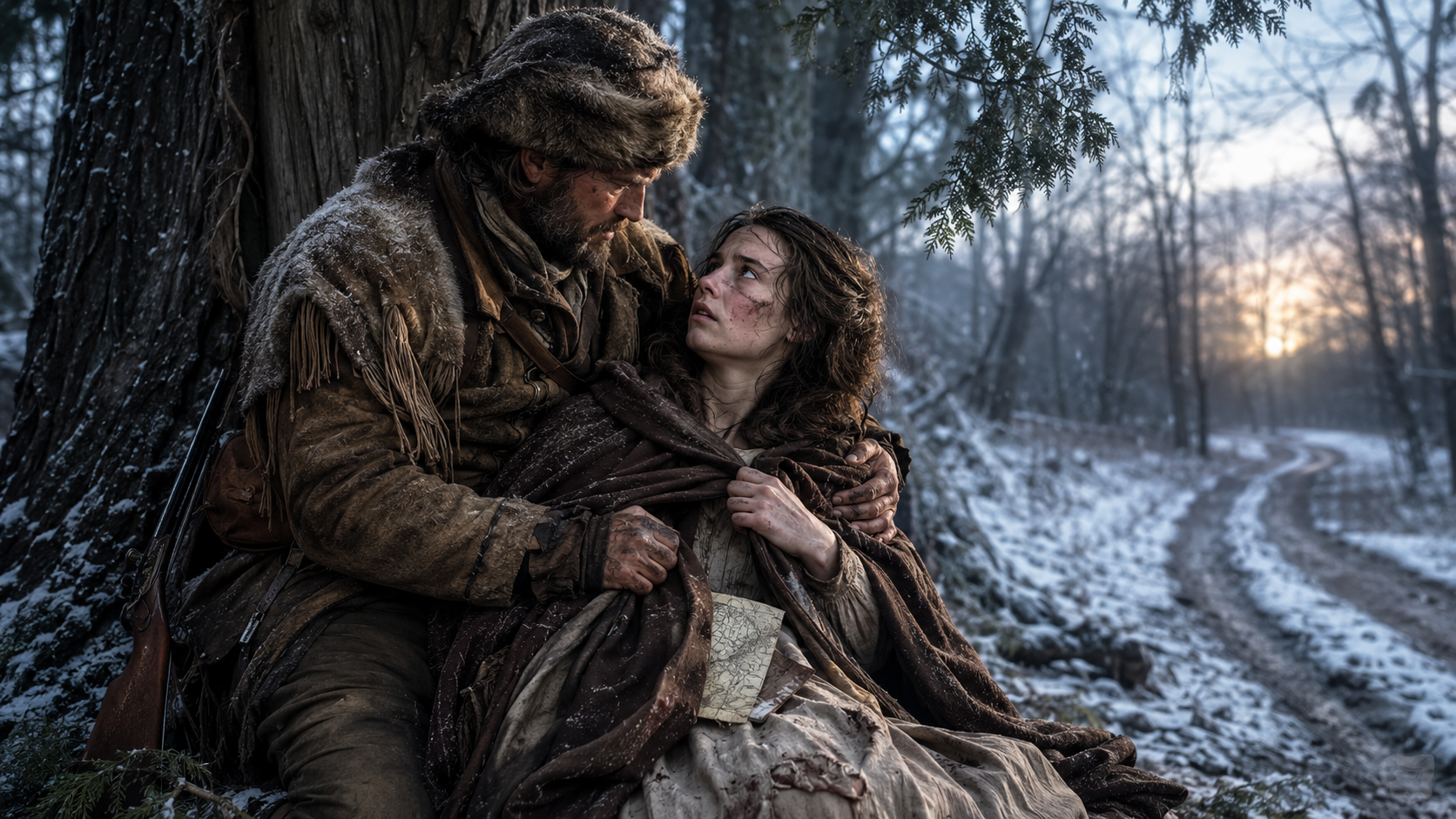
She thought of all the books she had hidden beneath her mattress. All the pamphlets she had read by candlelight. All the private disgust she had mistaken for courage.
The shame of it nearly bent her in half.
Then she saw another page.
A note in her father’s own hand: Reed woman, Amara. Manumission irregularity unresolved. Keep buried. Children not to be separated until sale necessary.
Amara Reed.
Josiah’s mother.
Marian had heard whispers that Amara had been sold when Josiah was a boy. Everyone had been told it. Josiah had been told it. Nell had grown up with it. Their mother had vanished into a sentence, and the sentence had become the truth because Lucius Bellamy had spoken it.
But this paper said otherwise.
This paper said a claim to freedom had existed.
This paper said her father had known.
Marian’s hands shook as she copied the map. She copied the note about Amara. She tore out two ledger pages, then three more, then forced herself to stop before the missing thickness became obvious.
At the bottom of her copied route, she wrote the only instruction she had ever seen in a letter passed through an old Quaker woman’s book years before.
Ask for Anna at Galloway Ridge.
She did not know whether Anna existed.
She did not know whether Galloway Ridge was still safe.
She did not know whether Josiah would trust the daughter of the man who claimed his life on paper.
She knew only that doing nothing had become a kind of death.
That night, rain came hard.
Lucius rode to Natchez to meet creditors. Everett Kane left after supper with promises to return before the week was out. Rafe Cutter, the overseer, drank in his cabin when weather turned mean. Bellamy Oaks settled into its usual silence, the silence visitors praised because they did not understand that terror could look very much like peace.
Marian put on her darkest cloak.
She sewed the copied map and the torn ledger pages into the lining with ugly, hurried stitches. Then she went to the stable.
Josiah was repairing a bridle by lantern light.
He looked up before she reached the door. The first thing she saw in his face was fear. Not for himself alone. Fear of what a white woman’s presence could become if anyone chose to make a story of it.
“Stop there,” he said.
Marian stopped.
Good, she thought. Learn quickly.
“I found something,” she whispered.
“Then take it back.”
“It concerns Nell.”
His expression changed by almost nothing. But almost nothing, in a man as guarded as Josiah, was enough.
“Say it and leave.”
Marian crossed no closer. She laid the folded paper on an overturned feed crate and stepped back.
“My father is selling nine people through Everett Kane before dawn Friday. Nell is one of them. You are too. I copied the route.”
Josiah did not move.
Rain ticked on the stable roof.
At last he came forward just far enough to look at the paper. His eyes passed over the lines once, then again. He picked up a bit of charcoal and drew a hard mark through one crossing.
“This creek is wrong.”
“You know the road?”
“I know every place a man can hide long enough to breathe, and every place he cannot.”
The answer had no drama in it. That made it worse.
He corrected three places on the map. A patrol road. A washed-out bridge. A low field where dogs could follow scent even after rain.
“Cutter drinks on rainy nights,” Josiah said. “But dogs don’t. If anyone runs, it must be before moonset. Split at the walnut stand. Children go with Mara Pike. Old Ben takes the east hollow. Nell—”
His voice stopped.
Marian looked at him.
“She is seventeen,” Marian said softly.
Josiah’s eyes cut to hers. “Your father’s book says that?”
“Yes.”
“His book makes her sound like a mule.”
“I know.”
“No.” His voice sharpened. “You read it. That is not knowing.”
The words struck where they deserved to.
Marian nodded. “You are right.”
That surprised him more than denial would have.
He folded the map and held it out.
“You take this.”
“I thought you needed it.”
“I have it now.”
“You memorized it?”
His gaze hardened. “Do not praise me for learning what I had to learn to stay alive.”
Her face burned. “Forgive me.”
“If you mean that, listen.” Josiah stepped back. “You do not speak to Nell. You do not come to the quarters. You do not cry at breakfast. You do not make yourself the center of what happens next. You brought paper. That is all. If this works, we carry ourselves. If it fails, we pay. Understand?”
Marian swallowed. “I understand.”
“No. But maybe you can obey.”
“Yes.”
“And if they ask you anything?”
“I will lie.”
“Can you?”
Marian thought of her father’s eyes. Everett Kane’s gloves. Rafe Cutter’s grin.
“Yes,” she said. “I have lived in this house all my life.”
Josiah studied her.
Then he nodded once.
“Go.”
She went.