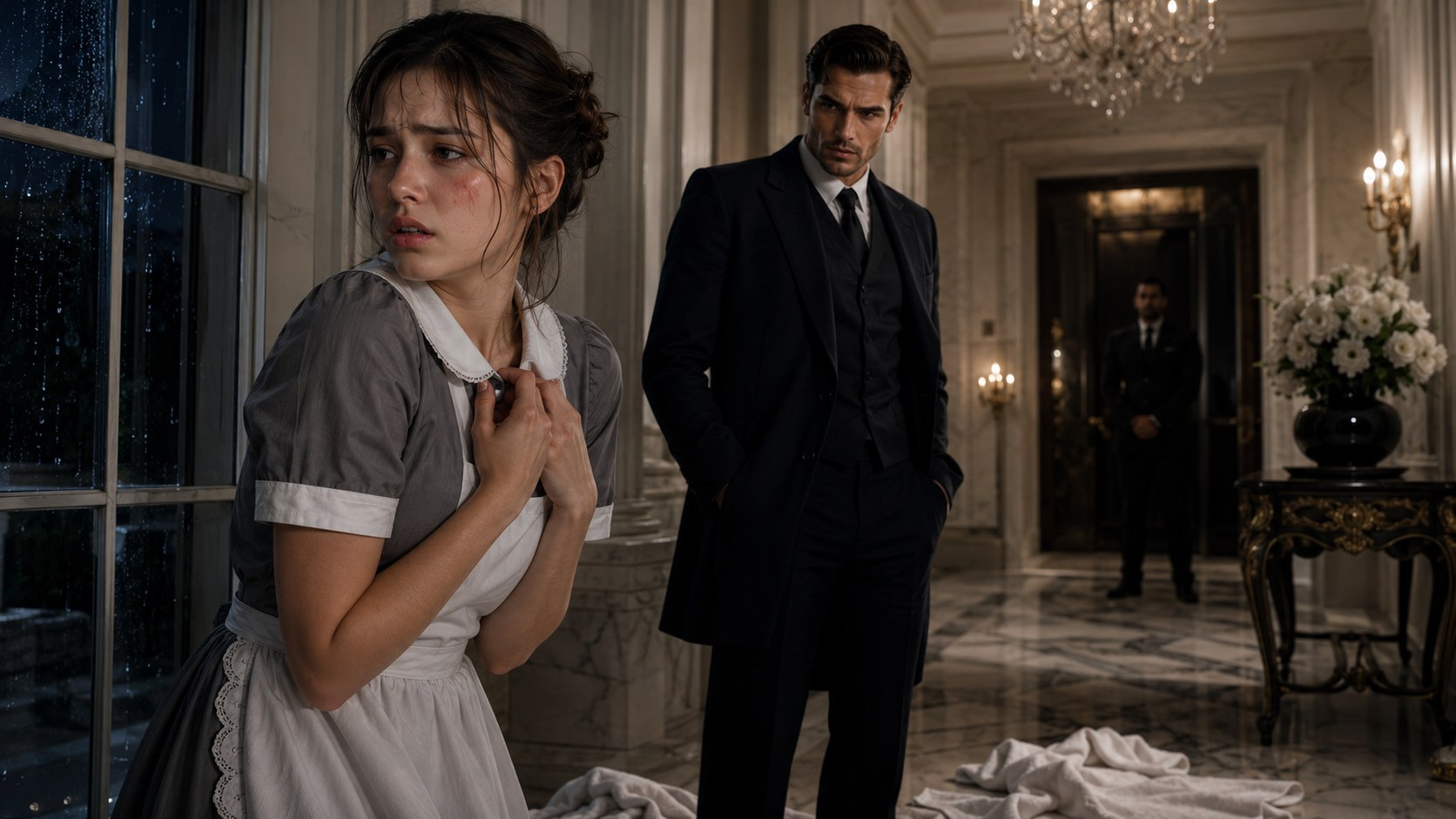
Lina stared at her.
“You’re offering me charity with a desk?”
Mara laughed. “I’m offering you work with a salary and an annoying amount of paperwork.”
“I don’t have a degree.”
“You have competence. We can train the rest.”
Lina thought of the Serrano estate. The locked wine room. The women who had probably walked those halls before her and said nothing because rent was due, children needed medicine, and men like Matteo understood the mathematics of fear.
“When do I start?” she asked.
The trial did not happen quickly.
Real consequences rarely did.
But hearings began. Deals were offered. Names were traded. Enzo Serrano’s empire started to collapse not with a gunshot, but with accountants, subpoenas, and frightened men saving themselves in alphabetical order.
Matteo tried to claim he had acted alone.
Then the ledger produced payment records.
Enzo tried to claim he had never ordered violence.
Then Mrs. Doria testified about the locked room.
A former driver testified.
Then a former cook.
Then a woman who had been a maid before Lina, who had vanished from the estate after refusing Matteo’s attention.
Her name was Celia Wren.
She stood in court with shaking hands and told the truth anyway.
Lina sat behind her.
When Celia finished, she turned, searching the room like someone coming up from underwater.
Lina held her gaze and nodded once.
Celia began to cry.
Not loudly.
No one in that house had been allowed to cry loudly.
Julian sat on the opposite side of the aisle, surrounded by attorneys. He did not look at Lina often. He had learned that people watched them and invented meanings. He kept distance where distance protected her.
But after the hearing, in the courthouse corridor, he approached only when she was standing alone.
“You did well,” he said.
“I only sat there.”
“Sometimes that is the hard part.”
She leaned against the wall, suddenly tired.
“Do you ever stop measuring every room?”
He looked at her.
“No.”
“Me neither.”
Outside, cameras waited behind barricades. Questions rose and broke like waves whenever a lawyer stepped through the doors.
Lina took a breath.
Julian noticed.
“There’s a side exit.”
“I know.”
“Do you want it?”
She looked toward the front doors.
For months, she had been hidden. Behind carts, behind silence, behind other people’s decisions. The thought of cameras terrified her.
But fear was not always an instruction.
Sometimes it was only weather.
“No,” she said. “I want the front.”
Julian studied her for a moment.
Then he stepped aside.
Not in front of her.
Not behind her.
Beside her, but with enough space that no photograph could turn protection into possession.
Lina walked out through the courthouse doors.
The questions hit immediately.
“Miss Vale, did you know about the ledger?”
“Were you paid by Julian Cross?”
“Are you afraid of Enzo Serrano?”
She stopped at the microphone.
Her lawyer started to guide her away, but Lina lifted a hand.
The reporters quieted by degrees.
She looked into the cameras.
“My name is Lina Vale,” she said. “I worked in a house where people believed silence belonged to them. It did not. What happened to me has happened to many workers in many houses, offices, kitchens, hotels, and private rooms. Not all cages have bars. Some have paychecks. Some have threats. Some have powerful men calling cruelty discipline.”
The crowd stilled.
Lina’s voice shook once.
She continued anyway.
“I am not here because a billionaire saved me. I am here because women before me kept records, opened doors, remembered names, and finally spoke. I am here because my brother deserves a world where fear does not get to make family decisions. And I am here because the truth does not become less true just because the person saying it wears a uniform.”
She stepped back.
For once, no one shouted.
That night, Julian came to the foundation office after everyone else had gone home.
Lina was at her desk, surrounded by intake forms and cold tea. She looked up when he stopped at the doorway.
“You’re working late,” he said.
“So are you.”
“I own the building. That makes it less impressive.”
She smiled despite herself.
He held up a paper bag. “Your grandmother sent food.”
“My grandmother sent you?”
“She said you forget to eat when angry.”
“She’s not wrong.”
He placed the bag on the table near the door.
Still waiting for invitation.
Lina closed the file in front of her.
“You can come in.”
He did.
For a while they ate dumplings from paper containers under fluorescent lights while the city moved beyond the windows.
No mansion. No marble. No guards in the room.
Just rain, food, and two people learning what silence could feel like when it was not forced.
Finally, Lina said, “I used to think being invisible kept me safe.”
Julian looked at her.
“Did it?”