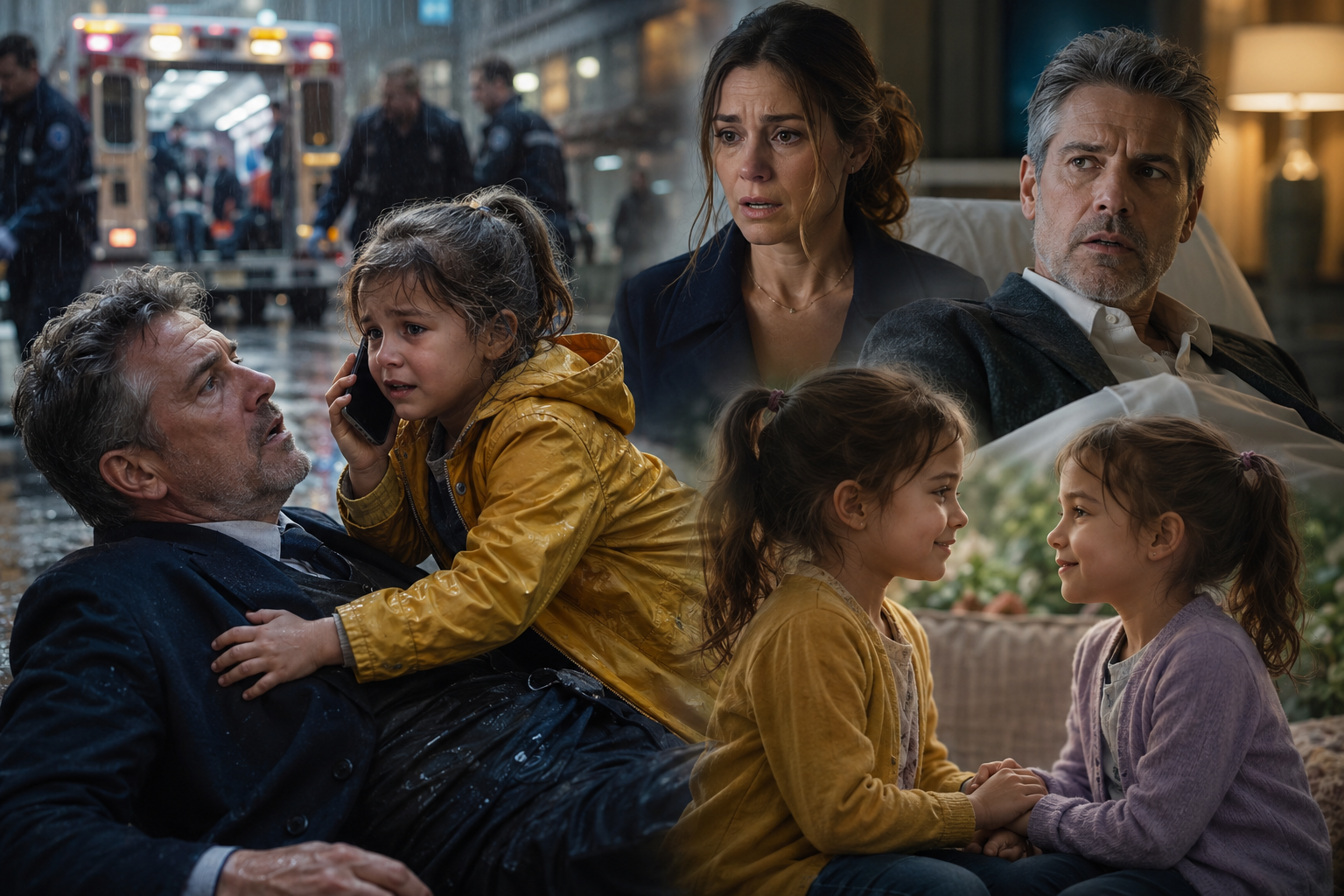
Cassian testified the next day. He spoke about forged messages, intercepted calls, family pressure, and the cruel architecture of a lie that had separated two children before they knew how to breathe the same air.
When asked whether he blamed Seraphina alone, he said no.
“I blame everyone who believed money could edit a mother’s reality.”
Seraphina was convicted.
The nurse was convicted.
Cassian’s mother died before her trial concluded, leaving behind a handwritten letter Cassian never showed Lyra because it contained apology without accountability, and he had learned the difference.
Custody was not simple.
Nothing good ever is after something evil has been done carefully.
Maren wanted Cassian.
Juno wanted Maren.
Lyra wanted both daughters under her roof and knew that wanting was not the same as healing.
So the adults did what the children deserved.
They built a bridge.
Maren spent afternoons with Lyra first, then weekends. Juno spent time at Cassian’s house, where she declared the kitchen too clean and taught the chef how to make pancakes shaped like animals. The girls began therapy together. They learned the truth in pieces small enough to hold.
“You were born together,” Lyra told them.
“Someone made a very wrong choice,” Cassian said.
“You were always sisters,” Lyra added.
“Even when you didn’t know,” Cassian said.
Maren asked if loving Seraphina made her bad.
Lyra knelt in front of her.
“No, sweetheart. Children are allowed to love the people who cared for them. Adults are responsible for adult choices. Not you.”
Maren cried then, and Lyra held her for the first time as a mother holds a child who has finally stopped being brave.
Cassian stood in the hallway and pressed one hand against the wall.
He did not ask Lyra for forgiveness.
At first, that was the only decent thing about him.
Then he did more.
He came to school meetings and sat in chairs too small for him. He learned which teacher made Juno anxious and which songs helped Maren sleep after nightmares. He stopped letting assistants buy birthday gifts and spent an entire Saturday choosing two music boxes because the girls had different tastes and deserved to be known separately, not treated as one miracle split in half.
He apologized when apology was useful.
He stayed silent when silence was kinder.
He never once said, “I lost years too,” though he had.
Lyra noticed.
She did not want to.
But she did.
One autumn afternoon, nearly two years after the day at Harbor Market, Lyra stood again beneath the glass roof where the rain had once hammered down and a child’s phone call had cracked open the truth.
The market was warm with cinnamon, coffee, flowers, and voices.
Juno and Maren ran ahead, both in yellow coats because they had insisted on matching, though Juno’s had a rabbit pin and Maren’s had a horse pin. Captain Bun rode in Maren’s backpack today. The sea glass hung on a cord around Juno’s neck.
Cassian walked beside Lyra with two paper cups of coffee.
“You still hate this place?” he asked.
Lyra watched the flower stand where he had fallen.
“No.”
“Do you love it?”
“No.”
“That seems fair.”
She accepted the coffee.
For a while, they watched the girls argue over which pastry was largest. Maren accused Juno of using geometry unfairly. Juno said geometry was legal in pastry matters.
Cassian smiled.
Lyra looked at him.
“You’re different now.”
“I had poor material to work with before.”
“That sounds almost humble.”
“I’m practicing.”
She laughed before she could stop herself.
The sound surprised them both.
Cassian’s expression softened, but he did not reach for her. He had learned not to take one open door as permission to enter every room.
Lyra respected that.
Across the market, Juno turned.
“Mom! Cassian! Hurry up!”
Maren cupped her hands around her mouth.
“We’re choosing for everybody, and Juno makes terrible choices!”
“I make brave choices!” Juno shouted.
“You chose raisin bread yesterday!”
“That was an accident!”
Lyra shook her head.
Cassian looked at her.
“She saved my life,” he said quietly.
Lyra watched Juno grab Maren’s hand and pull her toward the bakery.
“She saved more than that.”
Cassian nodded.
Years earlier, Lyra had believed fate was a thief.
It had taken love. It had taken trust. It had taken a daughter and left a grave where a cradle should have been.
But fate was not one thing.
Sometimes it was cruel.
Sometimes it was late.
Sometimes it arrived wearing a yellow coat, carrying a stuffed rabbit, and remembering three numbers when every adult froze.
Juno never understood why people called her a hero.
When reporters asked, years later, why she had called 911 for a stranger, she shrugged.
“He wasn’t a stranger,” she said. “He was a person.”
And maybe that was the whole miracle.
Not the fortune.
Not the mansion above the bay.
Not the headlines or the courtroom or the famous name everyone suddenly pretended not to fear.
Just a little girl who saw someone falling and decided that falling people should not be left alone.
Because she called for help, a dying man lived.
Because he lived, a lie died.
Because the lie died, two sisters found each other.
And because two sisters found each other, everyone who had been broken by the truth finally learned that a family is not always restored in one grand moment.
Sometimes it is rebuilt slowly.
With two toothbrushes by the sink.
Two lunch boxes on the counter.
Two girls laughing in the next room.
And one brave child who once held a phone in the rain and refused to let a stranger close his eyes.