Adrian flinched, but Vivienne kept going.
“He said Adrian was going to throw away the Tokyo deal, the board seat, everything the Vale family had built, because he wanted to fund some emotional little clinic.”
Her mouth twisted around the words.
“His phrase. Not mine.”
Nora’s pulse hammered in her ears.
The clinic.
The dream Adrian had once listened to as if it mattered. As if her softest wishes were blueprints. A place for frightened children. A place where therapy rooms did not smell like hospitals, where the walls were warm colors, where children who had seen too much could learn the world might still be safe.
She remembered telling Adrian about it late one night, barefoot in his kitchen, both of them eating takeout from cartons because neither of them knew how to cook anything that did not come with instructions. He had listened with his chin in his hand, eyes soft.
“That’s not a dream,” he’d said then. “That’s a plan waiting for money.”
And she had laughed because back then she still believed laughter could live anywhere.
Vivienne’s voice pulled her back.
“Malcolm paid me to make sure you saw enough to doubt him,” she said to Nora. “Not enough to prove anything. Just enough to hurt. Enough to make you suspicious. He said if you confronted Adrian, they would fight, and Adrian would realize how much chaos the relationship was causing. He said Adrian would choose the company once he saw the cost.”
Nora could barely breathe.
“The texts,” Vivienne continued. “The hotel photograph. The timing. The way I made sure you walked in at the wrong second, saw the wrong thing, heard the wrong part of a sentence.”
Adrian turned away for a moment, one hand at the back of his neck, his entire body drawn tight with rage.
“I told myself,” Vivienne said, her voice cracking, “that you would confront him. That he would explain. That you’d both be furious, but eventually you’d know the truth. I never thought you would disappear.”
Nora almost laughed. Not because anything was funny, but because the word was too small.
Disappear.
As if she had evaporated.
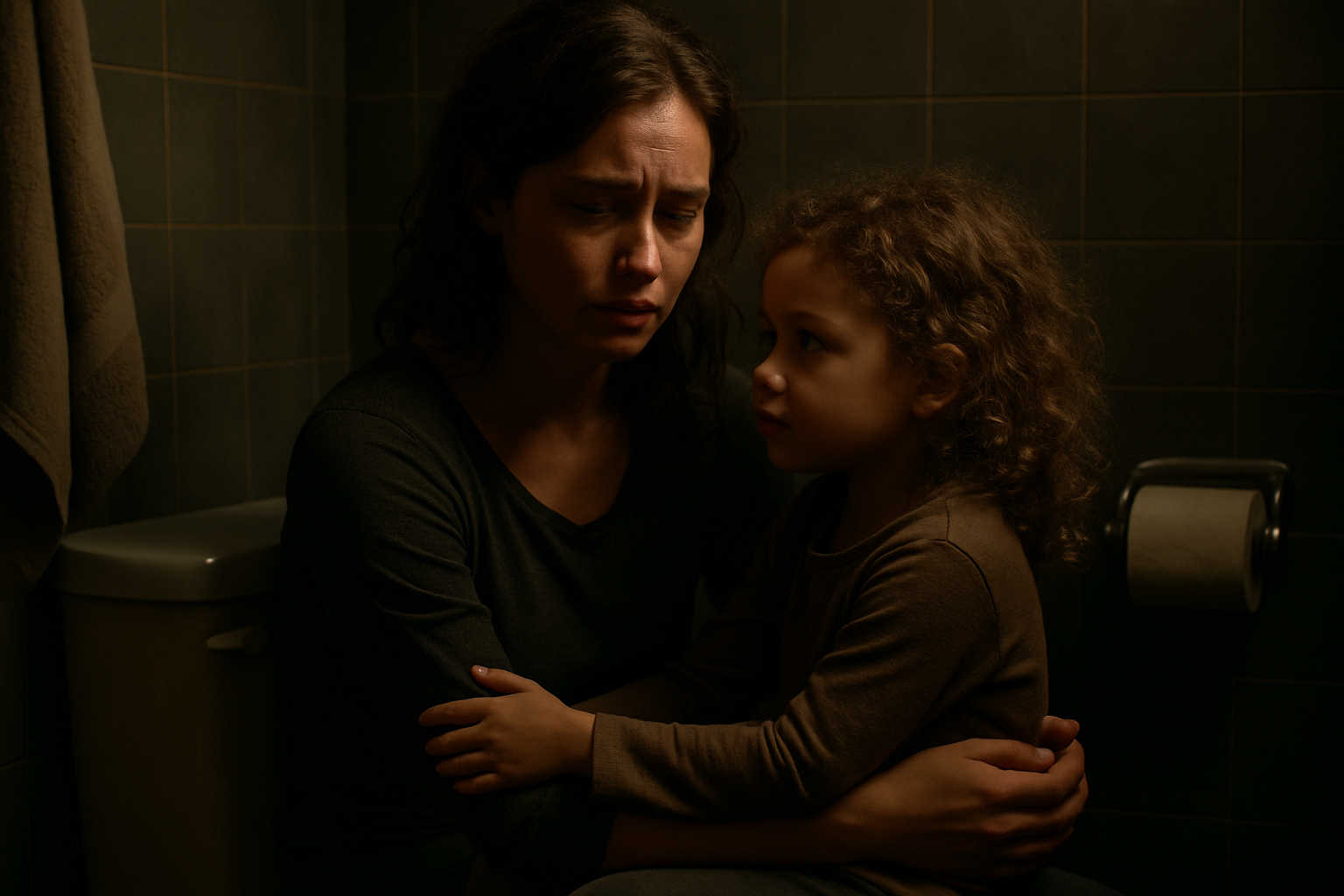
As if she had not sat on bathroom floors in cheap apartments while pregnant and shaking, gripping a phone she could not make herself use. As if she had not written Adrian’s name in unsent messages, then erased it, then hated herself for both. As if she had not given birth gripping a nurse’s hand while imagining the man who should have been there somewhere beneath another woman’s window.
Her hands began to shake.
Adrian saw it and moved one step toward her, then stopped. He had learned, over these last weeks, the terrible discipline of not assuming comfort was permission. Nora saw the restraint in him. Saw how hard-won it was.
Vivienne reached into her purse.
Adrian’s eyes sharpened. “What are you doing?”
“Giving you what I should have given you years ago.”
She removed a thick envelope, creased at the corners from being handled too many times. She held it out, but no one took it at first. It sat there between them, ordinary paper carrying extraordinary ruin.
“Bank records,” Vivienne said. “My signed statement. Copies of the original messages with full context. The edited versions Malcolm arranged for Nora to see. The photographer’s invoice. Everything.”
Dr. Hart, who had remained silent in the armchair, leaned forward slightly.
Vivienne’s eyes returned to Nora.
“The line you saw,” she said softly. “‘The little one changes everything.’ It wasn’t about a mistress. It wasn’t about a baby.”
Nora stopped breathing.
Vivienne’s hand trembled harder.
“It was about the pediatric wing Adrian wanted to build. The one he wanted to name after you because he knew you wanted a place where traumatized children didn’t feel like patients.”
For a moment, no one spoke.
The entire world seemed to narrow to the sound of Maddie’s breathing against Nora’s side.
Adrian’s face had gone gray.
Nora looked at him, and in his expression she saw the ghost of the man he had been four years ago—the man planning a future she had mistaken for betrayal.
“You should have told me sooner,” Adrian said, his voice raw.
Vivienne nodded. Tears slipped down her cheeks.
“I know.”
“Years sooner.”
“I know.”
“You let her leave.”
Vivienne pressed a fist to her mouth, then lowered it. “Yes.”
The word landed with no defense around it.
“I was afraid of prison,” she admitted. “Then ashamed. Then Malcolm died, and I told myself reopening it would only cause more pain. That maybe everyone had moved on. That maybe my confession would be selfish.” She gave a broken laugh. “It turns out guilt can make cowardice sound noble if you let it talk long enough.”
Nora’s anger rose so fast it nearly burned through her grief.
“You thought we moved on?”
Vivienne looked at her.
Nora’s voice shook now, but it did not break.
“I raised his daughter alone because of what you helped create. He missed her first steps. Her first fever. Her first word. Do you know what her first word was?”
Vivienne shook her head, crying silently.