Nora could still feel Theodore’s cold hand on the hospital door. We all have to consider what is best for Adrian.
She had thought he meant money.
She had not realized he meant erasure.
Adrian looked toward the windows, but Nora could see he was not seeing the street. He was seeing years. Birthdays. First steps. Fevers. Christmas mornings. The empty spaces where his father had stood guard over a lie.
“My mother?” he asked.
Vivienne’s face shifted.
That was answer enough.
Adrian’s eyes cut back to her. “Did my mother know?”
“She suspected.” Vivienne’s voice was faint. “I don’t know how much. I heard her and your father fighting once. She said, ‘If there is a child, you have no right.’ He told her to stay out of business matters.”
Adrian shut his eyes.
Nora remembered Elise Vale, elegant and quiet, always seeming half a step behind her husband even when she stood beside him. She had sent Nora a cashmere blanket after the baby shower with a card that said, For softness when the world is not. Nora had kept it even after she fled. Maddie still slept with it folded at the foot of her bed in winter.
“Where is Theodore now?” Nora asked.
Adrian opened his eyes.
“He’s in Boston,” Vivienne said. “And he knows Adrian has found you.”
The air changed.
It was subtle but immediate, like a door opening somewhere in a dark house.
Adrian’s voice went lethal. “How?”
Vivienne shook her head. “I don’t know. Someone from the old office saw you together outside the hotel. Or he had people watching. He always had people watching when he thought control was slipping.”
Nora felt Maddie’s absence like a siren. She looked toward the counter, where Russell was helping her choose between glitter stars and tiny cats, deliberately animated, deliberately loud.
Vivienne followed her gaze. “That’s why I came now.”
“You came because he might expose himself?” Adrian asked bitterly. “Or because you’re afraid he’ll drag you down with him?”
Vivienne did not deny it quickly enough.
Adrian’s face hardened.
“There it is.”
“I am afraid,” she admitted. “But not only for myself.”
“No,” Adrian said. “You don’t get to claim concern now.”
Vivienne’s shoulders folded inward. “I deserve that.”
“You deserve worse.”
“Yes.”
The simple agreement seemed to rob Adrian of momentum. Rage needed resistance. Vivienne offered none.
Nora looked at the envelope.
Her whole life had split because of what was inside it. Or rather, because of what it proved. Yet the evidence looked ordinary. Paper. Ink. Corners. A thing that could be held in one hand after destroying four years.
She reached for it.
Adrian turned. “Nora—”
“I need to see.”
Her fingers trembled as she opened the flap.
The first page was an email printed in black and white.
From: Theodore Vale
To: Vivienne Cross
Subject: Containment
Nora read only fragments before her stomach turned.
Emotional leverage.
Unsuitable partner.
Post-delivery vulnerability.
Separation language must appear to originate from Adrian.
No direct threats unless necessary.
Protect him from sentimental impulse.
A sound escaped her.
Adrian was beside her instantly, but she could not look at him. She kept reading because pain, once opened, demanded witnesses.
The next page was worse.
A drafted text message.
Nora, I can’t do this. My father is right. The baby complicates everything. You and I were never meant for this kind of life. I’ll make sure you’re provided for if you stop contacting me.
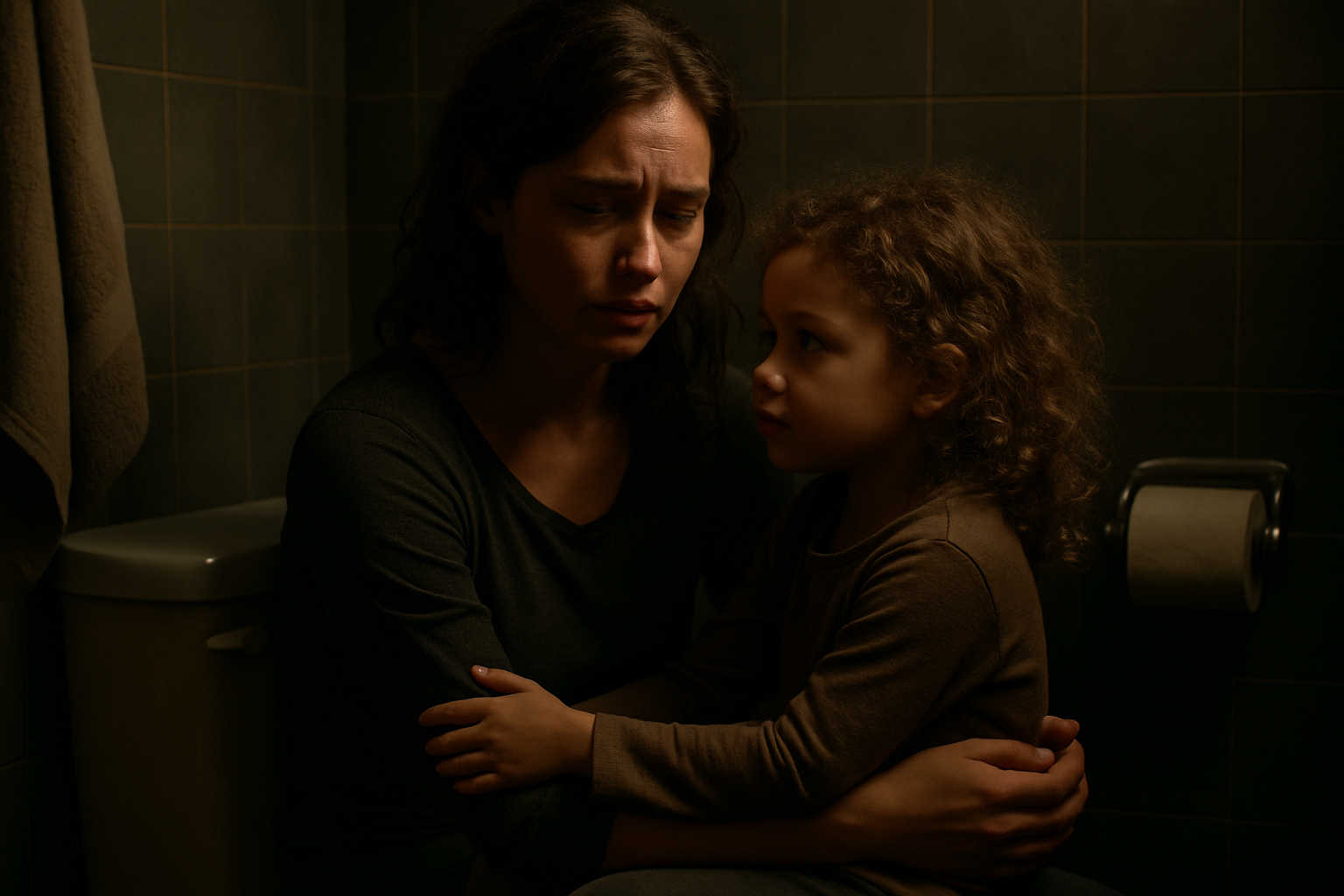
Nora remembered receiving it at 2:13 a.m., sitting on the bathroom floor of her mother’s house with Maddie asleep in a laundry basket because they had arrived too suddenly to have a crib. She remembered reading the words until they blurred. She remembered whispering, Don’t beg, Nora. Don’t teach your daughter to beg.
And then she had changed her number.
Adrian read over her shoulder.
His face crumpled.
“I never wrote that.”
“I know that now,” Nora whispered.
“I never would have written that.”
“I know.”
But knowing now did not erase what not knowing had done.
Vivienne’s voice shook. “He made me send it from your phone during the London board dinner. You left it in the private room when you took a call from Frankfurt. I knew your passcode because—”
“Because I trusted you,” Adrian said.
“Yes.”
The words hung there, small and catastrophic.
Nora lowered the papers.
For four years, she had built a life around one message. Around one sharp, clean abandonment. She had told herself that certainty was a mercy. That Adrian had chosen his empire over his child and that nothing good could come from reopening the wound.
But certainty had been manufactured.
Her grief had been engineered.
Her loneliness had been useful to someone.
The realization did not make her feel vindicated. It made her feel invaded.
“I need air,” she said.
Adrian reached for her, then stopped himself. “Do you want me to come?”
Nora looked at him.
That question—so simple, so careful—nearly undid her more than the envelope had.
“Yes,” she said.
They stepped outside beneath the café awning.