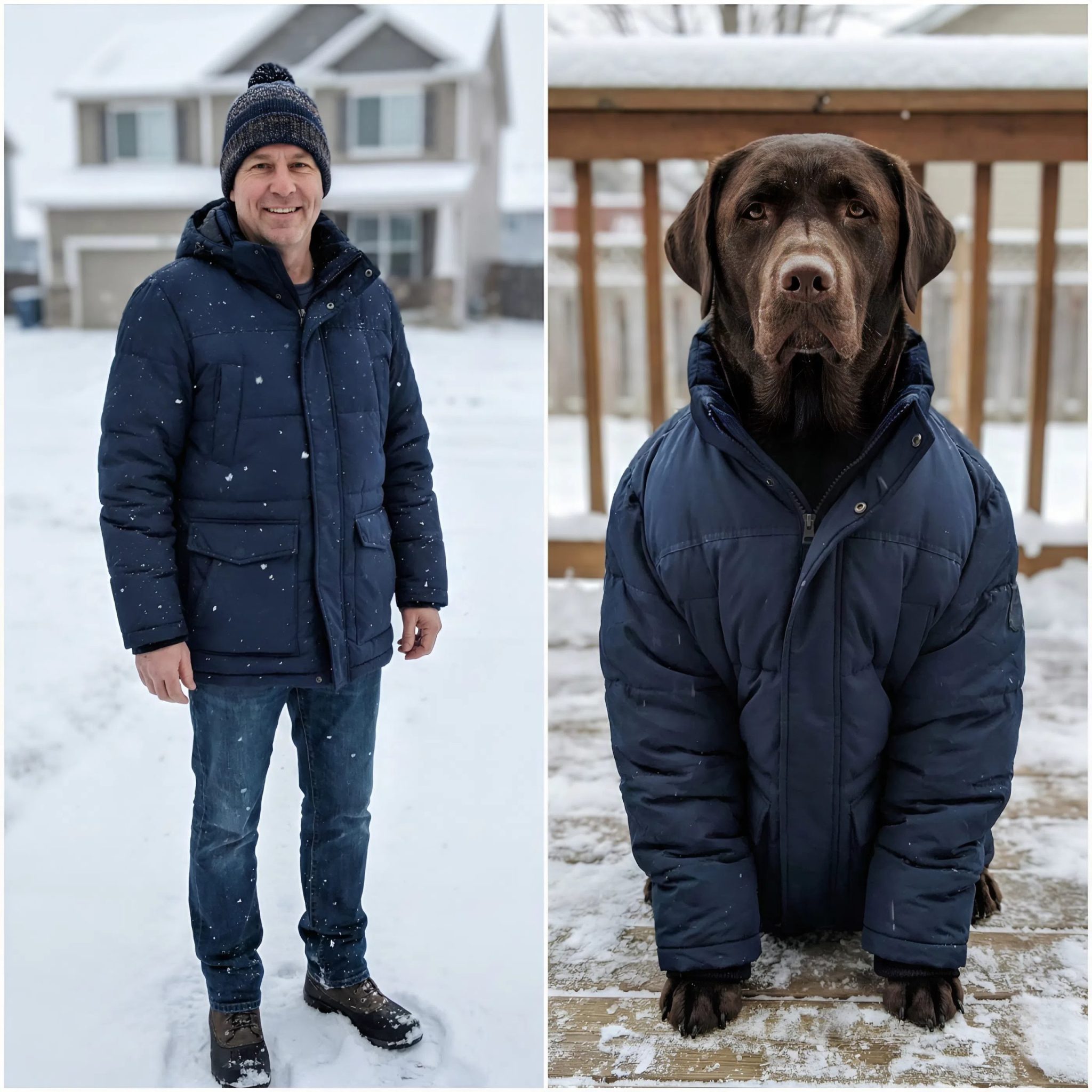
He kept urging me forward.
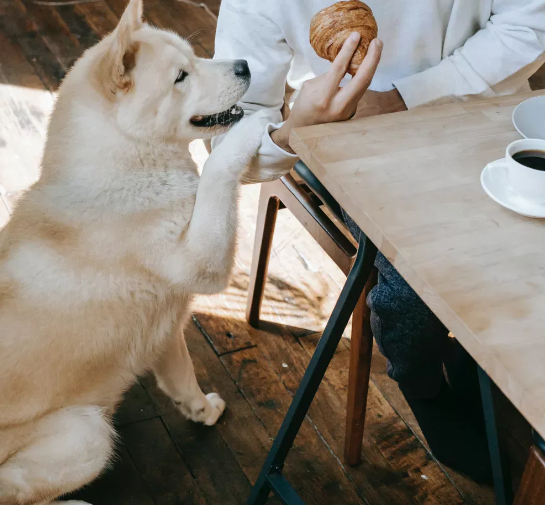
After what felt like forever, the trees opened to reveal an old, abandoned structure half-hidden by brush. The door hung crooked on one hinge. The windows were shattered.
Max dropped the jacket at my feet, barked once—sharp and unmistakable—then fixed his gaze on the doorway.
My hands trembled as I pushed the door open.
Inside were signs that someone had been living there: an old mattress, blankets, a makeshift table, empty containers.
And then I saw him.
He was sitting against the wall, thinner than I remembered. His hair was longer, streaked with gray. His face held confusion and exhaustion.
“Ethan?” I whispered.
He lifted his head slowly, eyes wary. “I… I don’t think that’s my name.”
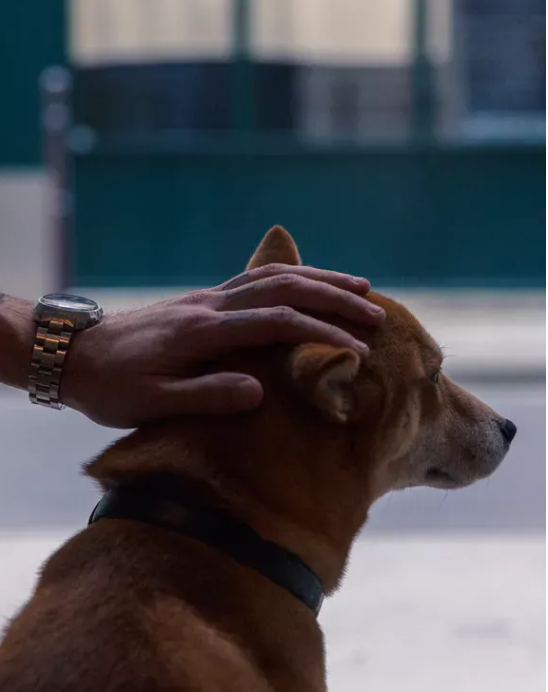
I fell to my knees. Max walked to him, and Ethan reached out without thinking, resting a hand on the dog’s head—as if instinct took over, as if something deep in him still remembered.
Through sobs, I called 911. “My husband… he’s been missing for six years. I found him.”
At the hospital, doctors explained what had happened. The accident caused severe head trauma. Ethan lost his memory and wandered for years without knowing who he was. He survived on odd jobs and the kindness of strangers until he eventually ended up living nearby.
Recovery didn’t come overnight. There were months of therapy. Some days he remembered small things—a smell, a song. Other days, nothing.
We learned patience.
The kids met their father again slowly. At first, he was a stranger. Then someone familiar. Then someone who stayed. They shared photos and stories without demanding he become the person he used to be.
Sometimes he would say, “I don’t remember this, but it feels like it belongs to me.”
That was enough.
Max grew older, but he never stopped watching Ethan, as if he was afraid he might lose him again.
Ethan doesn’t remember our wedding or the night our first child was born. He doesn’t remember the argument about the kitchen paint.
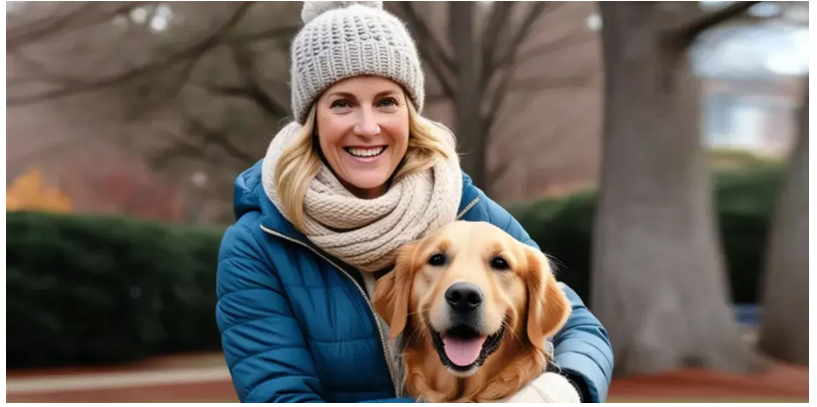
But he remembers how to smile when our daughter tells a joke. He remembers how to help our son with homework. He remembers how to be here.
Some nights, I still set an extra plate at the table. Not out of habit. Not out of grief.
But because now, someone truly is coming home to eat it.
Hope isn’t loud. It doesn’t promise perfect endings.
Sometimes it simply waits—and returns with a muddy jacket and a loyal dog who never stopped believing.