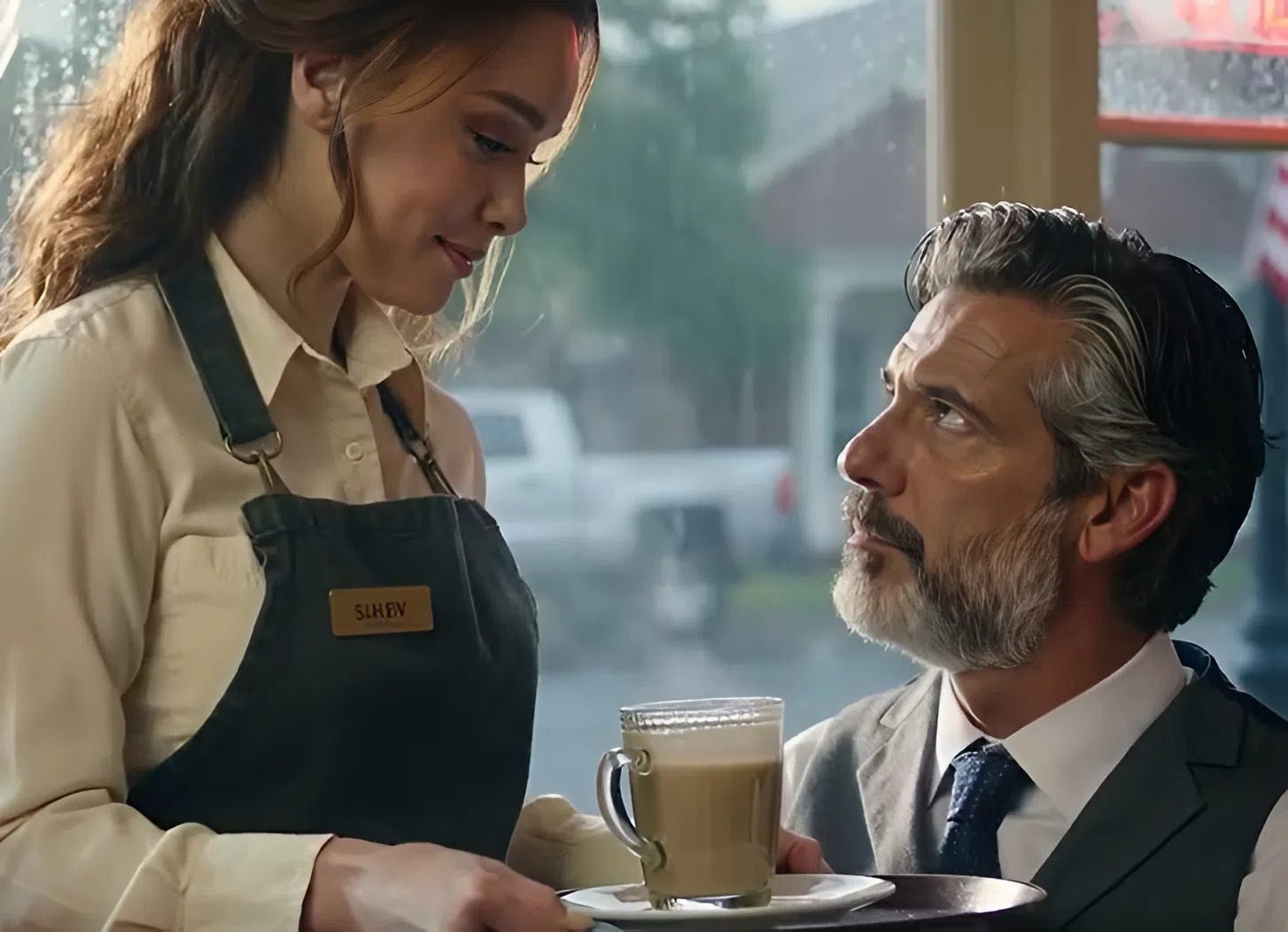

Two unlikely travellers, bound not by fate but by choice. Emma didn’t know where this journey would lead, but for the first time in her life, she wasn’t afraid of the answer, because she wasn’t trying to escape or seek wealth or fantasy. She was walking into something honest, and that, she understood, was enough. The days that followed were completely unusual for Emma.
No five-star hotels, no yachts, no champagne brunches. Instead, she woke up in quiet villages and dusty towns, in modest hotels and community centres, riding in Charles’s old jeep with the windows down and the wind playing in her hair. He did not live like the billionaire the world believed him to be.
They visited children’s homes on the outskirts of small towns, where children rushed into Charles’s arms, calling him by name. Not because he gave them toys, but because he remembered their birthdays, their favourite books, their inside jokes. They visited shelters for recovering drug addicts, where Charles spoke little but listened deeply. They sat on the porches of houses, half-built by hands he had financed but never named, eating soup made by people who didn’t even know that the man across from them owned half the sky. Emma watched all this with quiet delight.
He never announced himself, never sought praise. Once, while sorting boxes at a community food bank in Vermont, she asked him, ‘Why don’t you tell people who you are?’ He shrugged. ‘Because they would stop talking to me like a human being.’ Wherever they were, she saw the same thing. His eyes sought not gratitude, but connection.
And more than once, she caught her reflection in a window and realised she was smiling in a way she hadn’t in years. One night in a cabin on the edge of a forest in Quebec, they sat on the porch as crickets sang and the air was heavy with the scent of pine. The only light came from a single lantern on the wooden table between them. Charles brewed chamomile tea.

Emma curled up in the rough blanket, watching the steam rise from her cup. They were silent for a while, but it wasn’t an awkward silence. It was the kind of silence that felt like shared breathing. Finally, Charles leaned back in his chair, staring into the darkness. ‘I’ve been offered everything,’ he said. ‘Compensation, comfort, even love.’
He paused, then turned to her, his voice softening. “But I don’t need someone who loves me. I need someone who understands why I love what I love. Someone who doesn’t need glamour, just presence.” Emma didn’t answer right away. She let the words sink in between them, heavy and gentle.
Then she looked at him, her eyes reflecting the lamplight and something deeper. ‘I don’t know if I’m that person,’ she admitted. ‘I don’t know if I understand all the reasons why you are the way you are,’ she took a breath. ‘But I know one thing. I’ve never felt more like myself than when I’m with you.’ Charles didn’t smile. He didn’t look triumphant.
He just looked peaceful, as if he had just heard an answer he didn’t know he was waiting for. They didn’t touch hands. They didn’t lean into anything more. Because what they shared had nothing to do with distance. It was recognition. Two souls, separated by several generations, shaped by very different lives, finding quiet resonance in the commas between their scars. Later that night, Emma sat by the window in the cottage and wrote in her journal.
Her thoughts came in half-sentences and single words. Silence, found, seen. She closed the book, tucked it under her pillow, and whispered into the silence. ‘I didn’t come looking for love, but maybe I stumbled upon something bolder.’ Outside, the stars blinked above them like silent witnesses to an ongoing story.
A story not about fantasy or fate, but about two souls who once believed they were alone until they became one. Three months. Three months of quiet mornings and unhurried conversations that listened more than they spoke, seeing the world not from skyscrapers, but from street corners and crowded public halls. Emma had changed, but not in the way most people would expect. She didn’t become richer. She didn’t dress differently.
Her shoes were still worn at the edges, her journals were still full of thoughtful musings and dog-ears, but her spirit had changed. She walked with her head held high, spoke more slowly, no longer felt the need to explain her worth to anyone. Charles noticed it too. They had just returned from a visit to a women’s shelter in Detroit when he asked to speak with her alone.
They sat on the roof of a converted church, the shining sky behind them. He handed her a simple folder, no ribbon, no ceremony. Inside were the legal documents to establish a foundation in her name — the Emma Bennett Opportunity Fund. She slowly looked up. ‘I want to leave something behind,’ he said. ‘But not for my name. I’ve done enough of that.’