The appearance of Jill Munro in the mid-seventies was much more than just a television debut; it was the birth of a global phenomenon that noticeably shifted the center of gravity of American pop culture. When Farrah Fawcett first appeared on screen in the TV series «Angels Charlie», she not only played the role — she instantly rose to such heights of fame that only a few can reach. Her name became a universal designation for a special type of sparkling charisma, a spontaneous force that passed through the screen with such a radiance that it almost obscured a living woman behind the created image. She became a major discovery among «angels», a figure of such powerful public interest that she changed the very idea of a small screen celebrity, turning him into something truly grandiose.

And yet, under the glossy shell of the television sensation, there was a serious talent hiding, waiting for the opportunity to open up. Farrah began a conscious and often grueling creative transformation, gradually abandoning the safe halo of a glamorous image for the sake of the hard truth of her roles in the films «Flaming Bed» and «The next morning». These were not just career steps; they were displays of artistic courage. Embodying women pushed to the limit of survival, she proved that her dedication to acting was much deeper than the «status of the visual icon» that the world was trying to pin on her. She changed her light smile to the hard truth of human struggle, revealing a dramatic force that made Hollywood see a serious, sensitive actress behind its famous hairstyle and tan.

When thinking about the 1970s, it is impossible to ignore the main cultural symbol of that era — the legendary poster in a red swimsuit. It still remains the most accurate visual expression of time: a single shot in which her cascading hairstyle and radiant smile became the model of the American dream. But life within this degree of notoriety was complex and often lonely. She was a woman eager to move on, while the world audience wanted to keep her motionless in one bright, impeccable position. It was this tension between the frozen icon and the developing artist that determined her spirit of the times, proving that even the «girl next door» can have depth that can challenge the world that extolled her.

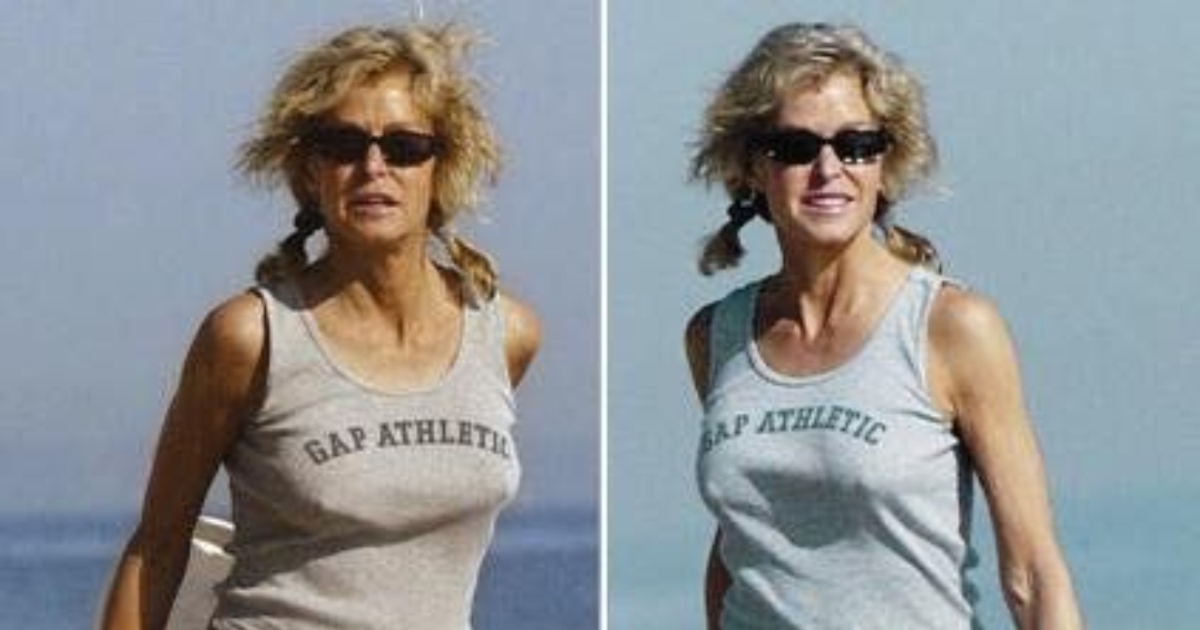
In Farrah’s classic photographs in the sands of Malibu, there is a special timelessness: in these photographs, the coast appears not as a background, but as its natural environment. Far from the rigid confines of the studio and the artificiality of the set, it had a relaxed grace, as if directly born from the noise of the Pacific surf. The Californian way of life that she personified was saturated with salty air and golden light, a feeling of freedom that sounded in every laugh she made. At these moments on the West Coast, she did not appear to be the product of a PR machine; she was a bright, lively and earthly figure whose beauty seemed as natural as the coastline itself.

Farrah Fawcett’s legacy remains an exemplary example of the shining transformation of —’s successful transition from pin-up sensation to a respected figure in Hollywood history. She was a woman of warmth, energy and inner dignity who refused to remain within the close confines of early success. As a producer and dramatic actress, she created a space for herself in which both her past and her unrealized capabilities found a place. Today we remember her not just as the face on the poster; she was a pioneer who managed to pass through the heights of glory with rare nobility, forever connected with the golden spirit of the era in which she not only lived, but which she helped determine with each of her appearances in the frame.