Those words did not repair the years. Nothing could. But Lydia kept them anyway, because not every broken thing becomes whole, and not every gift needs to be large to be real.
By the third year of their marriage, Rowan had built a house at the edge of town with wide windows facing the ridge. The bakehouse remained on Main Street, warm and loud and sweet-smelling, but their home became the place people came when storms rose early or grief arrived uninvited.
Every Sunday, Lydia baked honeycake.
Every Sunday, Rowan ate the first slice.
Sometimes, when the light fell a certain way, sorrow crossed his face. Lydia never feared it. She had learned that love did not drive ghosts from the room. It simply made enough space for the living too.
On the mantel sat Maeve’s letter beside Evelyn’s recipe book. Not as a shrine, but as a witness.
Years later, when their daughter Elara was old enough to stand on a stool and stir batter with both hands, she asked, “Why does Papa close his eyes when he eats honeycake?”
Rowan looked at Lydia.
Lydia smiled.
“Because,” Rowan told his daughter, “some sweetness reminds a man he is alive.”
Elara considered this seriously. “Did you forget?”
“For a while.”
“How did you remember?”
Lydia leaned against the counter, arms folded, flour on her cheek.
Rowan’s slow smile changed his whole face.
“Your mother dared me.”
At every harvest fair after that, someone retold the story.
Each year it grew larger.
Some said Lydia rode through a wall of snow taller than the church steeple. Some said Rowan cried so hard the fire went out. Some said Victor Cale fainted in the street when Lydia held up the freight tag, which was false but satisfying enough that nobody corrected it.
Lydia let them talk.
She had spent too much of her life fearing the town’s mouth. Now she knew people would always make stories out of what they did not understand. The trick was to live so truthfully their stories could not cage you.
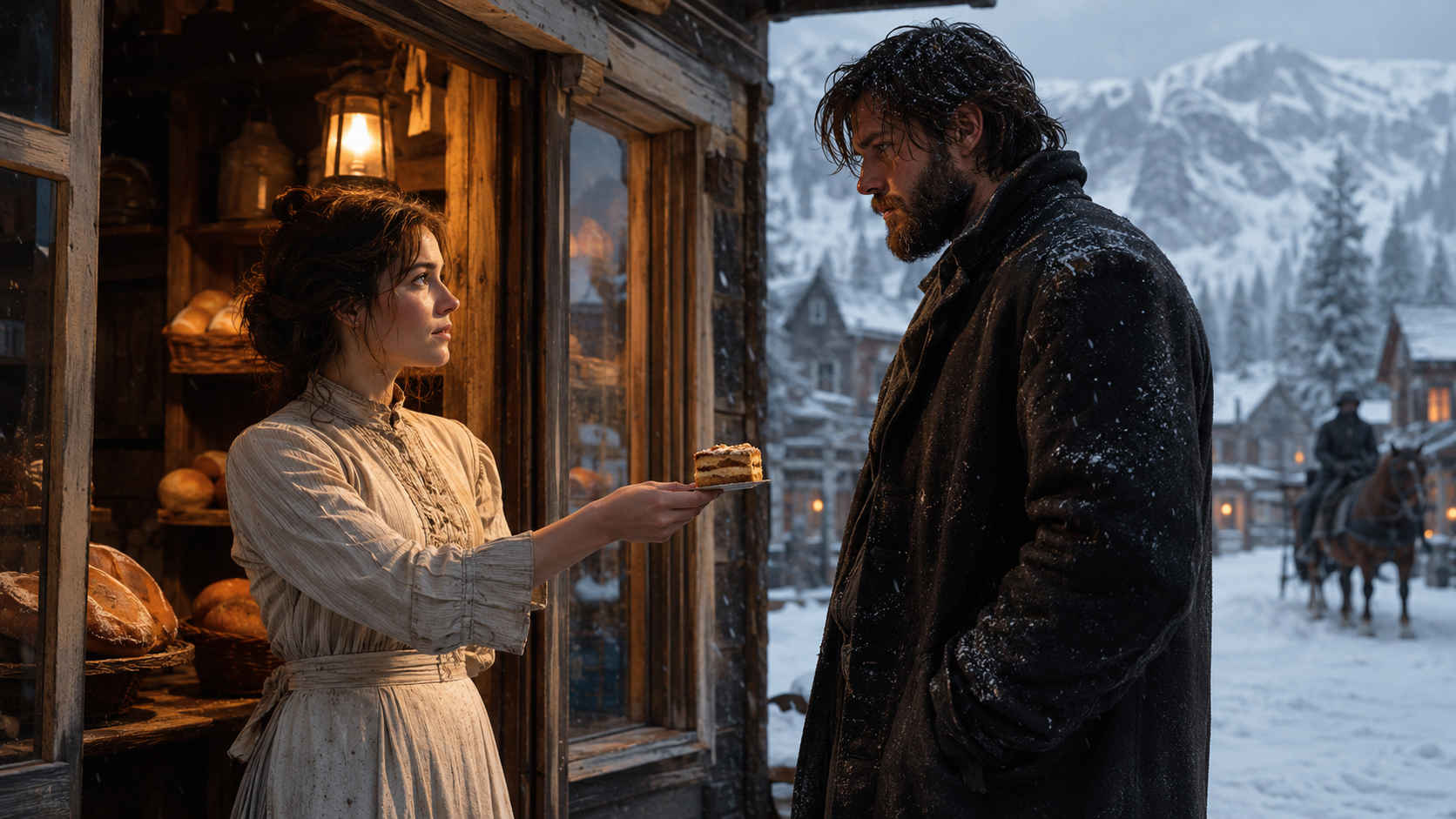
At sunset, when the fair crowd thinned and the mountains turned violet beyond the rooftops, Lydia always chose the best piece of honeycake left on the tray.
She held it out to Rowan.
“I dare you,” she said.
And Rowan Halloway, who had once mistaken loneliness for loyalty, took the cake from his wife’s hand and ate it before God, Briar Hollow, and the ghosts he had finally learned to love without dying beside them.
Every year, it tasted of honey.
Every year, it tasted of grief survived.
Every year, it tasted of the woman who had been told she was too much and became exactly enough to call a silent man home.