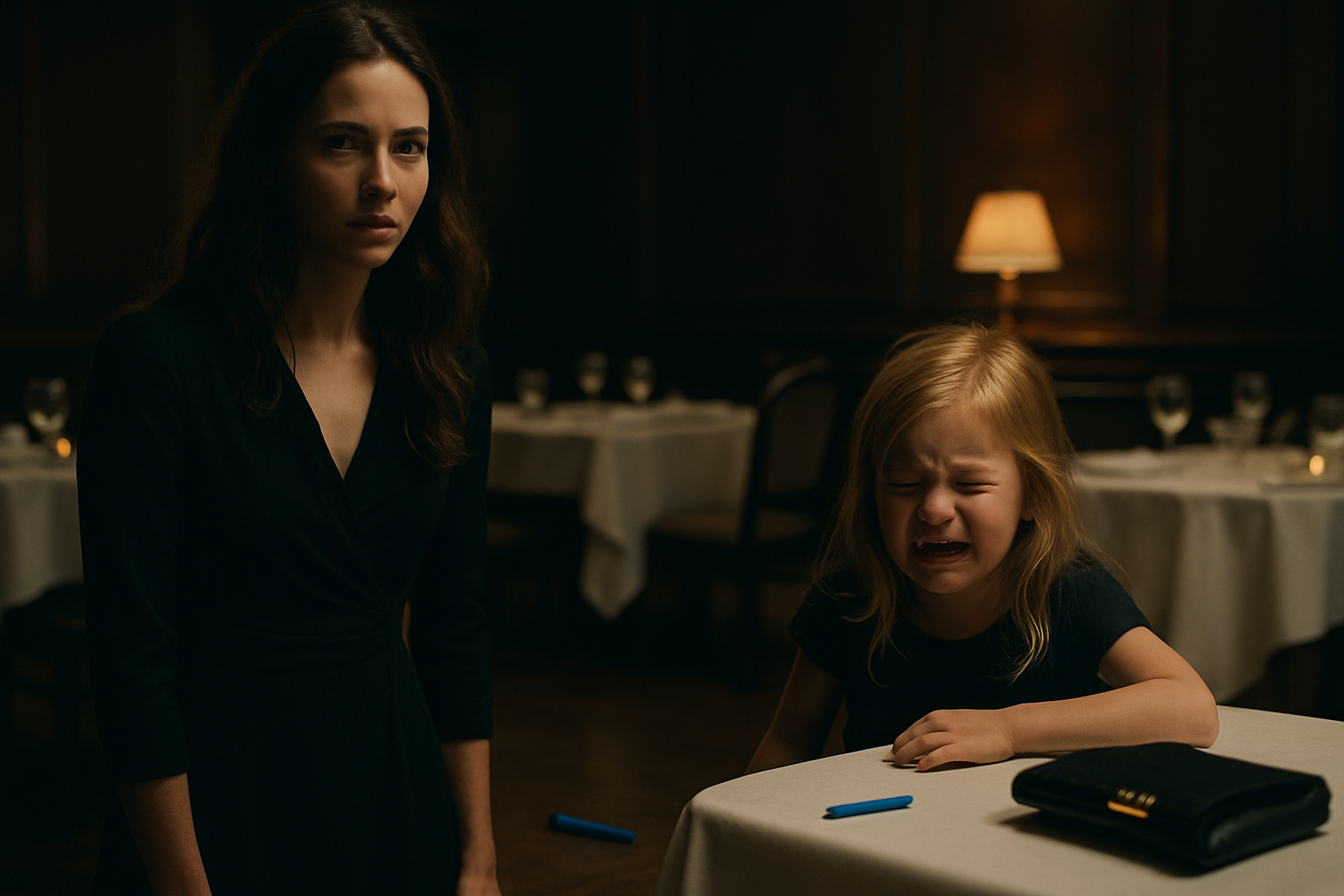
She did not confront Claire at the table. That would have been too messy, too immediate. Vanessa preferred damage that ripened. By the end of that week, Diane was calling Claire selfish. Charles was calling her an embarrassment. Vanessa was calling Ethan every night in a voice soft enough to sound wounded and sharp enough to draw blood.
Ethan called no one.
Not Claire.
Not once.
For three days, she waited.
She watched her phone until the screen blurred. She reread the last message she had sent him. We need to talk. Please. It’s important.
The message remained unanswered.
On the fourth day, Diane stood in Claire’s bedroom doorway as if already inspecting it for resale.
“You will not drag this family through scandal,” Diane said.
Claire sat on the bed with a sweater folded in her lap. “I’m pregnant, Mom. I’m not committing a crime.”
Diane’s mouth tightened. “Do not be dramatic.”
That was Diane’s gift. She could take any wound and call it theater.
Charles had been worse. He had not yelled at first. He had stood by the fireplace in his study, fingers resting on the mantel, his voice low and measured.
“Do you understand what you’ve done?”
Claire had laughed once, because the alternative was sobbing. “What I’ve done? I’m having a baby.”
“You are unmarried.”
“I know.”
“With Ethan Marlowe.”
Claire said nothing.
Charles turned then, and she saw not a father, not a man worried for his daughter, but a businessman calculating exposure.
“Senator Marlowe’s people will deny everything if this becomes public,” he said. “And if they don’t, they’ll bury it in a way that makes you look unstable. You think you’re the first girl to mistake attention for commitment?”
The word girl had struck harder than she expected.
Claire had left Richmond with one suitcase and $1,800 from her savings account.
No trust fund. No goodbye dinner. No tearful reconciliation on the front steps of the house where she had grown up. Diane did not come to the door when Claire carried her suitcase down the stairs. Charles did not ask where she would go. Vanessa watched from the landing, arms folded, lips curved with the satisfaction of someone who had not merely won but rearranged reality so winning looked inevitable.
Three months later, Claire Bennett’s obituary ran in the Richmond Register.
Beloved daughter of Charles and Diane Bennett. Cherished sister of Vanessa Bennett. Lost too soon.
There were no details about the accident because there had been no accident. No funeral because there was no body. No grave because Claire was alive in a cramped apartment near Virginia Beach, vomiting every morning into a chipped toilet, pressing one hand to her stomach and the other to the wall to keep herself upright.
Diane had framed it as mercy.
“People will stop asking questions,” she had said in the last voicemail Claire ever saved. Her mother’s voice had been calm, breathy, almost kind. “You made your choices, Claire. Let us survive ours.”
Let us survive ours.
As if Claire’s existence were a storm they had endured.
Charles had used the obituary to protect business relationships. A dead daughter was tragic; a pregnant unmarried daughter abandoned by a Marlowe was inconvenient. Tragedy drew sympathy. Inconvenience drew whispers.
Vanessa had used it to inherit Claire’s place in the family story. She became the only Bennett daughter, the elegant survivor, the woman who wore grief like a tasteful black dress when it suited her and discarded it when it did not.
And Ethan had accepted it.
That, Claire later realized, had been the truth that freed her from him.
He had not investigated. He had not demanded proof. He had not driven to Virginia Beach or searched hospitals or called old friends or hired anyone to ask questions. He had accepted her death because believing Claire was dead was easier than admitting he had abandoned her while she carried his child.
But Claire had not died.
She had worked.
She had suffered.
She had built.
There were mornings when pregnancy made standing impossible, and she still got up because rent did not care about nausea. There were nights when Lily cried with the desperate rage of an infant who had no language for hunger or colic or the absence of a second pair of arms, and Claire walked the apartment floor until dawn, whispering numbers under her breath to stay awake.
One, two, three.
Debit, credit, balance.
Breathe.
She took contract work first. Bookkeeping for a dentist’s office. Payroll cleanup for a restaurant owner who paid in checks that sometimes cleared. Tax preparation during seasons that turned her eyes red and her back stiff. She studied after Lily fell asleep, earning certifications one exhausted hour at a time.
And slowly, quietly, she became dangerous.
Not in the way Charles understood danger. She had no private security, no board seat, no senator returning her calls. Claire’s danger was patience. Precision. Memory. She learned to read financial records the way other people read faces. She could spot a lie in a vendor ledger. She could hear panic in a reconciliation statement. She could trace money through layers of shell companies until the numbers, exhausted by their own disguises, began confessing.