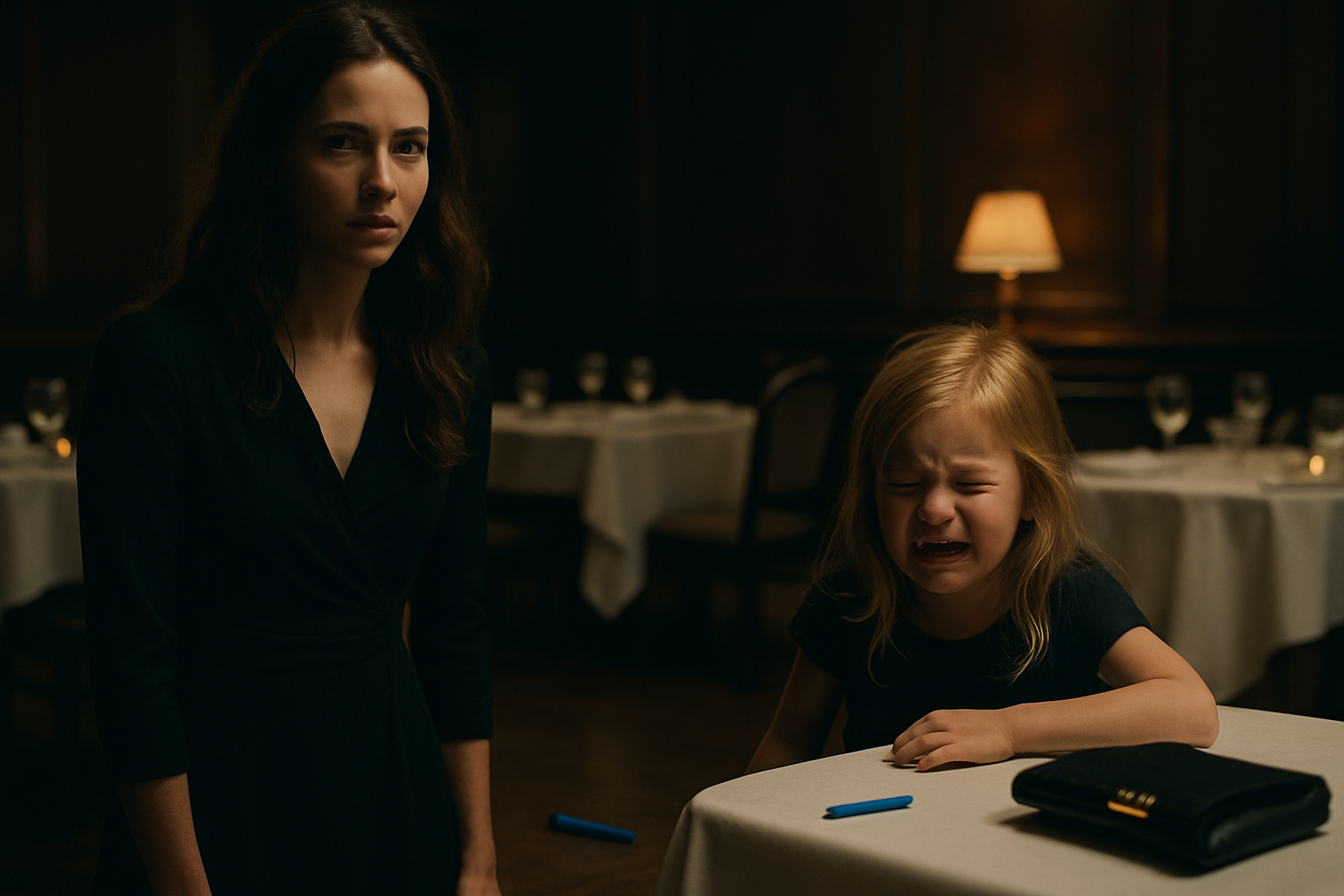
“Then I was ashamed of myself,” Diane said. “But by then, I had told the lie so many times I did not know how to walk back into the truth.”
Claire stared at her mother for a long moment.
There it was.
Not enough.
Not nearly enough.
It did not rebuild a childhood. It did not undo Lily’s confusion when she had been old enough to understand that a whole branch of her family had pretended her mother no longer existed. It did not erase the obituary, the whispered phone calls, the closed doors, the years Claire had spent carrying her own grief while everyone else had insisted she was the problem.
But it was the first honest sentence Diane Bennett had ever given her.
And because Claire had built a life out of refusing lies, she knew honesty when it finally appeared.
“I cannot give you the relationship you want,” Claire said.
Diane’s face crumpled.
Claire watched it happen. She felt the old instinct rise—the daughter’s reflex to comfort, to make less, to patch over damage so her mother would not have to sit inside the consequences. For half a second, her hand almost moved.
Then she thought of Lily.
She thought of her daughter watching her, learning from her, someday deciding what love was allowed to demand.
Claire kept her hands at her sides.
“I cannot bring you into Lily’s life just because you are lonely,” she said. “I cannot pretend the past was a misunderstanding. I cannot let you skip accountability and call it healing.”
Diane nodded slowly. Tears slipped down her face now, uncollected. “I understand.”
“I don’t think you do yet,” Claire said, not cruelly. “But maybe you can.”
Diane pressed her lips together.
Claire took a breath.
“But,” she said.
Diane looked up.
The word was small, but in that hallway it sounded like a door opening the width of a hand.
“You can write to me once a month,” Claire said. “Not to Lily. To me. No surprise visits. No gifts. No messages through other people. One letter. Once a month.”
Diane was very still.
“If you lie,” Claire continued, “if you blame, excuse, dramatize, manipulate, or try to make me responsible for your pain, I stop reading. If you tell the truth, maybe one day there will be a second step.”
Diane lifted a trembling hand to her mouth.
“Thank you,” she whispered.
Claire’s eyes did not move from hers.
“Do not thank me yet,” she said. “Truth will cost you more than pride ever did.”
Diane nodded again, and this time she did not ask for a hug.
That mattered.
Claire turned and walked back toward the dining room without embracing her mother, without offering absolution, without sealing the moment in some tidy gesture that would make everyone else more comfortable.
It was not cruelty.
It was a boundary.
And boundaries, Claire had learned, were not walls built to punish people. They were doors with locks, windows with latches, fences with gates that opened only when safety had been earned.
When she reentered the dining room, Lily looked up immediately.
Children always knew when weather had changed.
Claire gave her a small smile.
Lily studied her face for a second, then relaxed and returned to explaining to Governor Pierce why pancakes tasted better when they were shaped like animals, even if the animal was not identifiable.
Governor Pierce listened with the seriousness of a woman receiving classified information.
Claire sat down.
Under the table, Lily’s foot found hers.
Claire touched it back.
A year passed before Lily met Diane again.
Not because Diane asked perfectly. She did not. Her first letters were careful in the way old habits were careful—polished, defensive around the edges, full of phrases like I never meant and you must understand. Claire read them at the kitchen table after Lily went to bed, underlining nothing, responding to nothing.
The third letter was shorter.
The fourth contained no excuses.
The fifth began, I have been trying to remember the first lie I told myself about you.
Claire read that one twice.
Diane wrote about Charles, but not in the old way. Not as if he had hypnotized the whole family and left her blameless. She wrote, I liked the protection his cruelty gave me. When he was harsh, I could be soft by comparison without ever being brave. I let him be the villain so I would not have to be honest.
Claire folded that letter and sat with it for a long time.
There were months when no second step seemed possible. There were days when Claire found herself angry all over again, not with the clean rage that had carried her through the night at Archer & Vale, but with the tired, ordinary fury of remembering. Fury in the grocery aisle. Fury while packing Lily’s lunch. Fury while seeing an elderly woman help her daughter choose tomatoes and realizing she had never had a mother who knew how to stand beside her without measuring her.
Therapy helped.
So did work.
So did pancakes.