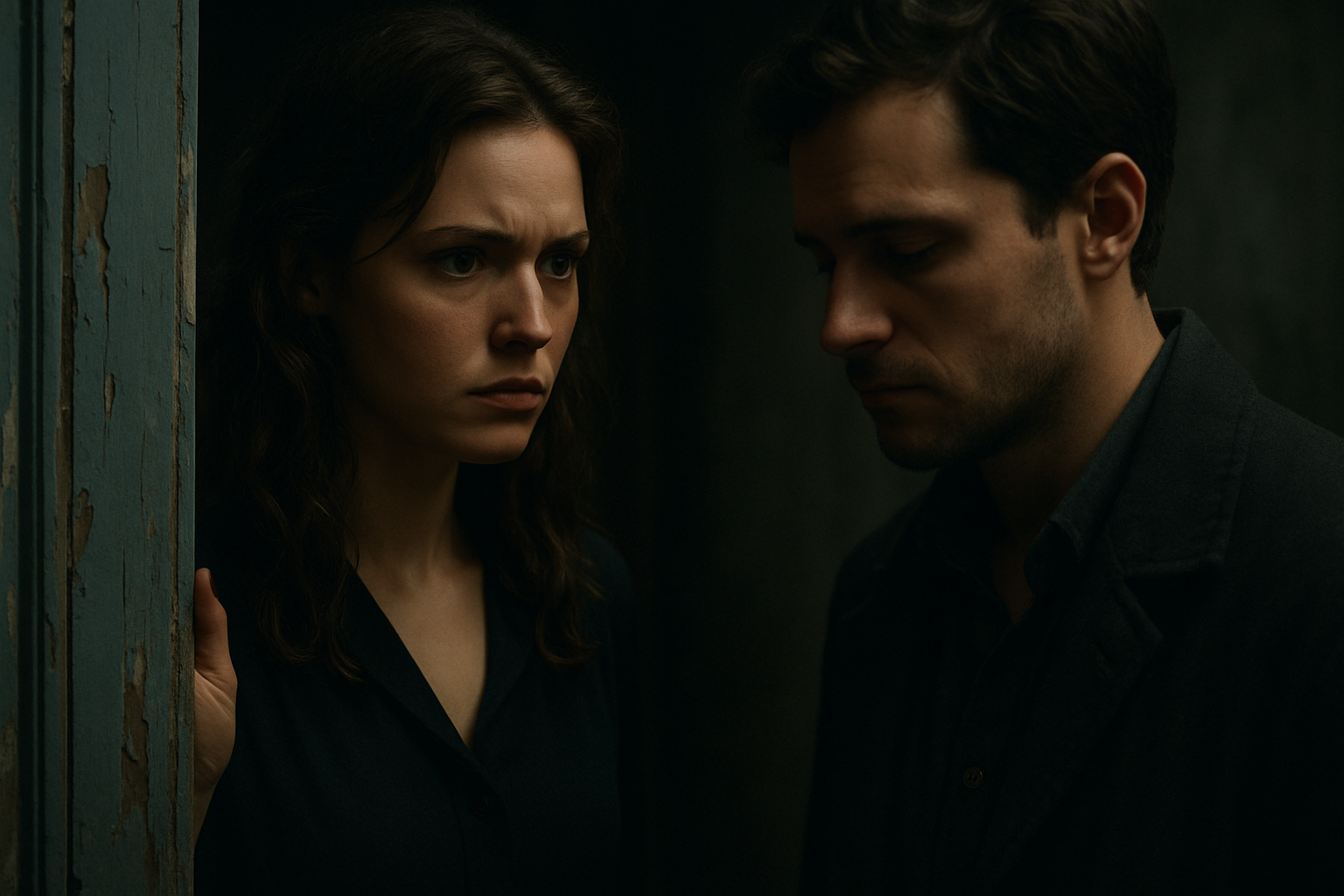
This man had hurt her. He had doubted her, dismissed her, tried to solve his panic by turning her life into a problem to be managed. He had stood inside his own power and used it badly.
But he had also walked into the ruins of that power and chosen not to save it.
He had handed over evidence that could destroy his family name, his company, his inheritance, his myth. He had faced Malcolm not as a rival hungry for control, but as a father protecting the future from the past.
Grace did not know yet whether that was enough for love.
But it was enough for truth.
“What happens now?” she asked.
Sebastian lifted his head. His eyes were red, but steady.
“Malcolm is finished,” he said. “The illegal routes are finished. The shell companies, the offshore accounts, the transport network—all of it. I signed cooperation agreements this morning before we went to the church.” A humorless breath escaped him. “There will be trials. Asset seizures. Headlines. Board members pretending they had no idea. Investors claiming moral outrage while calling my office to ask how much money they’ll lose.”
“And Rourke Harbor Holdings?”
“It may survive as a legitimate company.” He looked toward the dark hospital window, where their reflections hovered faintly in the glass. “Or it may collapse. I don’t know.”
“You’re not afraid?”
At that, he gave a quiet, broken laugh.
“I’m terrified.” His gaze returned to her belly. “But I was more terrified of Lily asking me one day what I did when I had the chance to become decent.”
Grace closed her eyes.
The baby rolled beneath the monitor straps, an unmistakable shift that made the paper tracing flutter.
Sebastian laughed softly through a breath that sounded almost like a sob.
“She hates hospital belts,” Grace murmured.
“She has strong opinions.”
“She gets that from me.”
“I hope she gets everything from you.”
Grace opened her eyes.
“No,” she said.
His expression went still, as if bracing for a blow he would accept because he believed he had earned it.
“Not everything,” Grace said.
Sebastian waited.
Grace’s fingers tightened around his.
“She can have your courage,” she said. “The real kind. The kind that lets go of power instead of grabbing more.”
His eyes filled.
This time, he did not look away.
Six weeks later, Lily decided she was done waiting.
By then, the newspapers had turned Sebastian Rourke into three different men.
In one version, he was a criminal heir trying to purchase redemption by betraying men worse than himself. In another, he was the ruthless billionaire who had cleaned rot out of his own empire only after the rot threatened to stain his name. In a third, he was a tragic figure: a son undoing his father’s sins, a man sacrificing wealth for morality, a handsome penitent in tailored shirts caught by cameras outside federal court.
Grace read none of the articles unless Megan forced her to laugh at the most absurd headlines.
“Listen to this one,” Megan said one afternoon from Grace’s kitchen table, holding her phone like a royal proclamation. “‘Rourke Reckoning: Billionaire Bad Boy Turns Family Empire Inside Out.’ Bad boy? He built a crib mobile last night and nearly cried because one of the sheep looked judgmental.”
Sebastian, kneeling on the nursery floor with a tiny screwdriver in his hand, looked up. “That sheep was poorly designed.”
Grace, thirty-seven weeks pregnant and wedged into an armchair with a bowl of cereal balanced on her belly, said, “The sheep is fine.”
“It has accusing eyes.”
“It’s a felt sheep, Sebastian.”
“It knows what it did.”
Megan grinned. “See? Front-page menace.”
To the world, Sebastian was a scandal.
To Grace, he was the man sleeping badly on her too-small couch because she was too pregnant, too uncomfortable, and too honest to pretend she wanted to be alone.
They were not magically healed.
There were no violins, no grand reconciliation that wiped the slate clean. Grace still woke some nights with the sound of tearing paper in her ears—the first ultrasound image ripping in Sebastian’s hands, that cruel early moment when he had been so afraid of being trapped that he had chosen to become cruel first. She still sometimes watched him enter a room and remembered how power had once followed him like a weapon.
Sebastian still reached for control when fear cornered him. It was reflexive, bred into him by years of boardrooms and family wars and men who believed tenderness was a liability. He would start arranging security details without telling her, or call specialists before asking if she wanted them, or try to solve emotional pain with logistics.
Grace no longer let him.
“No,” she would say.
And to his credit, after the first flicker of panic, Sebastian would stop.
They argued about security, court dates, money, the press camped outside Mercy Lake, and whether he was allowed to replace her ancient Honda without permission.
He was not.
“It has no rearview camera,” he said one evening, standing in her driveway beneath a maple tree shedding red leaves.
“It has mirrors.”