The Heiress Beneath Her Heart

The Heiress Beneath Her Heart

His throat moved once, then again, as though the words had turned to glass on the way up.

“A girl?”

“Yes.”

“How far—”

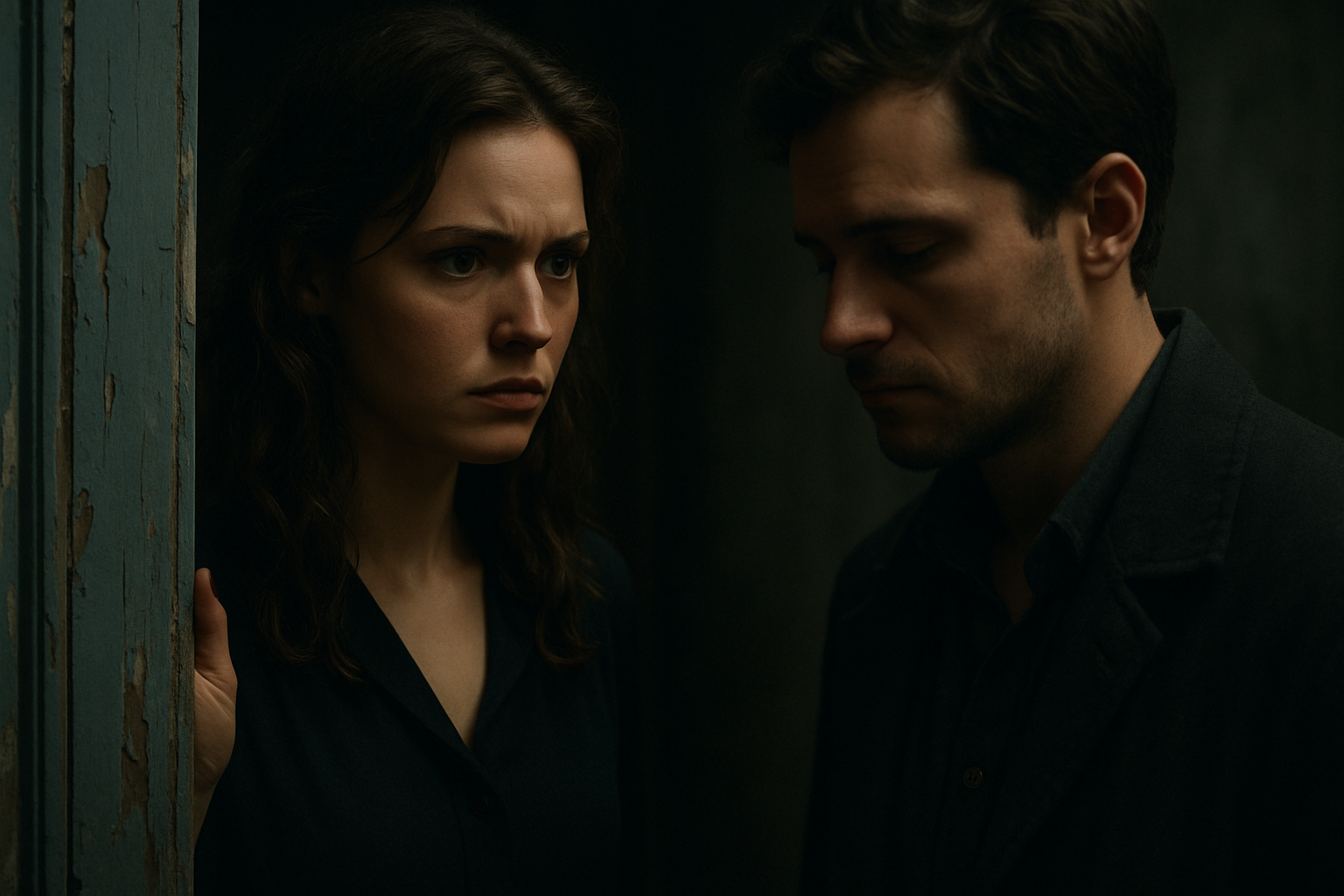
“No.” Elara Vale tightened her grip on the peeling apartment door until the cheap wood bit into her palm. “You don’t get details just because your curiosity finally caught up with your cruelty.”

Cassian Veyr lowered his eyes.

“I deserve that,” he said.

“You deserve worse.”

“I know.”

The admission unsettled her more than any argument could have.

Cassian Veyr did not concede ground. He seized it. Bought it. Bricked it over. If necessary, he buried people beneath it and built towers on top. He was the man other powerful men lowered their voices around, the heir to a fortune that had chewed up half the city’s skyline and spit it out in steel, marble, and tinted glass.

Yet there he stood in the dim hallway of a failing apartment building, rain darkening the shoulders of his expensive coat, hands empty at his sides, posture careful, looking at her like a starving man outside a locked chapel.

Elara hated that some wounded, traitorous part of her still recognized him.

Not the billionaire. Not the monster from that night.

The man who had once laughed quietly into her hair at two in the morning. The man who had memorized how she took her coffee. The man whose touch had made her believe, for one foolish stretch of time, that she had found a place in the world where she would not have to brace for pain.

“I found out the truth,” Cassian said.

She almost laughed. Almost.

“Which truth?” she asked. “The one where I’m a liar? Or the one where my daughter is someone else’s bastard?”

He flinched as if she had struck him.

Good, Elara thought, though the satisfaction was bitter. Let him feel one ounce of what he had poured over her without mercy.

“The fertility test was false,” he said. “Not mistaken. False.”

The word changed the air between them.

Elara did not open the door wider, but she stopped pushing it closed.

Cassian reached slowly into the inner pocket of his coat. Every movement was careful, telegraphed, almost submissive. He removed a folded document, creased from having been handled too many times, but he did not try to force it through the gap.

He merely held it where she could see the letterhead.

Northgate Reproductive Institute, Legal Records Division.

“Five years ago,” he said, voice low, “my uncle Orson sent me to a private specialist after I ended things with a woman named Maribel. She told me she was pregnant. Then she told me she’d miscarried. Three months later, she laughed in my face and admitted there had never been a baby at all.”

Elara’s jaw tightened.

“I was humiliated,” Cassian continued. “Not just hurt. Humiliated. Orson said I needed facts, not feelings. He said men in our family didn’t survive by trusting tears or timing or pretty stories. So I went to the doctor he recommended. Dr. Alden Kress. Kress told me I was functionally sterile.”

Elara listened because she was a nurse and because the document in his hand looked real.

She listened because the name of the clinic was familiar enough to matter.

She listened because beneath the stretched fabric of her sweater, the baby kicked hard, as if objecting fiercely to being left out of the conversation.

“I believed it,” Cassian said. “It fit what I wanted to believe. That I couldn’t bring a child into my world even by accident. That no woman could use fatherhood to weaken me. That no one could reach me through blood.”

His face tightened, and when he spoke again, his voice cracked on her name.

“So when you came to me—heaven help me, Elara. When you came to me with that ultrasound, I saw Maribel. I saw a trap. I saw every old humiliation standing in front of me instead of seeing you.”

“You saw what was convenient,” she said. “There’s a difference.”

“Yes.”

The simple agreement left her with nowhere to throw the next accusation.

She had expected denial. Excuses. A polished speech. Cassian had always been fluent in control. His anger had once been cold enough to freeze a room, his pride sharp enough to cut anyone foolish enough to touch it.

But this was not the Cassian who had torn her first ultrasound in half and let the ruined image flutter onto his office floor like trash.

This man looked hollowed out.

He glanced down at the document, then back at her.

“The clinic was audited after Dr. Kress died. A lawyer contacted me because my name was attached to sealed medical records. My sample was never tested, Elara. Orson paid Kress to enter another man’s results under my file.”

Elara’s fingers tightened around the edge of the door.

“Why would your uncle do that?”

Cassian’s expression changed.

It was still grief, yes. Still shame. But beneath both, something darker moved, old and venomous.

“Because of my grandfather’s trust,” he said. “Forty-seven percent of Veyr Meridian Holdings remains under Orson’s voting control until I produce a legal heir. If I never had a child, Orson remained the second most powerful man in the family forever. If I had one, he became an employee with a title and a leash.”

Elara stared at him.

The hallway light buzzed overhead, flickering in uneven pulses. Somewhere downstairs, a neighbor’s television blared canned laughter at the wrong moment, the sound thin and absurd through the walls.

“So your uncle convinced you that you couldn’t have children,” she said slowly, “and when I told you I was pregnant, you did his work for him.”

Cassian closed his eyes.

“Yes.”

Elara wanted the answer to make her feel victorious.

It did not.

It made her feel sick.

There had been an invisible man in the room that night. Standing behind Cassian’s cruelty. Guiding his worst fear like a hand wrapped around the hilt of a blade. Orson Veyr had planted the lie, watered it, let it grow roots through Cassian’s pride until it strangled anything tender in him.

But Orson’s lie had not ripped the ultrasound.

Orson’s money had not called her a con artist.

Orson had not looked at her as though the child beneath her heart was filth.

Cassian had done that himself.

Elara unhooked the chain.

The small metallic scrape sounded much louder than it should have.

She opened the door and stepped back.

“You have five minutes,” she said. “Not because I forgive you. Because I want to understand how dangerous this is for my daughter.”

Cassian entered as though stepping into a courtroom where the verdict had already been read.

Guilty.

His gaze moved over the small room.

The yellow crib by the window, secondhand but scrubbed spotless. The thrift-store dresser with mismatched knobs she had painted white on her day off. The stack of parenting books with sticky notes blooming from their pages. The folded onesies on the bed, sorted by size, each one so tiny it made her chest ache when she held it.

Then he saw the framed ultrasound on the nightstand.

His entire face shifted.

It was not the one he had torn. That one was gone, though sometimes Elara still saw the pieces when she closed her eyes. This image was from her twenty-week scan.

Her daughter’s profile was clear and perfect.

A curved forehead. A small nose. One tiny hand lifted as if she were waving at the world before entering it.

Cassian looked away first.

“Does Orson know?” Elara asked.

“Not that I found you,” Cassian said. “But he suspects the pregnancy is real. He had someone watching your old apartment. He may have someone watching the hospital.”

Fear opened cold in her stomach.

“You brought that danger here?”

“I came alone. I changed cars twice. I used a driver no one in my family knows. No one followed me.”

“Forgive me if your judgment doesn’t comfort me.”

His mouth tightened, but he nodded.

“Fair.”

Elara sat in the armchair because standing too long made her back ache now, a deep, dragging pressure that settled low in her spine after long shifts. She hated that weakness had a body now. Hated that exhaustion made her sit while Cassian stood in her apartment in a coat worth more than everything she owned.

But Cassian remained near the door.

He did not take another step without permission.

That small obedience hurt more than arrogance might have, because it suggested he was learning.

Too late.

“What do you want?” she asked.

“To protect you both.”

“No.”

The speed of her answer startled him.

“No?” he repeated.

“You don’t get to make yourself the hero of the disaster you helped create,” Elara said. “Protection is not the same as repentance.”

His eyes held hers.

“Then tell me what repentance looks like.”

Elara almost said there was none.

She almost told him repentance would be signing away any claim to the baby and vanishing before her daughter was born. She almost said he could mail his apology to an empty room and live with the echo.

But then the baby moved again.

A rolling pressure beneath Elara’s palm.

Not a kick this time. Something slower. A turn. A presence.

And Elara thought, unwillingly, of the questions her daughter might ask one day.

Did my father know about me?

Did he want me?

Did you keep him away because he was dangerous, or because you were hurt?

Elara had survived too much to become unfair with someone else’s life. Her pain was real. Her anger was earned. But she would not build her daughter’s future out of vengeance and call it love.

“First,” she said, “you will not come here uninvited again.”

Cassian nodded once.

“Second, you will not send men to follow me unless I approve who they are and why they’re there.”

Another nod.

“Third, you will tell me the truth, even when it makes you look ugly.”

His jaw flexed. “Yes.”

“And fourth,” Elara said, voice hardening, “if your world is dangerous to my daughter, you leave that world. Not pretend. Not hide assets behind shell companies. Not move the danger into prettier rooms and call it security. Leave.”

For the first time since he had entered, Cassian looked shaken in a way that reached beyond guilt.

He looked as if she had asked him to cut out his own heart and place it in her hands.

“Elara,” he said quietly, “that world is not a coat. I can’t take it off by morning.”

“Then you have until she’s born.”

His gaze dropped to her belly.

All the power in him—all the wealth, the ruthlessness, the polished cruelty he wore like armor—seemed to bend toward that small hidden life.

“And if I can’t?” he asked.

“Then Liora and I will be gone before you learn how to pronounce her full name.”

“Liora,” he repeated.

Elara regretted letting the name slip the moment it left her mouth.

The way he said it—softly, almost reverently—made the room feel too intimate. As though he had reached out and touched something sacred she had meant to keep protected behind her ribs.

“Yes,” she said. “Liora.”

He nodded once, solemn as a man accepting an oath.

“Then I’ll become a man Liora can know.”

For six weeks, Cassian tried.

He did not do it gracefully.

Men who spent their lives commanding did not naturally become men who asked permission. Cassian Veyr knew how to acquire, intimidate, negotiate, and win. He did not know how to stand outside someone’s boundaries and wait to be invited in.

The first mistake came within forty-eight hours.

He sent a private security consultant to Elara’s hospital without warning, a broad-shouldered man in a dark suit who introduced himself near the nurses’ station while Elara was halfway through a twelve-hour shift and already surviving on vending machine crackers and stubbornness.

She called Cassian from the break room.

“You sent a stranger to my workplace?”

“Elara, Orson may already have someone watching—”

“You do not get to scare me in the name of protecting me.”

“I was trying to—”

“You were trying to control the situation because fear makes you reach for power. Congratulations. I noticed.”

Then she hung up and refused to speak to him for three days.

The second mistake was bigger.

Cassian bought her entire apartment building through a holding company.

He claimed it was to fix the locks, repair the elevator, replace the broken lobby camera, and get rid of the mold blooming like gray lace around the basement pipes. All practical things. All things her landlord had ignored for years.

Elara found out because the furious landlord himself appeared at her door, red-faced and shaking a letter, demanding to know why “some silver-blooded devil” had acquired his property overnight.

She called Cassian immediately.

“Did you buy my building?”

A pause.

“Elara—”

“Did. You. Buy. My. Building?”

“The front entrance doesn’t latch. The elevator failed inspection twice. There are three units with exposed wiring. I had concerns.”

“You had concerns, so you bought the roof over my head?”

“It seemed efficient.”

“It seems insane.”

By sundown, she made him sell it back to the landlord for one dollar, a written maintenance schedule, and an apology delivered in person while she stood beside the mailboxes with her arms crossed over her belly.

Cassian apologized.

Badly.

Then, when Elara raised one eyebrow, he apologized again.

Better.

The third mistake was almost laughable.

He suggested moving her into a guarded townhouse on Aureate Row, a street where the trees were trimmed into obedient shapes and the houses stood behind iron gates like rich people’s secrets.

Elara stared at him across the small café table where she had agreed to meet only because the place was public, bright, and served ginger tea.

“I would rather give birth in a bus station,” she said, “than live in another property you control.”

Cassian looked genuinely pained.

“It has medical staff on call.”

“So does the hospital where I work.”

“It has reinforced glass.”

“So does prison.”

“It has a nursery.”

“My apartment has a nursery.”

“It has security.”

“My daughter needs a mother who can breathe.”

That, at last, silenced him.

But he also learned.

Slowly. Clumsily. With visible effort.

He started texting before acting.

At first, the messages were cautious, almost formal, as if he were drafting treaty language between hostile nations.

May I have the elevator repaired if your landlord signs off first?

Is it acceptable for me to pay for a rideshare after late shifts, or would you prefer a prepaid account not tied to my name?

Would you consider meeting a retired female detective who now does private protection work? You would choose whether to hire her. I would not contact her again without your permission.

Elara answered when she could.

Sometimes with yes.

Often with no.

Occasionally with: Stop trying to solve emotional problems with invoices.

To her surprise, he listened.

Sebastian came to her next appointment as if he had been summoned to judgment.

He arrived ten minutes early, dressed too sharply for the faded blue chairs and old parenting magazines of Dr. Patel’s waiting room. His black coat hung open, his hands empty, no phone pressed to his ear, no assistant whispering into his shoulder, no one trailing behind him like a shadow with a gun tucked under a jacket.

Grace noticed all of it.

She noticed, too, how out of place he looked among the nervous husbands, the women in soft leggings rubbing circles over their bellies, the toddlers climbing chairs with sticky fingers while their parents apologized without meaning it. Sebastian did not sneer. He did not check the exits in a way that made people turn. He simply sat beside Grace in a plastic clinic chair, his knees angled toward her but not touching, his silence taut enough to hum.

A woman across from them laughed when her husband dropped a packet of prenatal vitamins and scrambled after it. Sebastian watched the little bottle roll under a chair with the focus of a man observing an unfamiliar ritual in a foreign country.

Grace should have found it ridiculous.

Instead, something in her chest ached.

When the nurse called her name, Sebastian rose at once. Then he stopped, uncertain, as if he had remembered halfway to his feet that he no longer had the right to follow her anywhere.

Grace held the strap of her purse tighter.

“You can come,” she said.

The words were not warm. They were not forgiveness. They were permission, and Sebastian received them as though she had handed him a pardon written in gold.

In the examination room, Dr. Patel smiled with the calm authority of a woman who had delivered half the city’s secrets into daylight.

“Grace,” she said, washing her hands. “Good to see you. And this must be…”

“Sebastian,” Grace said.

Dr. Patel’s expression flickered with recognition. Not fear exactly, though Grace had learned that most people’s faces changed when they heard his name. Dr. Patel simply nodded, professional and measured.

“Sebastian, then. Welcome.”

He inclined his head. “Thank you for allowing me to be here.”

Grace looked at him.

Allowing me.

Once, Sebastian had spoken as if the world existed by his permission. Doors opened because he approached them. Men went silent when he lifted a hand. Papers were signed, deals arranged, bodies moved, reputations ended. He had not asked to be allowed into rooms.

Now he stood beside an ultrasound machine, looking almost helpless.

Grace lay back on the table, lifting her sweater enough for Dr. Patel to spread the gel across her belly. It was cold, and she flinched before she could stop herself. Sebastian’s hand moved a fraction toward her, then froze in midair.

Not touching.

Not claiming.

Waiting.

Dr. Patel pressed the wand to Grace’s stomach, and the monitor filled with silver shadows. The room seemed to shrink around them. Machinery hummed softly. Somewhere down the hall, a baby began to cry and was quickly soothed.

Then the heartbeat filled the room.

Fast. Strong. Wildly alive.

Sebastian stopped breathing.

Grace knew because she glanced at him, unwillingly, and saw the air leave him as if someone had struck him in the chest. His jaw tightened. His eyes glistened. He turned his face slightly away, but not quickly enough.

He was crying.

Silently, without sound, without any of the grand theater men sometimes used when they wanted grief to be witnessed. A tear slipped down his cheek and disappeared into the shadow of his collar.

Grace looked back at the monitor before her own eyes betrayed her.

Dr. Patel softened her voice. “That’s your daughter’s heartbeat.”

Sebastian swallowed. “It’s… fast.”

“Perfectly normal,” Dr. Patel said. “Babies like to make their presence known.”

Grace let out a small breath despite herself. “She has practice.”

On the screen, Lily shifted, a pale flutter of bone and motion. Dr. Patel moved the wand carefully, following the arc of her spine, the curve of her head, the tiny drumbeat of her heart.

“She’s strong,” Dr. Patel said. “Very active. Healthy growth. You’re doing well, Grace.”

Sebastian’s hand hovered again, this time near Grace’s shoulder.

For several seconds, she pretended not to notice.

She hated that she noticed his restraint. Hated that it mattered. Hated that, beneath the fury and humiliation he had carved into her, there remained some treacherous place in her that remembered his hands when they had been gentle. Before the accusation. Before the shredded ultrasound. Before he had looked at her baby and seen a lie.

Finally, Grace gave the smallest nod.

Sebastian’s fingers settled on her shoulder.

Warm. Careful. Almost reverent.

On the monitor, Lily stretched one tiny leg and kicked.

Sebastian exhaled sharply. “Was that her?”

Grace turned her head just enough to see his face. “No,” she said dryly. “That was the vending machine.”

Dr. Patel laughed.

Sebastian looked at Grace, really looked at her, and for one fragile second the room changed.

He was not Sebastian Rourke, heir to a dangerous empire, a man whose name made other men lower their voices. She was not the woman he had doubted, insulted, and left bleeding pride in an apartment full of silence. They were just two frightened people in a small medical room, staring at the impossible proof that their child was alive between them.

Their child.

The thought moved through Grace like a bruise being pressed.

When the appointment ended, Dr. Patel printed several ultrasound pictures and handed them to Grace. Sebastian stood nearby with his hands clasped behind his back, his control returning in pieces. But his eyes followed the images.

Outside the clinic, the afternoon wind was sharp enough to make Grace pull her coat tighter around her.

Sebastian walked beside her to the curb but kept a careful distance.

“Grace,” he said.

She stopped.

He looked at the envelope of pictures in her hand. “May I have one?”

The question should have been simple. It was not.

Grace remembered the first ultrasound. The way she had clutched it like a sacred text. The way Sebastian had taken it from her and torn it—not because paper mattered, but because trust had been made paper-thin in his hands, and he had destroyed it.

Her fingers tightened.

Sebastian did not plead. He did not step closer. He simply waited, his expression stripped bare.

At last, Grace slid one picture free and held it out.

He took it with both hands.

“If you tear this one,” she said quietly, “I will ruin you.”

Sebastian looked down at the shadowed outline of Lily, then back at Grace.

“If I ever tear anything that belongs to her again,” he said, “I’ll ruin myself.”

She wanted to believe him.

That was the problem.

His change might have continued like that—slowly, painfully, almost safely—if Malcolm Rourke had not decided that the truth was too dangerous to remain hidden.

It happened on a Sunday afternoon at St. Agnes Church on the South Side, the kind of place where the paint peeled in the stairwells but the candles were always lit. Grace volunteered there twice a month at a free pediatric checkup clinic, helping mothers who counted bus fare before buying cough syrup, fathers who asked questions in lowered voices because fear embarrassed them, grandmothers raising grandchildren on pensions that barely held together.

She had not told Sebastian she was going.

Partly because she was tired of being watched. Tired of cars slowing near her apartment. Tired of men with neutral expressions appearing outside grocery stores and pretending to read newspapers. Sebastian called it security. Grace called it another kind of cage.

And partly because she believed St. Agnes was too humble to matter.

A church basement with folding tables, donated vaccines, mismatched chairs, and a coffee urn that worked only when threatened did not seem like a battlefield men like Malcolm would choose.

She was wrong.

The clinic had just closed. The last mother had taken her twins home wrapped in secondhand coats, and Father Paul had gone upstairs to speak with a parishioner about a leaking roof. Grace stood beside Megan, packing boxes of gloves and tongue depressors into a plastic storage bin.

Megan was talking about the new resident at the hospital who had fainted during a routine blood draw.

“Six feet tall,” Megan said, stacking supplies with brisk efficiency. “Played college football. Looked at one vial of blood and went down like a Victorian lady.”

Grace smiled despite herself. “Did you catch him?”

“Absolutely not. I protect patients, not egos.”

The overhead lights flickered.

Once.

Twice.

Grace looked up.

The basement smelled of coffee, disinfectant, old stone, and baby lotion. No gas. No smoke. No reason for the air to turn strange, except that it had.

A man in a navy maintenance jacket appeared at the bottom of the stairs.

“Gas smell upstairs,” he said. “Everyone needs to clear out through the rear exit.”

His voice was flat.

Too flat.

Megan stopped moving.

Grace looked at his hands.

Clean nails. No grease. No roughness at the knuckles. An expensive watch tucked beneath his sleeve. No tool belt. No flashlight. No radio.

Her body understood before her mind finished naming it.

Megan shifted closer to her. “We’ll wait for Father Paul.”

The man smiled.

It was not a maintenance man’s smile. It was a locked door.

“I said now.”

Two more men appeared behind him.

Grace’s phone was in her coat pocket across the room. Too far. Her purse sat on a chair behind the check-in table. The rear exit was past them. The stairs were blocked.

Her belly tightened, not exactly a contraction but a hard band of terror that stole her breath.

Lily kicked once.

Sharp. Sudden.

The man’s eyes dropped to Grace’s stomach.

“Mr. Rourke wants to talk.”

Grace forced herself to stand very still. “Which Mr. Rourke?”

His smile thinned.

That was answer enough.

Megan moved first.

Later, Grace would remember that about her—the immediate, ferocious loyalty of it. No speech. No hesitation. Megan simply grabbed the open box of latex gloves and hurled it into the maintenance man’s face. Gloves burst into the air like pale birds.

“Run!” Megan shouted.

Then she shoved Grace toward the storage hallway.

Grace ran because pride was useless and dignity was a luxury, and at seven months pregnant survival mattered more than bravery. Her shoes slipped on the old linoleum. Behind her, someone cursed. A chair overturned. Metal shelves crashed down in a thunder of bedpans and supply bins.

Megan screamed her name—not in pain.

In warning.

Grace reached the storage room and slammed the door. The lock was old, stiff, barely more than a suggestion of safety. She turned it anyway, then stumbled backward between towers of donated diapers and winter coats.

Her hands shook as she searched the walls.

No window.

No second door.

No miracle.

Then she saw the wall phone half-hidden behind stacked boxes of formula.

She lunged for it, knocking her hip against a shelf. Pain flared down her side, and she pressed one hand to her belly.

“Stay with me,” she whispered to Lily. “Stay with me, sweetheart.”

Her fingers fumbled over the buttons.

She dialed Sebastian’s number from memory.

He answered on the first ring.

“Grace?”

Just her name. One syllable. Alert already.

She lowered her voice, though panic wanted to tear it open. “St. Agnes. Basement. Malcolm’s men.”

The silence that followed lasted less than a second.

Grace felt the whole city shift inside it.

“Lock yourself in,” Sebastian said. “Get low. I’m coming.”

The door shuddered as someone kicked it.

Grace flinched and crouched behind a metal cabinet, one arm wrapped around her stomach. “Sebastian—”

“I’m here.”

“No, listen to me. If something happens—”

“Nothing happens,” he cut in.

His voice had changed.

Not cold. Not commanding. Not the voice that once made hardened men obey him.

Terrified.

“Listen to me, Grace. You and Lily breathe. That is your only job. You breathe until I get there.”

The door shuddered again. Wood splintered near the lock.

“Sebastian,” she whispered, and this time her voice broke.

“I’m coming,” he said. “I swear to God, I’m coming.”

The line went dead.

The third kick cracked the door.

Grace looked around wildly. There were blankets. Diapers. Cans of formula. A plastic nativity set missing two wise men. A heavy industrial flashlight rested on a shelf beside a toolbox.

She grabbed it with both hands.

The door split inward with a groan. A shoulder forced through the broken gap. A man cursed, reaching for the lock.

Grace did not think.

She swung with every ounce of fear in her body.

The flashlight connected with his temple with a sickening crack. The man shouted and stumbled sideways, grabbing his head.

Grace ran.

She squeezed through the gap, scraping her arm on broken wood, and burst into the hallway. Her breath came in sharp, burning pulls. She made it six steps before another man caught her arm.

His grip bit deep enough that she gasped.

“Careful,” a familiar voice said from near the stairs. “If you hurt the baby, you ruin the leverage.”

Grace turned.

Malcolm Rourke stood at the foot of the stairs as if he had arrived for a charity luncheon and found the service disappointing.

He was older than Sebastian by twenty years, silver-haired and handsome in the polished, bloodless way of wealthy men who had never scrubbed a floor, carried groceries on a bus, or apologized without calculation. Grace had seen him once before, across a hotel lobby, smiling beside Sebastian with one hand on his shoulder like a proud uncle.

That smile was gone now.

There was no warmth in his face.

Only ownership.

“Hello, Grace,” Malcolm said. “You have caused an extraordinary amount of inconvenience.”

The man holding her tightened his fingers around her arm.

Grace refused to cry out.

“If you want Sebastian,” she said, breathing through the pain, “call him yourself. Dragging a pregnant woman out of a church basement seems inefficient.”

Malcolm chuckled. “I see why he liked you.”

Grace lifted her chin.

“Unfortunately,” Malcolm continued, “he did more than like you.”

Fear moved coldly through her, but anger was faster.

“You falsified his medical records.”

“I protected an empire from sentiment.”

“You mean you protected your seat.”

The amusement drained from his face.

There it was, Grace thought. The wound beneath the silk.

“Sebastian was built to rule,” Malcolm said. “He had discipline. Instinct. Loyalty. Then he met a nurse who convinced him goodness was more valuable than obedience.” His mouth twisted around the word goodness as if it tasted rotten. “Now he is speaking with federal attorneys, liquidating profitable channels, cutting loose men who have served this family for decades, and boring me with phrases like legitimacy.”

Grace stared at him.

Sebastian had told her he was leaving the life. She had known there were deals being unwound, properties sold, accounts frozen or transferred into lawful channels. She had known he was trying to rebuild the Rourke name into something their daughter would not have to whisper.

But federal attorneys?

Evidence?

Testimony?

In Malcolm’s world, that was not reform.

That was treason.

“No wonder you’re desperate,” Grace said softly.

Malcolm’s eyes sharpened.

“You’re not here to scare me,” she continued, the truth revealing itself as she spoke. “You’re here because you already lost him.”

For the first time, Malcolm’s expression flickered.

Then he stepped closer.

“I am here,” he said, each word neat and venomous, “because a child can be handled many ways before it becomes an heir.”

Grace slapped him.

The sound cracked through the basement like a gunshot.

For one stunned second, every man froze.

Malcolm’s face turned with the force of it. Grace’s palm burned. Her arm throbbed where the guard still held her. Lily kicked again, hard and furious, and Grace held on to that tiny rebellion like a flame inside her.

Malcolm touched his cheek slowly.

His eyes went dead.

Before he could speak, the rear door exploded inward.

The impact shook dust from the ceiling.

Sebastian entered first, but not like the man Grace had feared he might become in this moment. He did not come with street soldiers flooding behind him, weapons raised, ready to turn a church basement into a war zone.

He came with Angela Brooks.

Grace recognized her at once: the retired detective with iron-gray hair, a sharp mouth, and eyes that missed nothing. Behind Angela came two federal agents in dark windbreakers, followed by uniformed Chicago police moving with disciplined urgency.

“Hands where I can see them!” one officer shouted.

The man holding Grace released her so quickly she nearly stumbled. She caught herself against the wall, one hand instinctively flying to her stomach.

Sebastian saw.

His eyes went first to Grace’s face. Then her arm. Then her belly. He scanned her with a desperation that stripped him of every elegant cruelty he had ever worn. Only when he saw she was standing, breathing, alive, did he turn to Malcolm.

The temperature in the room seemed to drop.

“You used my child as bait,” Sebastian said.

Not shouted.

Not roared.

That made it worse.

Malcolm recovered enough to laugh. “Your child? You don’t even have proof.”

Sebastian reached inside his coat and removed an envelope.

“I have Dr. Hanley’s payment records,” he said. “Vivian’s sworn statement. The original lab chain of custody. Recordings of you ordering surveillance on Grace. Bank transfers from your private accounts to the clinic administrator who altered my results.”

Malcolm’s face went still.

Sebastian’s voice did not change. “Vivian took immunity this morning.”

Grace’s breath caught.

Vivian.

For months, that name had been a ghost with painted nails and a cruel laugh. The woman from the gala. The one who had leaned close to Sebastian and poured poison into his ear with a smile. Grace had imagined her as the original wound, the betrayal that made him look at pregnancy and see a trap.

But now the truth widened beneath her feet.

Vivian had not merely broken Sebastian’s trust.

She had been hired to do it.

A paid actress in Malcolm’s lesson.

The fake pregnancy. The staged miscarriage. The cruel laughter at the gala, timed perfectly for Sebastian to overhear. All of it designed to terrify a younger Sebastian out of fatherhood, out of softness, out of any desire that might compete with the Rourke empire.

Then Malcolm had delivered the final blow: a falsified fertility report, stamped with medical authority, sealing the lie inside Sebastian’s bones.

Malcolm had not taken advantage of Sebastian’s wound.

He had manufactured it.

“You don’t have the spine,” Malcolm said, but his voice had lost its polish. “You turn those over, you burn half your own house down.”

Sebastian stepped closer. “I know.”

“Your father would be ashamed.”

At that, something changed in Sebastian’s face.

Not rage.

Something older.

“My father,” Sebastian said, “died because you sent his driver onto black ice with cut brake lines.”

The room went silent.

Grace stopped breathing.

Even Malcolm seemed startled, and that brief crack in his expression told the truth before he could deny it.

Sebastian’s father had not died in a simple accident.

Malcolm had been pruning the family tree for decades, cutting away anyone who stood between him and control.

Angela Brooks moved slightly, her gaze fixed on Malcolm. “Careful how you answer, Mr. Rourke.”

Malcolm looked at her with contempt. “You have nothing.”

“We have enough,” Angela said. “And now we have witnesses.”

Sebastian did not take his eyes off his uncle.

“I spent years believing grief made you hard,” he said. “You taught me that love was weakness. That family was leverage. That mercy was how men got killed.” His voice lowered. “But you weren’t teaching me how to survive. You were teaching me how not to notice what you were.”

Malcolm’s hands curled at his sides.

“You ungrateful boy.”

“No,” Sebastian said. “I was grateful. That was your greatest success.”

Grace stood with one palm pressed to her belly, trembling in the aftermath of terror, and watched the empire shift.

For so long, Sebastian had seemed like a storm—dangerous, inevitable, impossible to redirect. But now she saw the boy who must have stood beside a coffin, his world broken open, while Malcolm put a hand on his shoulder and shaped his grief into obedience.

She hated Sebastian for what he had done to her.

She did.

But in that moment, she also saw the architecture of his ruin.

And she hated Malcolm more.

One of the federal agents stepped toward Malcolm. “Malcolm Rourke, you’re under arrest.”

Malcolm laughed, sharp and disbelieving. “Do you know who I am?”

“Yes,” Angela said. “That’s why we’re here.”

The officer took Malcolm’s wrist.

For the first time since Grace had seen him, Malcolm Rourke looked truly old.

Not weak. Not defeated.

Exposed.

As they turned him, his eyes found Grace. Hatred burned there, clean and bright.

“This isn’t over,” he said.

Grace was still shaking, her arm aching, her child restless beneath her heart. But she met his gaze and did not look away.

“Yes,” she said. “It is.”

Sebastian turned sharply at the sound of her voice, as though it had pulled him back from a ledge.

He moved toward her, then stopped a few feet away.

“Grace.”

She could see the question in him. The need to touch her. To make sure she was real. To apologize for being too late even though he had arrived in time. To kneel, perhaps, if the world had not been full of police and broken doors.

She lifted one hand.

Not to invite him closer.

To stop him.

Sebastian obeyed.

That, more than anything, almost undid her.

Megan appeared from behind two officers, hair wild, cheek bruised, fury intact. “I’m fine,” she announced before Grace could ask. “But if anyone wants to arrest the man I hit with a tray, he’s behind the vaccination table reconsidering his life.”

A stunned laugh escaped Grace, broken at the edges.

Megan rushed to her and wrapped both arms around her carefully. “Are you hurt?”

“I don’t think so.”

“That is not a medical assessment.”

“I’m okay,” Grace whispered, and then the words broke. “I think Lily’s okay.”

Megan pulled back immediately, one hand hovering near Grace’s stomach. “Any pain? Bleeding? Dizziness?”

“No. Just… scared.”

“We’re going to the hospital.”

Grace nodded.

Sebastian took one step forward. “My car is outside.”

Megan’s eyes snapped to him. “She’ll go in an ambulance.”

Sebastian accepted the blow without blinking. “Of course.”

Grace looked at him then.

There was blood on his knuckles. Not much. A thin line, probably from forcing the rear door open. Dust clung to the shoulder of his coat. His face was colorless.

“You called Angela,” Grace said.

“I called everyone,” he replied. “But Angela was already close.”

“Already close?”

His jaw tightened. “She’s been helping me build the case against Malcolm.”

Grace absorbed that.

Another secret.

But not the kind meant to trap her.

Still, exhaustion swept through her so fiercely that the basement tilted. Megan caught her elbow.

Sebastian saw and went rigid.

“Grace?”

“I’m fine,” she said, though her voice sounded far away.

The paramedics arrived minutes later, their questions gentle but rapid. Blood pressure. Pulse. Pain. Fetal movement. Grace answered as best she could while the room blurred with uniforms, radios, and the low murmur of officers taking statements.

When they guided her toward the stretcher, she resisted.

“I can walk.”

Megan gave her a look. “You can also sit down and stop arguing with people who know better.”

Grace sat.

As they wheeled her toward the rear exit, Sebastian followed at a distance until she turned her head.

He stopped immediately.

That restraint again.

It made her angry. It made her ache. It made her remember the ultrasound picture he had held with both hands.

“Sebastian,” she said.

He came closer, but not too close.

His eyes were fixed on her as if looking away might make her vanish.

“I’m sorry,” he said, voice raw. “I should have—”

“Don’t.” She closed her eyes for a second. “Not here.”

He nodded once.

The paramedics lifted the stretcher over the threshold into the cold Sunday air. Police lights painted the alley red and blue. Parishioners stood behind yellow tape, whispering prayers. Somewhere above them, the church bell began to ring for evening Mass.

Sebastian walked beside the stretcher until they reached the ambulance.

Grace looked at him in the flashing lights.

“Did you know?” she asked.

His face tightened. “About my father?”

She nodded.

“Not until three days ago.”

“And Vivian?”

“I suspected. Angela found her. She talked when she realized Malcolm would let her take the fall for everything.”

Grace looked down at her belly. Lily moved under her palm, a slow roll now, no longer a furious kick.

“Your whole life,” Grace said quietly, “he’s been lying to you.”

Sebastian’s mouth trembled once before he controlled it.

“Yes.”

She should have felt vindicated.

Part of her did. A hard, wounded part. The part that wanted to say, Now you know what it is to have the truth stolen from you.

But there was no satisfaction in seeing someone discover that his life had been built by a murderer.

The paramedic climbed into the ambulance. “Ma’am, we need to go.”

Grace nodded.

Sebastian stepped back.

Then, as the doors began to close, he reached into his coat and pulled out the ultrasound picture.

The one she had given him.

Still intact.

Still held carefully.

“I have it,” he said, as if she had asked. As if it mattered that she knew.

Grace stared at the small black-and-white image in his hand.

Then the ambulance doors shut between them.

Sebastian’s face had gone the color of ash, but when he spoke, his voice did not break.

“The FBI has the mechanic’s confession too.”

For a heartbeat, the room seemed to lose oxygen.

Malcolm Rourke’s eyes flicked from Sebastian to the officers, then to Angela Brooks, then finally to Grace. In that instant, something old and ugly surfaced in him—something cornered, feral, stripped of the expensive suits and polished manners that had made him look civilized for so many years.

He lunged.

Not at Sebastian.

At Grace.

She saw him coming as if through deep water. Her body reacted before her mind could. One hand flew protectively over her belly. Her knees locked. A thin, strangled sound caught in her throat.

Sebastian moved faster.

He intercepted Malcolm with a force that cracked through the church basement like a gunshot. His hand seized the back of Malcolm’s collar and drove him hard into the wall. Plaster dust burst from the impact. Malcolm grunted, his cheek crushed against peeling paint, his arms flailing once before Sebastian pinned him there with a violence so tightly controlled it was more terrifying than rage.

Every officer in the room shouted at once.

“Rourke!”

“Step back!”

“Hands where we can see them!”

Grace flinched, not because Malcolm had almost reached her, but because for one blinding second she feared Sebastian would cross the line. That he would become the very man she had spent months being afraid he was. That all the restraint, all the promises, all the trembling attempts at change would shatter under the weight of blood and history.

But Sebastian stopped.

He held Malcolm there, breathing hard, shoulders heaving beneath his torn dress shirt. His eyes blazed with something that looked like hatred, yes—but not only hatred. Grief. Disgust. Recognition. A son’s fury at a family that had taught him cruelty and called it legacy.

“For years,” Sebastian said, his voice low enough that everyone else fell silent to hear it, “you taught me power meant deciding who could be hurt.”

Malcolm twisted, his mouth opening for a curse.

Sebastian pressed him harder against the wall.

“My daughter,” he said, each word carved from him, “will learn something else.”

Then he released him.

He stepped back with his hands open, palms visible, breath ragged but controlled.

Angela Brooks moved in immediately. She caught Malcolm’s wrist, wrenched it behind his back, and snapped one cuff into place with ruthless efficiency. The federal agents closed around him, reading his rights while Malcolm spat threats that sounded smaller by the second.

Sebastian did not watch his uncle being taken.

He turned toward Grace.

All the force drained out of him as he crossed the basement. He slowed before reaching her, stopping two feet away as if there were an invisible boundary around her he no longer had the right to cross. His gaze moved over her face, her arm, the way she still held her stomach.

“Are you hurt?” he asked.

Grace tried to answer. Her arm throbbed where Malcolm had grabbed her earlier. Her back ached from the struggle, and her body was trembling with delayed terror. Dust clung to her hair. Her lungs burned. Every bruise seemed to announce itself at once.

But beneath her palm, Lily moved.

Alive.

Furious.

A rolling, indignant kick that made Grace press her hand more firmly to the curve of her belly and almost laugh from the shock of relief.

“I don’t know,” she said honestly.

Sebastian’s face changed at once.

“Hospital,” he said. “Now.”

This time, Grace did not argue.

By the time they reached Mercy Lake, the sky had darkened to the bruised purple of late evening. Police lights still flashed red and blue in Grace’s memory even after they were gone, turning every passing streetlamp into an echo of danger. Sebastian sat beside her in the back of the ambulance because she had not told him to leave, but he did not crowd her. He kept one hand braced against the bench, the other fisted against his knee, as if every instinct in him wanted to touch her and every lesson he was trying to learn told him to wait.

At the hospital, Dr. Patel was already waiting.

Grace had never been so grateful to see another human being in her life. The doctor’s calm face, practical hands, and quiet instructions wrapped around Grace like a net.

“Let’s check the baby,” Dr. Patel said. “One thing at a time.”

One thing at a time.

Grace clung to that.

They strapped monitors around her belly. The elastic bands felt too tight, too clinical, too impersonal after everything that had happened. For a moment, all Grace could hear was her own pulse hammering in her ears.

Then the fetal monitor found Lily’s heartbeat.

Fast.

Steady.

Insistent.

Grace closed her eyes and broke.

Sebastian made a sound from the corner of the room, something that might have been a breath or might have been a prayer. He had retreated there as soon as the nurses began working, his suit jacket gone, sleeves rolled to his forearms, dust and bloodless scrapes marking his hands. He looked like a man who had walked out of a collapsed building and still expected the roof to come down.

For four hours, Dr. Patel monitored Lily.

Four hours of beeping machines, blood pressure cuffs, quiet questions, and Grace trying not to imagine all the ways fear could still win.

Megan arrived halfway through with a bruised cheek, a split lip, and the particular expression of someone who had already decided she would rather make jokes than be fussed over.

“I’m fine,” she announced before anyone could ask. “You should see the other guy.”

Angela Brooks, standing near the foot of Grace’s bed with a tablet in her hand, raised an eyebrow.

“Megan,” Grace said, horrified. “What happened?”

Megan waved her off. “There was a security guard. There was also a mop bucket. The mop bucket and I formed a temporary alliance.”

“She knocked a grown man unconscious with a janitor’s cart,” Angela said dryly.

Megan shrugged. “Improvisation is a life skill.”

Grace would have laughed if she had not started crying again.

Megan’s face softened. She came to the bed and took Grace’s free hand. “Hey. You’re here. Lily’s here. That’s what matters.”

Angela Brooks took Grace’s statement in careful increments. She did not push too hard, but she did not let the details disappear either. Police came and went. Federal agents asked questions. Nurses checked vitals. A technician adjusted the monitor when Lily shifted away from it like an offended queen refusing surveillance.

Through all of it, Sebastian stayed in the corner unless Grace asked him closer.

Not because he did not want to come.

Grace could feel his attention on her with nearly physical weight. Every wince she failed to hide. Every time the monitor crackled. Every time Dr. Patel entered the room. But he did not command. He did not demand. He did not assume.

He waited.

Near midnight, after Dr. Patel reviewed the tracing for the third time and finally smiled, some invisible fist around Grace’s ribs loosened.

“She looks perfectly fine,” the doctor said. “Strong heartbeat, good movement, no signs of distress. You’ll be sore. You’ll need rest. But from what I can see, Lily is doing beautifully.”

The words landed too gently for how much they meant.

Grace nodded.

Then she covered her face with both hands and sobbed.

It came out of her all at once—the terror in the church basement, the memory of Malcolm’s hand on her arm, the sound of Sebastian hitting the wall with him, the years she had spent not asking for much and still having to fight for every inch of safety. She cried for Lily. For herself. For the girl she had been before Sebastian Rourke walked into her life like a storm with perfect tailoring and ruined everything before he tried to save it.

Sebastian rose halfway from his chair.

Then stopped.

His hands curled at his sides.

“Can I come closer?” he asked.

That question undid her more than any apology could have.

Grace lowered her hands. Tears blurred him at the edges, turning him into something less sharp, less unreachable.

“Yes,” she whispered.

He crossed the room slowly and sat beside the bed. He did not touch her. He waited until she reached for him.

Grace extended her hand.

Sebastian took it like a vow.

His fingers closed around hers with aching care, as though he knew he was holding something already broken once and would never forgive himself if it broke again.

“You knew about your father?” she asked after a long silence.

Sebastian looked down at their joined hands.

“I suspected for years,” he said. “Not everything. Not the details. But enough to know there were shadows in places no one wanted me looking.” His thumb moved gently over her knuckles. “I proved it last week.”

Grace’s throat tightened. “Your father caused the accident.”

“Yes.”

The word seemed to cost him.

“My father ordered it,” Sebastian said. “Malcolm covered it. Together, they buried the investigation, bought statements, erased records, paid people to forget what they had seen. The mechanic kept copies because men like that always think evidence is insurance.”

“And you found him.”

“I found the trail. Angela helped. The FBI already had pieces. I gave them the rest.”

Grace studied him. There were dark hollows beneath his eyes. A faint bruise along his jaw. Dust still clung to his shirt. He looked nothing like the cold, untouchable man who had once stood in front of her and told her that her pregnancy was inconvenient.

“Why didn’t you tell me?” she asked.

Pain moved across his face.

“I thought if I told you before the arrests, Malcolm might find out. I thought I was protecting you.” He exhaled shakily. “And maybe part of me was still deciding what truths I had the right to give and when. Still controlling the room even while I told myself I’d changed.”

Grace did not look away.

“No more after,” she said.

He knew exactly what she meant.

No more I’ll tell you after the danger passes.

No more you’ll understand later.

No more secrets dressed up as protection.

Sebastian bowed his head. “No more after. I know. I’m sorry.”

Grace looked at him for a long time.

This man had hurt her. He had doubted her, dismissed her, tried to solve his panic by turning her life into a problem to be managed. He had stood inside his own power and used it badly.

But he had also walked into the ruins of that power and chosen not to save it.

He had handed over evidence that could destroy his family name, his company, his inheritance, his myth. He had faced Malcolm not as a rival hungry for control, but as a father protecting the future from the past.

Grace did not know yet whether that was enough for love.

But it was enough for truth.

“What happens now?” she asked.

Sebastian lifted his head. His eyes were red, but steady.

“Malcolm is finished,” he said. “The illegal routes are finished. The shell companies, the offshore accounts, the transport network—all of it. I signed cooperation agreements this morning before we went to the church.” A humorless breath escaped him. “There will be trials. Asset seizures. Headlines. Board members pretending they had no idea. Investors claiming moral outrage while calling my office to ask how much money they’ll lose.”

“And Rourke Harbor Holdings?”

“It may survive as a legitimate company.” He looked toward the dark hospital window, where their reflections hovered faintly in the glass. “Or it may collapse. I don’t know.”

“You’re not afraid?”

At that, he gave a quiet, broken laugh.

“I’m terrified.” His gaze returned to her belly. “But I was more terrified of Lily asking me one day what I did when I had the chance to become decent.”

Grace closed her eyes.

The baby rolled beneath the monitor straps, an unmistakable shift that made the paper tracing flutter.

Sebastian laughed softly through a breath that sounded almost like a sob.

“She hates hospital belts,” Grace murmured.

“She has strong opinions.”

“She gets that from me.”

“I hope she gets everything from you.”

Grace opened her eyes.

“No,” she said.

His expression went still, as if bracing for a blow he would accept because he believed he had earned it.

“Not everything,” Grace said.

Sebastian waited.

Grace’s fingers tightened around his.

“She can have your courage,” she said. “The real kind. The kind that lets go of power instead of grabbing more.”

His eyes filled.

This time, he did not look away.

Six weeks later, Lily decided she was done waiting.

By then, the newspapers had turned Sebastian Rourke into three different men.

In one version, he was a criminal heir trying to purchase redemption by betraying men worse than himself. In another, he was the ruthless billionaire who had cleaned rot out of his own empire only after the rot threatened to stain his name. In a third, he was a tragic figure: a son undoing his father’s sins, a man sacrificing wealth for morality, a handsome penitent in tailored shirts caught by cameras outside federal court.

Grace read none of the articles unless Megan forced her to laugh at the most absurd headlines.

“Listen to this one,” Megan said one afternoon from Grace’s kitchen table, holding her phone like a royal proclamation. “‘Rourke Reckoning: Billionaire Bad Boy Turns Family Empire Inside Out.’ Bad boy? He built a crib mobile last night and nearly cried because one of the sheep looked judgmental.”

Sebastian, kneeling on the nursery floor with a tiny screwdriver in his hand, looked up. “That sheep was poorly designed.”

Grace, thirty-seven weeks pregnant and wedged into an armchair with a bowl of cereal balanced on her belly, said, “The sheep is fine.”

“It has accusing eyes.”

“It’s a felt sheep, Sebastian.”

“It knows what it did.”

Megan grinned. “See? Front-page menace.”

To the world, Sebastian was a scandal.

To Grace, he was the man sleeping badly on her too-small couch because she was too pregnant, too uncomfortable, and too honest to pretend she wanted to be alone.

They were not magically healed.

There were no violins, no grand reconciliation that wiped the slate clean. Grace still woke some nights with the sound of tearing paper in her ears—the first ultrasound image ripping in Sebastian’s hands, that cruel early moment when he had been so afraid of being trapped that he had chosen to become cruel first. She still sometimes watched him enter a room and remembered how power had once followed him like a weapon.

Sebastian still reached for control when fear cornered him. It was reflexive, bred into him by years of boardrooms and family wars and men who believed tenderness was a liability. He would start arranging security details without telling her, or call specialists before asking if she wanted them, or try to solve emotional pain with logistics.

Grace no longer let him.

“No,” she would say.

And to his credit, after the first flicker of panic, Sebastian would stop.

They argued about security, court dates, money, the press camped outside Mercy Lake, and whether he was allowed to replace her ancient Honda without permission.

He was not.

“It has no rearview camera,” he said one evening, standing in her driveway beneath a maple tree shedding red leaves.

“It has mirrors.”

“It makes a grinding noise when you brake.”

“It has personality.”

“It has a death wish.”

Grace folded her arms over her belly. “Sebastian.”

He stopped, exhaled, and dragged a hand through his hair. “Right. Sorry. Asking, not deciding.”

“Good.”

“May I buy you a safer car?”

“No.”

He looked physically pained.

Grace patted his cheek. “You’re doing great.”

He came to therapy when she asked.

At first, he sat stiffly on the sofa in Dr. Harlan’s office as if preparing for cross-examination. The first time the therapist asked how he felt, Sebastian looked genuinely cornered.

“Responsible,” he said.

“That’s not a feeling,” Dr. Harlan replied.

“It is if you’re bad at this,” Grace muttered.

Sebastian almost smiled.

Slowly, painfully, he began to learn the difference between guilt and accountability, between protection and control, between being forgiven and being trusted. Grace learned things too—how to say what hurt without apologizing for hurting, how to let herself want help without feeling weak, how to admit that part of her still loved him and part of her still wanted to slap him, and both could be true at once.

He sat through birthing class between a plumber named Eddie and a high school math teacher named Jana, both of whom recognized him from the news and then quickly pretended they did not.

Sebastian practiced breathing exercises with absolute seriousness.

“In through the nose,” the instructor said. “Out through the mouth.”

Sebastian obeyed like he was negotiating a hostage release.

Grace leaned toward him and whispered, “If you look any more intense, they’re going to ask you to lead the class.”

“This is important.”

“It’s breathing.”

“It appears I’ve been doing it inefficiently for years.”

He built Lily’s dresser by hand because Grace mentioned once that she had always imagined assembling the nursery herself. The dresser arrived in five flat boxes with instructions translated badly from another language and screws divided into bags labeled with letters that did not exist in the manual.

Sebastian rolled up his sleeves.

Grace watched from the doorway, amused. “You know you can pay someone.”

“I am aware.”

“You run a shipping empire.”

“Formerly questionable shipping empire.”

“And yet this drawer has defeated you.”

“It has not defeated me.”

The drawer slid in crooked and jammed.

Sebastian stared at it.

Grace waited.

He cursed exactly twice, both times under his breath, then took it apart and started again.

When it was finished, he stood in the nursery doorway late that night, looking at the tiny clothes folded in the drawers, the crib beneath the window, the small stuffed rabbit Megan had bought, and the felt sheep with its allegedly accusing eyes.

Grace found him there.

He did not hear her at first.

“Sebastian?”

He turned. His expression was unguarded.

“I didn’t think I’d get to stand in a room like this,” he said quietly.

Grace came beside him. Their shoulders almost touched.

“Neither did I,” she admitted.

He looked at her, but he did not reach. He had learned the sacredness of waiting.

Grace took his hand.

On a rainy October morning, Grace woke before dawn to a deep cramp that wrapped around her back and pulled her from sleep like a hook.

For a moment, she lay still, staring at the ceiling. Rain whispered against the windows. Somewhere in the living room, Sebastian shifted on the couch, as if his body had been trained to respond to any change in her breathing.

Another ache rolled through her, low and insistent.

“Sebastian,” she called.

He was on his feet before the last syllable left her mouth.

He appeared in her doorway with his hair wrecked from sleep, wearing a T-shirt and the expression of a man prepared to fight God.

“Contraction?” he asked.

“Maybe.”

He vanished.

Grace frowned.

He returned three seconds later holding the hospital bag, the diaper bag, her coat, his shoes, and what appeared to be a folder of medical documents.

She stared at him. “Put that down.”

“It’s time.”

“It’s been one contraction.”

“It could progress quickly.”

“It could also be gas.”

He froze, clearly torn between medical panic and politeness.

Grace would have laughed if another contraction had not tightened through her body, stronger this time. She gripped the edge of the nightstand and breathed the way they had practiced.

Sebastian set everything down.

He came behind her and placed both hands carefully on her lower back.

“Pressure?” he asked.

“Yes,” she breathed. “There. Don’t stop.”

“I won’t.”

For twelve hours, he did not.

At first, they stayed at the house. Grace paced through the living room while rain streaked the glass and dawn turned the world silver. Sebastian timed contractions, rubbed her back, brought water she forgot to drink, and accepted every contradictory instruction she gave him.

“Don’t hover.”

He stepped back.

“Why are you over there?”

He came closer.

“Stop looking worried.”

He rearranged his face so badly she almost laughed.

Megan arrived with coffee for herself and a look of fierce excitement.

“Oh my God,” she whispered. “We’re having a baby.”

“I’m having a baby,” Grace said through clenched teeth as another contraction rose.

“Yes, but emotionally, I’m very involved.”

By the time they reached Mercy Lake, the contractions had sharpened into something that stole the edges from the world. Grace remembered pieces: Sebastian’s hand at her elbow, the rain on his hair, the wheelchair she refused and then demanded, the nurse who told her she was doing beautifully and Grace thinking the nurse was lying with professional kindness.

In the delivery room, Sebastian became the version of himself Grace had once thought impossible.

Present.

Quiet.

Useful.

He did not intimidate the nurses. He did not question Dr. Patel as if she were an employee reporting to him. He did not fill fear with commands.

He held ice chips to Grace’s mouth. He rubbed circles into her lower back until his wrists ached. He counted breaths with her, low and steady, when pain made language disappear.

“You’re safe,” he whispered. “She’s safe. I’m here.”

Again and again.

“You’re safe. She’s safe. I’m here.”

The words became a rope Grace could hold.

Hours blurred. The room brightened, dimmed, brightened again in her perception though the clock insisted only minutes were passing. Pain changed shape. It became pressure, then fire, then something enormous and ancient moving through her body with a force beyond choice.

At one point, she grabbed Sebastian’s shirt and snarled, “If you ever touch me again, I’ll sue you.”

Sebastian, pale and sweating, nodded solemnly.

“Completely fair.”

Dr. Patel laughed behind her mask. “That means we’re close.”

Close still felt endless.

Grace pushed until she thought her body would split into light and fire. She cursed. She cried. She begged once, and Sebastian bent his forehead to her hand as if he could lend her every ounce of strength he had.

“You can do this,” he said, voice shaking. “Grace, you can do this.”

“I hate you,” she gasped.

“I know.”

“I don’t mean it.”

“I know that too.”

“I might mean it.”

“That’s also fair.”

Then Dr. Patel’s voice changed.

“There she is. Grace, reach down if you want to feel her head.”

Grace shook her head wildly. “No. No, I can’t—”

Sebastian made a sound.

Grace looked at him.

He was crying openly, staring toward the place where their daughter was entering the world. Not elegant tears. Not controlled emotion. His face had crumpled completely.

“She has hair,” he said, wonder breaking every word. “Grace, she has so much hair.”

“Of course she does,” Grace sobbed. “She’s dramatic.”

“One more push,” Dr. Patel said.

Grace pushed.

The world narrowed to a cry.

Lily Rose Halley came into the world screaming.

The sound tore through the room—furious, alive, undeniable. A protest. A proclamation. A tiny person announcing that she had arrived and expected everyone to take notice.

They placed her on Grace’s chest, slippery and warm and perfect.

Grace’s arms closed around her daughter.

Everything else disappeared.

There was no scandal, no courtroom, no ruined company, no past, no fear. There was only the weight of Lily against her skin, the frantic flutter of tiny fists, the red scrunch of her face, the damp dark hair plastered to her head, and the impossible sound of life insisting on itself.

“Hi, Lily,” Grace sobbed, pressing kisses to her forehead. “Hi, my brave girl. Hi.”

Lily wailed harder, as if offended by the brightness of existence.

Sebastian stood beside the bed with one hand over his mouth, undone.

Not powerful.

Not feared.

Not untouchable.

Just a father seeing the person he had almost rejected before she had a voice to defend herself.

Grace looked at him through tears.

“Do you want to hold your daughter?”

His face crumpled all over again.

“Only if you’re sure.”

“I’m sure.”

The nurse helped transfer Lily into his arms.

Sebastian held her as if she were both glass and salvation. His large hands looked almost absurd around her tiny body. He supported her head with trembling care, lowering his face toward hers like a man approaching something holy.

Lily quieted almost immediately.

One tiny hand opened against his shirt.

Sebastian stared at that hand.

“Hello,” he whispered, voice breaking. “I’m your dad.”

Grace pressed her lips together as tears slid down her temples.

Sebastian swallowed hard.

“I’m late,” he said to Lily. “And I’m sorry. But I’m here now. I’m going to spend the rest of my life making sure you never doubt that.”

Lily made a small, indignant sound.

He nodded gravely. “Yes. That’s fair criticism.”

Grace laughed and cried at the same time.

She watched him bend over their daughter, and something inside her eased.

Not erased.

The past was not erased. The torn ultrasound still existed in memory. The cruel words had been said. Fear had left marks. Love did not become clean just because a baby was born into the room.

But Lily’s breathing was soft and steady.

Sebastian was holding her like a man who finally understood that redemption was not a speech, not a grand gesture, not a dramatic sacrifice made once beneath flashing lights.

It was a lifetime of choices made after the apology.

Two days later, the legal paternity acknowledgment arrived with the birth certificate forms.

Grace sat propped up in the hospital bed, sore, exhausted, and wearing the soft, stunned expression of a woman who had slept in ninety-minute fragments and still believed she had won the world. Lily slept against her chest, wrapped in a blanket patterned with tiny yellow ducks.

Sebastian stood beside the bed holding a pen.

He looked more nervous signing those papers than he had looked walking into federal court.

Grace read every line first.

He did not rush her.

When she handed him the form, he signed exactly where she told him to sign.

No argument.

No assumption.

No attempt to take the pen before she offered it.

When it came time to write Lily’s full name, Grace paused.

Sebastian noticed.

“You don’t have to,” he said quietly.

Grace looked up.

He understood before she explained. She saw it in his face—the grief, the humility, the refusal to ask for something he had not earned.

“She can be Halley,” he said. “Just Halley. Your name protected her from the beginning.”

Grace looked down at Lily.

Her daughter slept with one fist pressed beneath her chin, dark lashes resting on round cheeks. She belonged to herself first. Grace knew that with a fierceness that made her bones ache. No name would define Lily more than the choices she would one day make.

But names mattered.

They carried history.

They carried wounds.

They carried repair.

Grace picked up the pen.

Lily Rose Halley-Rourke.

She wrote it slowly, each letter deliberate.

Not because Sebastian demanded it.

Not because the Rourke name deserved a place beside hers.

But because Grace decided her daughter could carry both—the woman who had protected her when protection cost everything, and the man who had chosen, painfully and imperfectly, to become worthy of standing beside them.

Sebastian looked at the name for a long time.

Then he sat down in the chair beside Grace’s bed and bowed his head over their daughter’s tiny sleeping form.

“Thank you,” he whispered.

Grace leaned back against the pillows, tired beyond language, and watched the rain slide down the hospital window.

Outside, the world waited with its headlines, trials, accusations, and consequences.

Inside, Lily stirred against Grace’s heart.

And for that fragile moment, while Sebastian sat beside them with his hand resting open on the blanket between them, nothing needed to be solved.

Nothing needed to be declared.

They were not whole yet.

But they were here.

And for the first time, here felt like a beginning.

When Grace was discharged from the hospital, Chicago had turned white around the edges.

Snow clung to the ledges of the hospital windows and gathered in soft drifts along the curb, as if the city had tried, overnight, to cover its sharp corners. But there was no covering what had happened inside the Rourke family. There was no quieting the headlines, no folding the scandal back into the walls of the penthouse where it had begun.

Beyond the glass doors of the hospital entrance, cameras waited like wolves.

Grace saw them before the nurse pushing her wheelchair did. The crowd shifted all at once, a dark mass of coats and microphones and flashing lenses, pressing against the barricades the hospital security team had hurriedly set up. Reporters called to one another. News vans lined the street. The Rourke name had always attracted attention, but this was different. This was hunger.

Sebastian saw them too.

His entire body changed.

One moment he had been adjusting the blanket tucked over Lily’s tiny legs, his face softened by an exhaustion that had finally lost its arrogance. The next, he was all sharp angles and instinct, stepping forward, putting himself between Grace and the doors as if he could take the world’s bite in his own skin.

Grace watched the movement with a strange ache in her chest.

Once, that same instinct would have felt like a cage.

Once, Sebastian Rourke standing in front of her would have meant that her voice disappeared behind his, that her pain became his public relations problem, that her life was folded into his name and handled by lawyers.

But the man in front of her now was not trying to erase her.

He was afraid.

For her. For their daughter. Perhaps, even, for the fragile thing between them that had survived betrayal, cruelty, and the terrible silence of pride.

Grace reached out and touched his arm.

“Don’t hide us,” she said.

Sebastian turned. The movement was small, but she saw everything pass through his eyes—his old habit, his guilt, his need to protect by controlling, and the conscious decision to choose differently.

“Grace—”

“No.” Her voice was quiet, but it held. “Not anymore.”

The nurse behind her went still. A security guard glanced over his shoulder. The cameras flashed beyond the glass as if the world could smell the moment.

Grace shifted Lily gently in her carrier. The baby’s little face was tucked beneath a pale pink cap, her mouth pursed in the solemn displeasure of someone who had been born into chaos and found the whole thing deeply inconvenient. Grace looked down at her daughter and felt strength rise in her—not sudden, not fiery, but deep and rooted.

“Stand beside us,” she said.

Sebastian looked at her for a long second.

Then understanding moved across his face.

Not agreement. Not surrender.

Understanding.

He stepped back.

Not behind her. Not ahead of her.

Beside her.

His shoulder aligned with hers. His hand hovered for a moment near the carrier, then lowered, as if even touching Lily in public was something he wanted to ask permission for. Grace saw it. She saw the restraint, the effort, the respect that had not come naturally to him but was coming now, painfully and deliberately.

Together, they moved toward the doors.

The cold hit first.

Then the noise.

“Mr. Rourke!”

“Grace! Grace, are you afraid of the Rourke family?”

“Is it true your daughter was nearly taken from you?”

“Did your mother falsify medical documents?”

“Is Lily Rourke the legal heir?”

“Mr. Rourke, did you betray your father’s trust?”

“Miss Halley, are you still married?”

“Are you taking him back?”

Grace’s fingers tightened around the handle of the carrier.

Sebastian noticed, but he did not answer for her. He did not sweep her away. He did not bark at the reporters. He stayed beside her, close enough that his presence warmed the air between them, far enough that the world could see she was walking on her own.

That was what made Grace lift her head.

Not defiance.

Not performance.

Freedom.

The cameras flashed again, catching the pale curve of her face, the shadows beneath her eyes, the line of stitches still hidden beneath her coat where fear and stress had carved their price into her body. They caught Sebastian’s unshaven jaw and hollowed cheeks, the billionaire no longer polished for a boardroom but stripped down to a man who had almost lost everything that mattered.

And between them, asleep through it all, was Lily.

Their daughter.

Their truth.

A reporter shoved forward as far as the barricade allowed. “Grace! Do you have a statement?”

Sebastian’s jaw tightened, but he remained silent.

Grace stopped.

The entire crowd seemed to hold its breath.

For a moment she heard only the city—the hiss of tires through slush, the distant horn of a taxi, the soft mechanical click of cameras refocusing. She thought of the first time she had stood beneath Sebastian Rourke’s roof, frightened and in love and dazzled by a world built of glass. She thought of the night he had accused her, of the torn paper in his hand, of the way a single cruel sentence could become a room you lived in for months.

She thought of the church basement where she had slept with one hand over her belly, whispering apologies to a child who kicked back as if to say, I’m still here.

She thought of the hospital monitor. The alarms. Sebastian’s voice breaking when Lily cried for the first time.

Then she looked into the lenses.

“My daughter is not a scandal,” Grace said.

The shouting died so abruptly that the silence felt like another flash.

Grace continued, her voice steadier now. “She is not a headline. She is not a weapon in a family war, and she is not an inheritance dispute. Her name is Lily. She is my child. She is Sebastian’s child. And the only legacy that matters from this moment forward is the one we build for her.”

Sebastian’s eyes moved to her.

Grace did not look at him. Not yet.

“To anyone who thinks money can decide what a mother is worth,” she said, “you are wrong. To anyone who thinks power can bury the truth forever, you are wrong. And to anyone who thinks I survived all this just to be silent again—”

A faint, tired smile touched her mouth.

“You are very wrong.”

The cameras erupted.

Questions flew at them again, louder than before, but Grace had said what she needed to say. She began walking, and this time Sebastian moved with her. Not shielding. Not steering.

With.

At the curb, a black car waited. The same kind of car Grace had once associated with Rourke wealth, with drivers who never spoke and tinted windows that turned the world into something distant. Today it looked almost ordinary. A vehicle. A way home.

Sebastian opened the rear door, then paused.

Grace thought he meant to ask if he could take Lily’s carrier. Instead, he looked at her with an expression so unguarded it stopped her.

“Grace,” he said quietly, beneath the chaos, “thank you for not letting my worst moment be the final word.”

The reporters were still shouting. Snow gathered on the shoulders of his dark coat. His hair, usually impeccable, had been ruined by sleeplessness and winter wind. He looked nothing like the man who had once stood in a penthouse and destroyed her with certainty.

He looked like someone learning how to be worthy one breath at a time.

Grace looked down at Lily.

The baby stirred, making a tiny disgruntled sound, then settled again.

Grace thought of rain on penthouse windows. Of torn proof. Of cold marble beneath her feet when she walked out with nowhere to go. Of soup in a church basement, offered by strangers who had treated her with more tenderness than the family that should have protected her. Of a hospital room where Sebastian had held their daughter for the first time and cried without making a sound.

“It was never going to be the final word,” she said. “Lily gets that.”

Sebastian’s smile was not the old one.

Not the polished curve that had charmed investors and unsettled rivals. Not the cold smile of a man catching a lie.

It was fragile. Almost boyish. The smile of a man being handed a future he did not deserve and intended to honor anyway.

Grace let him help her into the car.

Then he secured Lily’s carrier with hands that trembled only once.

When he climbed in beside them, the door closed, and the roar of the city became muffled. The reporters became shapes beyond tinted glass, their mouths still moving, their questions dissolving into silence.

For the first time in days, Grace exhaled.

Sebastian sat across from her, because he had insisted she and Lily take the safer rear seat. His gaze stayed on the baby, but not with possession. With wonder.

Lily yawned.

It was a tiny thing, absurdly dramatic for someone so small. Her pink mouth opened, her fists curled, and then she sighed as if the entire world had disappointed her.

Grace laughed before she could stop herself.

It broke something open.

Not in a painful way.

In a human way.

Sebastian looked up, and the sound changed him. His shoulders lowered. The harshness around his eyes softened.

“She already disapproves of us,” he said.

“She has excellent judgment.”

“I’m aware.”

The car pulled away from the hospital. Cameras chased them for half a block, then fell behind. Chicago widened around them, gray and gleaming, the river dark beneath its bridges, the towers stabbing upward into a sky the color of pewter.

Grace watched the city pass.

She had been afraid to return to Sebastian’s world. Afraid that stepping back into his orbit would mean losing herself again. But as the car crossed the bridge toward the lake, she realized something had shifted.

It was not his world anymore.

Not only his.

If she entered it now, she would do so with her eyes open, her name intact, her daughter in her arms, and the truth no longer buried beneath anyone’s reputation.

Sebastian seemed to understand her silence.

“I had the penthouse cleared,” he said. “My mother’s things are gone. The staff involved have been dismissed pending investigation. Security has been replaced.”

Grace looked at him.

He held up one hand slightly, not defensive, but careful. “I’m not asking you to go there if you don’t want to. I arranged a house as well. Quiet neighborhood. Garden. No press at the gate. The deed is in Lily’s name, with you as trustee.”

Grace blinked.

Sebastian’s mouth tightened. “I should have done many things differently. This one I could do now.”

“Sebastian…”

“It’s not payment,” he said quickly. “It’s not an apology disguised as money. It’s safety. Yours. Hers. If you hate it, we sell it. If you want something else, you choose. I only wanted you to have options that no one can take away from you.”

Grace studied him for a long moment.

There it was again—the effort. The learned pause before power became pressure. He was changing, but not in the magical way stories liked to pretend men changed overnight because a woman forgave them. He was changing in the harder way. By stopping himself. By noticing the harm before repeating it. By making room where he used to occupy everything.

“That matters,” she said softly.

He nodded once, and the gratitude in his eyes nearly undid her.

They did not go to the penthouse.

Not that day.

Grace chose the house.

It stood on a quiet street where old trees arched over the sidewalk and every roof wore a cap of snow. It was smaller than any place Sebastian had ever owned and larger than anything Grace had ever imagined for herself. The brick was warm red, the windows wide, the front steps swept clean before they arrived.

There was a nursery upstairs.

Grace discovered it while Sebastian waited in the hall, holding Lily with the terrified concentration of a man carrying a priceless artifact made of moonlight and glass.

The room had pale yellow walls.

Not pink. Not Rourke blue. Not decorated by some expensive designer determined to make infancy look like a magazine spread.

Yellow.

Soft curtains. A rocking chair. Shelves waiting for books. A small white crib beneath a mobile of stars and clouds.

On the dresser sat a framed photograph.

Grace crossed the room slowly.

It was an ultrasound image.

Not the one Sebastian had torn.

A new one—the last one from the hospital before Lily arrived. Beneath it, in simple handwriting, were the words:

She was real before I was brave enough to believe.

Grace covered her mouth.

Sebastian stood in the doorway, Lily asleep against his chest.

“I can take it down,” he said. “I didn’t mean to—”

“No.”

Her voice broke on the word.

Sebastian went still.

Grace touched the frame. The glass was cool beneath her fingertips. For months, the memory of the torn ultrasound had lived inside her like a bruise. She had told herself she did not need him to believe. She had told herself Lily’s existence was proof enough.

But sometimes healing came not because the past vanished, but because someone finally named the wound without asking to be absolved of it.

Grace turned to him.

“You wrote that?”

He nodded.

“I keep thinking,” he said, “about the exact second I chose not to trust you. There were so many chances before that. So many moments when I could have asked, listened, waited. I didn’t. I let fear wear the mask of certainty.”

Lily made a tiny sound against him.

Sebastian glanced down, and the devastation in his expression softened into awe.

“I will regret that for the rest of my life,” he said. “But I won’t make you live inside my regret. I promise you that.”

Grace walked toward him.

For a moment, she looked at the man and the baby in his arms, and the image pressed against every locked door inside her.

It would have been easy to say yes to everything.

To the house. To the apology. To the way he looked at her now, as if she were not an obligation or a mistake, but the reason a ruined man might become whole.

But Grace had survived by learning the difference between longing and wisdom.

“I’m not ready to pretend we’re fixed,” she said.

Sebastian nodded immediately. “I know.”

“I don’t know what we are.”

“I know.”

“I love our daughter more than I’m angry at you,” she whispered. “But that doesn’t mean the anger is gone.”

“It shouldn’t be.”

Grace looked up sharply.

Sebastian’s eyes were wet, but steady. “Your anger protected you when I failed to. I won’t ask you to put it down before you’re ready.”

That was the moment Grace cried.

Not loudly. Not in the collapsing way she had cried alone.

Just tears, sudden and silent, slipping down her face.

Sebastian did not reach for her. He waited.

So Grace stepped forward herself and rested her forehead lightly against Lily’s blanket. Sebastian’s arms were around the baby, not her, but they were close enough that she felt his breath catch.

For a moment, the three of them stood in the yellow room while snow fell beyond the windows.

Not healed.

Not finished.

But alive.

In the weeks that followed, the Rourke empire trembled.

Not because Sebastian allowed it to collapse in a blaze of guilt, but because he finally stopped protecting rot in the name of legacy.

The board demanded statements. Investors panicked. Old allies vanished behind carefully worded denials. Lawyers emerged from every corner of the city with files, accusations, and settlement offers wrapped in polite threats.

Sebastian met them all.

He did not hide behind assistants. He did not send Grace out as proof of redemption. He did not use Lily’s birth as a shield.

He stood in the boardroom of Rourke Industries and told the truth.

“My family’s name has been used to intimidate, manipulate, and silence,” he said, while cameras from three major networks recorded every word. “That ends now. Anyone involved in the falsification of medical records, coercion, fraud, or threats against Grace Halley will be investigated. If that includes members of my family, then so be it.”

One director, a silver-haired man who had known Sebastian since childhood, leaned forward with contempt. “You understand what you’re doing?”

Sebastian looked at him.

“Yes,” he said. “For the first time, I do.”

His mother’s portrait was removed from the executive floor two days later.

The press called it ruthless.

Grace, watching from the nursery while Lily slept against her shoulder, called it necessary.

Sebastian’s mother did not go quietly. Women like Eleanor Rourke never did. She sent statements through attorneys, accusing Grace of manipulation, Sebastian of instability, the media of hysteria. But documents had a way of surviving where lies did not. So did nurses’ testimonies. So did bank transfers. So did security footage.

Piece by piece, the story became undeniable.

Grace had not trapped Sebastian.

She had been trapped by people who feared what Lily represented—not merely an heir, but proof that the Rourke dynasty could no longer control its own narrative.

And Grace, who had once been dismissed as a temporary mistake, became the woman whose survival cracked open the locked rooms.

Still, she refused every interview request after the hospital steps.

Fame did not interest her.

Justice did.

She spent her days learning Lily’s cries, her nights walking the upstairs hall in soft socks, humming lullabies she half remembered from childhood. Sometimes Sebastian stayed in the guest room. Sometimes he went back to the penthouse. He never assumed. He always asked.

At first, that politeness hurt.

It reminded Grace of everything broken between them.

Then, slowly, it became a bridge.

He arrived each morning with coffee she no longer had to tell him how she liked. He learned how to warm bottles, how to fold impossibly small clothes, how to change diapers with grim determination and only occasional panic. He sat through pediatric appointments with a notebook, asking questions with the seriousness he once reserved for billion-dollar acquisitions.

The first time Lily smiled, it was at the ceiling fan.

Sebastian took it personally.

“She smiled near me,” he argued.

“She smiled at moving furniture,” Grace said.

“I was in the room.”

“So was the lamp.”

He looked at the lamp with grave suspicion. “I don’t trust it.”

Grace laughed so hard she nearly woke the baby.

Those moments frightened her most.

Not because they were painful, but because they were not.

Pain had become familiar. Tenderness felt dangerous. Tenderness asked her to believe in a future that might disappoint her.

But Sebastian did not push.

When Lily was six weeks old, Grace found him in the kitchen at two in the morning, standing in the pale refrigerator light with the baby tucked against his bare chest and a look of complete surrender on his face.

“She won’t sleep unless I walk in circles,” he whispered.

Grace leaned against the doorway, arms folded over her robe. “Welcome to parenthood.”

“I negotiated a shipping merger with three governments in one night,” he said. “This is harder.”

“She’s more demanding.”

“She gets that from you.”

Grace raised an eyebrow.

Sebastian froze. “I meant that respectfully.”

She smiled.

He relaxed.

Lily blinked up at him, unimpressed.

Grace crossed the kitchen and adjusted the blanket around their daughter’s back. Her hand brushed Sebastian’s. Neither of them moved away.

The refrigerator hummed.

Snow tapped softly at the windows.

Sebastian looked at her. “I miss you.”

The words landed gently, but they landed deep.

Grace lowered her gaze to Lily. “I’m here.”

“I know.” His voice was rough. “That’s what makes it harder. I miss who you were before I hurt you. I miss the way you looked at me before I taught you not to.”

Grace’s throat tightened.

Sebastian swallowed. “I’m not saying that to ask for anything. I just needed to tell the truth.”

She stood there for a long moment.

Then she said, “I miss her too.”

His eyes closed briefly.

“But I don’t want to be her again,” Grace continued. “She loved you before she understood herself. I can’t go back to that.”

“I don’t want you to.”

When he opened his eyes, there was no demand in them. Only grief. Only hope, carefully held.

“If you ever love me again,” he said, “I want it to be because you chose me with your whole self. Not because you needed me. Not because I wore you down. Not because Lily connects us. Because I earned the right to stand beside you.”

Grace looked at him across their sleeping daughter.

Something inside her shifted—not healed all at once, but loosened.

“You’re learning,” she said.

“I’m trying.”

“I see that.”

For Sebastian, those three words seemed to matter more than any forgiveness she could have handed him too soon.

Spring came slowly.

The snow receded from the garden, revealing stubborn green shoots beneath the frozen earth. Grace planted lavender along the back fence because she liked the smell, and Sebastian, who had probably never held a garden trowel in his life, ruined an expensive pair of shoes kneeling in the mud beside her.

Lily watched from a shaded stroller, waving one tiny fist like a queen supervising labor.

“You’re doing it wrong,” Grace said.

“I’m making a hole.”

“You’re attacking the ground.”

“The ground started it.”

Grace shook her head, smiling despite herself.

By then, the worst of the scandal had settled into the courts. Sebastian stepped down as CEO temporarily while the investigation continued, a decision that sent shock through the business world. He retained his ownership, but gave operational control to an independent executive committee and established a trust for Lily that could not be touched by Rourke Industries, the family, or Sebastian himself.

When Grace asked why he had made it so ironclad, he gave her a simple answer.

“Because no child should have to depend on a powerful man staying good.”

She had not known what to say to that.

So she had kissed Lily’s forehead and let the sentence remain between them, solid and true.

Months passed.

Lily grew round-cheeked and bright-eyed, with Sebastian’s dark lashes and Grace’s stubborn chin. She developed a habit of staring solemnly at strangers until they became uncomfortable. Sebastian declared it a useful boardroom skill.

Grace began taking classes online in nonprofit management. She had an idea—small at first, then growing—that women like her should not have to depend on luck, churches, and the kindness of strangers when powerful families turned against them. Sebastian offered money once, carefully, and Grace accepted only after drafting terms herself.

The foundation was hers.

Not Rourke-branded.

Not named after Lily.

Hers.

Sebastian signed the donor agreement without changing a word.

The first time Grace spoke at a shelter fundraiser, she stood at the podium in a navy dress, her hair pinned back, Lily asleep in the front row in Sebastian’s arms. She told the room that survival was not always dramatic. Sometimes it was a woman keeping a doctor’s appointment with no one beside her. Sometimes it was saving receipts. Sometimes it was whispering to the child beneath her heart, “We are still here.”

Sebastian listened with tears in his eyes and did not look away when she spoke of cruelty.

Afterward, as applause filled the room, Grace found him standing near the exit with Lily chewing on his tie.

“She likes silk,” he said gravely.

“She likes destroying expensive things.”

“Again, she gets that from you.”

This time, Grace laughed without fear.

A year after Lily’s birth, they returned to the hospital—not because of emergency, not because of danger, but because the nurses who had saved Grace’s life had invited them to a small anniversary celebration for the neonatal unit.

Grace hesitated at the entrance.

Sebastian noticed. He always noticed now, but he no longer turned noticing into command.

“We don’t have to go in,” he said.

Grace looked through the glass doors.

No cameras waited this time. No reporters shouted. The lobby was full of ordinary life—families with balloons, tired doctors, a little boy carrying a stuffed dinosaur bigger than his head.

Lily stood between them, gripping one of Grace’s fingers and one of Sebastian’s. She had only recently learned to walk, and she approached the world with the reckless confidence of someone certain the floor existed solely to support her.

Grace looked at her daughter.

Then at Sebastian.

“We can go in,” she said.

They walked through the doors together.

Inside, a nurse recognized them immediately and burst into a smile. “There’s our miracle girl.”

Lily, who did not believe in modesty, clapped for herself.

Everyone laughed.

Later, after the visit, they stepped outside into soft evening light. The city was warmer now, gold spilling between buildings, the air carrying the first scent of summer rain.

Lily had fallen asleep against Sebastian’s shoulder, one small hand tangled in his collar. Grace watched the way he held her—securely, tenderly, as if he understood that love was not ownership but stewardship.

At the curb, he turned to Grace.

The same place, she realized.

Nearly the same spot where the cameras had surrounded them, where she had told the world Lily was not a scandal.

Sebastian seemed to realize it too.

For a moment, neither of them spoke.

Then he said, “I still haven’t asked.”

Grace looked at him. “Asked what?”

“If I can come home.”

The words were quiet.

There was no ring in his hand. No dramatic gesture. No assumption that time and good behavior had purchased her answer. Just a man standing before the woman he loved, holding their sleeping daughter, asking for permission to belong where he had once presumed he had rights.

Grace’s heart beat hard.

Home.

The word had changed shape so many times.

Once, it had been the penthouse, glittering and cold.

Then it had been a church basement cot.

Then a hospital room.

Then a yellow nursery in a house deeded to a baby who had not yet learned to say her own name.

Now home was not a place Sebastian owned. It was something Grace had built from the wreckage with her own hands.

She looked at him for a long time.

“You understand,” she said slowly, “that coming home doesn’t mean everything disappears.”

“Yes.”

“It doesn’t mean I’ll never be angry again.”

“I know.”

“It doesn’t mean you stop earning trust.”

“I won’t.”

Grace searched his face and found no impatience there. No pride waiting to be offended. No wounded entitlement.

Only love.

And humility.

And the kind of hope that had learned to kneel.

Lily sighed in her sleep and pressed her cheek against Sebastian’s shoulder.

Grace reached up and brushed a curl from her daughter’s forehead. Her fingers brushed Sebastian’s jaw on the way down.

He went very still.

Grace smiled faintly.

“You can come home,” she said.

Sebastian closed his eyes.

Not as if he had won.

As if he had been forgiven enough to begin.

When he opened them, they were shining. “Thank you.”

Grace took Lily from his arms, and he let her, because he knew now that love released as easily as it held. Then she shifted their daughter between them, so Lily’s warm little body rested against both their chests.

Sebastian bent his head. Grace did not move away.

Their first kiss after everything was not desperate.

It was not the kind that erased pain or pretended the past had been only a storm before sunlight. It was soft, trembling, and brief. A promise, not a conclusion.

When Grace pulled back, Sebastian’s breath was unsteady.

“I love you,” he whispered.

“I know,” she said.

A flicker of old fear crossed his face before she added, “I love you too. Differently now. Better, I think. Because I know what it costs.”

He nodded, unable to speak.

The city moved around them. Cars passed. Somewhere down the block, someone laughed. The hospital doors opened and closed behind them, carrying other stories in and out—beginnings, endings, miracles, grief.

Grace looked at the man beside her and the daughter between them.

The Rourke empire still stood, but it no longer towered over her.

Let it change. Let it fall. Let it become something cleaner or smaller or unrecognizable.

It was not the thing she had saved.

She had saved herself.

She had saved Lily.

And somehow, against every reasonable expectation, Sebastian had chosen to save the part of himself that could love without destroying.

At the car, he opened the door for her, then waited.

Grace looked back once at the hospital entrance, remembering the cameras, the fear, the first time she had stepped into the cold with Lily sleeping through the noise.

Then she looked forward.

Sebastian stood beside her.

Equal. Visible. Patient.

Grace placed Lily into her seat and buckled her in. The baby stirred, opened her dark eyes for one regal second, then went back to sleep as if the world had finally arranged itself to her satisfaction.

Sebastian laughed softly.

Grace reached for his hand.

This time, she did not do it to stop him.

She did it to bring him with her.

Behind them, the city kept moving. Behind them, the past remained exactly what it was—real, scarred, undeniable.

Ahead of them, their daughter slept.

And for the first time, Sebastian Rourke did not look back at the empire burning behind him.

He looked at Grace.

Then at Lily.

And stepped into the life he had chosen.

THE END