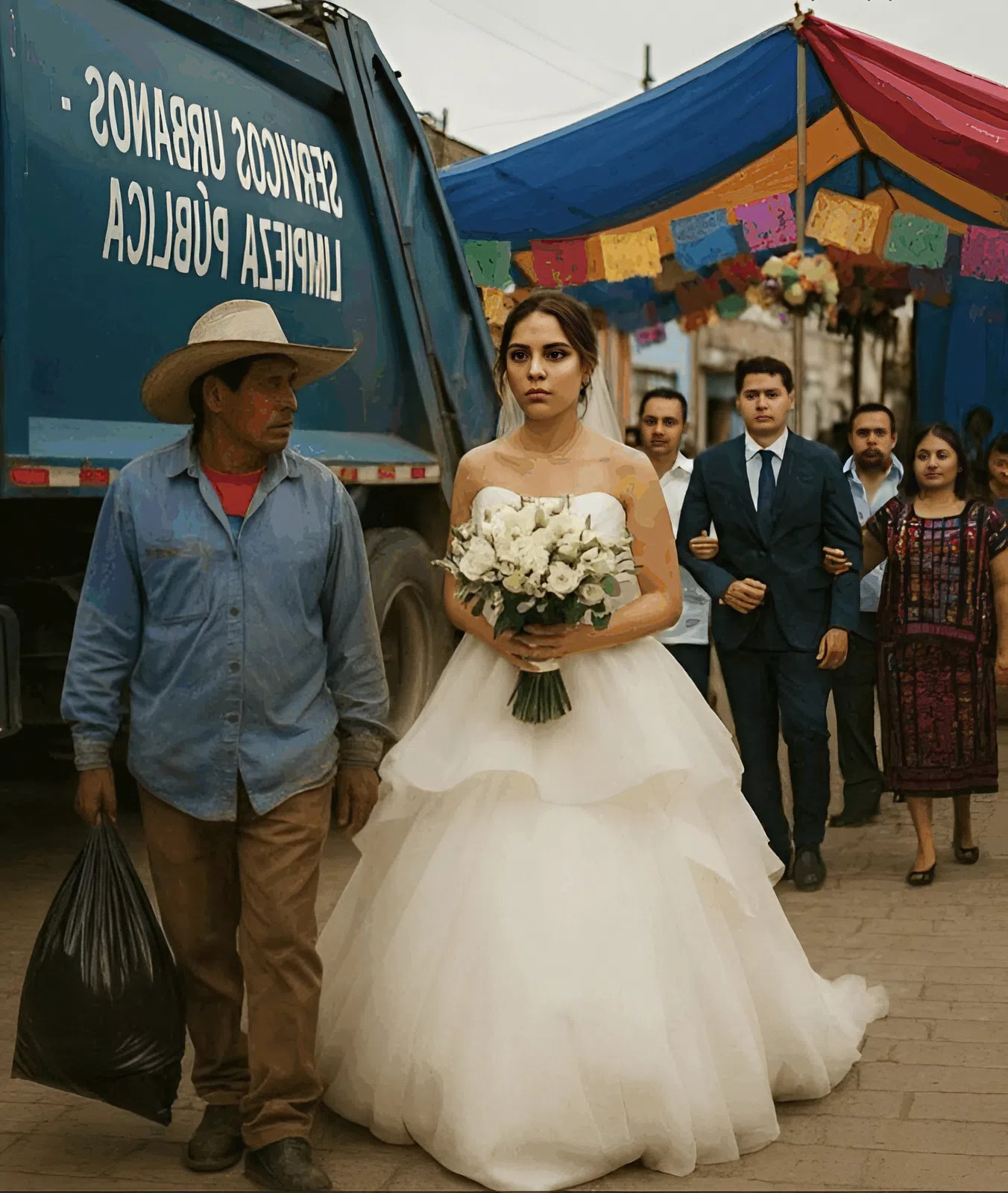
Under the golden autumn sun of the small town of San Pedro del Rio, joy reigned supreme.
It was the long-awaited wedding of Maria and Diego.
Maria, with her honey-brown eyes and gentle smile, was the life and soul of the neighbourhood.
Diego, an engineer from Mexico City, fell in love with her at first sight when they met at the fair.
The Lopez family’s courtyard was covered in bougainvillea, red roses and garlands.
Children ran around with balloons, and the aroma of mole poblano wafted through the air.
Then the groom’s wealthy family arrived — elegant, cold, and clearly feeling out of place.

When noon came, the ceremony came to an end and laughter filled the courtyard.
But the moment of joy was shattered by Diego’s mother, Doña Beatriz, who stood up and said loudly:
“I can’t keep quiet any longer!
Maria’s father is a garbage collector!
She held up a photograph of Don Manuel pushing a garbage cart, wearing worn-out boots and with calloused hands.
‘See? This man collects garbage!’ she said.
Silence fell.
Maria’s mother began to cry.
‘Yes, it’s true,’ she said. ‘But this job fed our family and paid for Maria’s education!’
At that moment, the sound of an engine could be heard in the distance.
A rubbish truck stopped in front of the house.
Don Manuel got out, calm and dignified, with a small wooden box in his hands.

‘Yes, I collect rubbish,’ he said firmly. ‘But do you know why?’
Beatrice smiled:
‘Of course, for the money!’
He shook his head.
‘Not just for the money. Look.’
He opened the box: inside were old photographs, documents and a gold medal.
His voice trembled as he said:
“Thirty years ago, I was an engineer in Puebla. After an explosion at the factory, I rescued ten workers from the fire.
I suffered severe burns and lost my career, but I was awarded this medal.
One of those men was named Esteban Fernandez.
Don Esteban stepped forward from the crowd, stunned.
‘You… saved my life?’
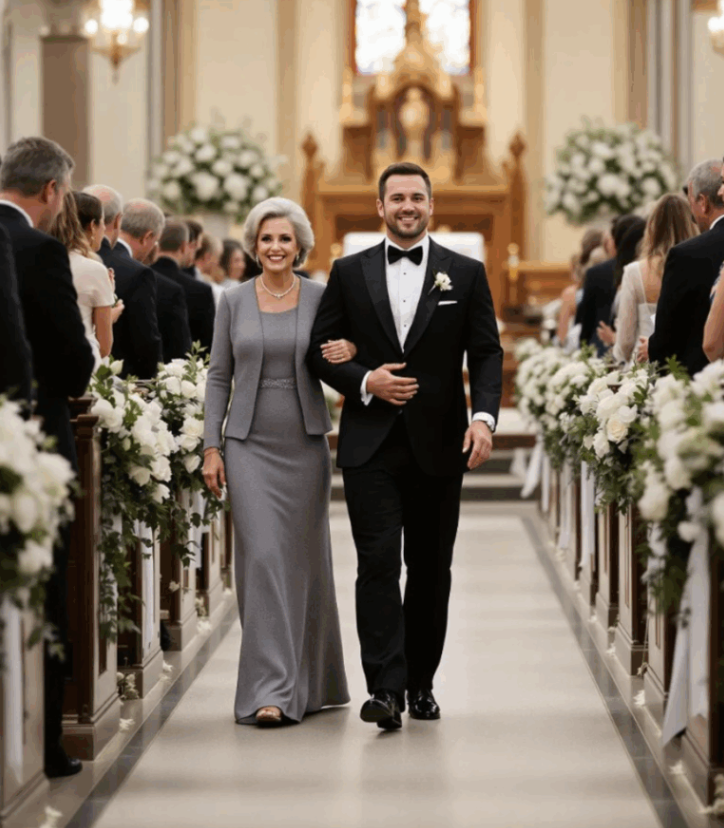
‘Yes,’ Don Manuel replied quietly. ‘I never thought I’d see you again.’
Esteban bowed his head in shame.
‘And I let my wife insult you…’
But Don Manuel did not finish.
He unfolded an old document.
“This piece of land in the centre of Puebla — today it is worth millions — belongs to Maria.
I never spoke of this.
I wanted her to marry for love, not for money.
The crowd gasped.
‘Father, you never told me about this,’ Maria sobbed.
He smiled gently.
‘You didn’t need to know. My happiness is seeing your happiness.’
Doña Beatriz stood pale and trembling.
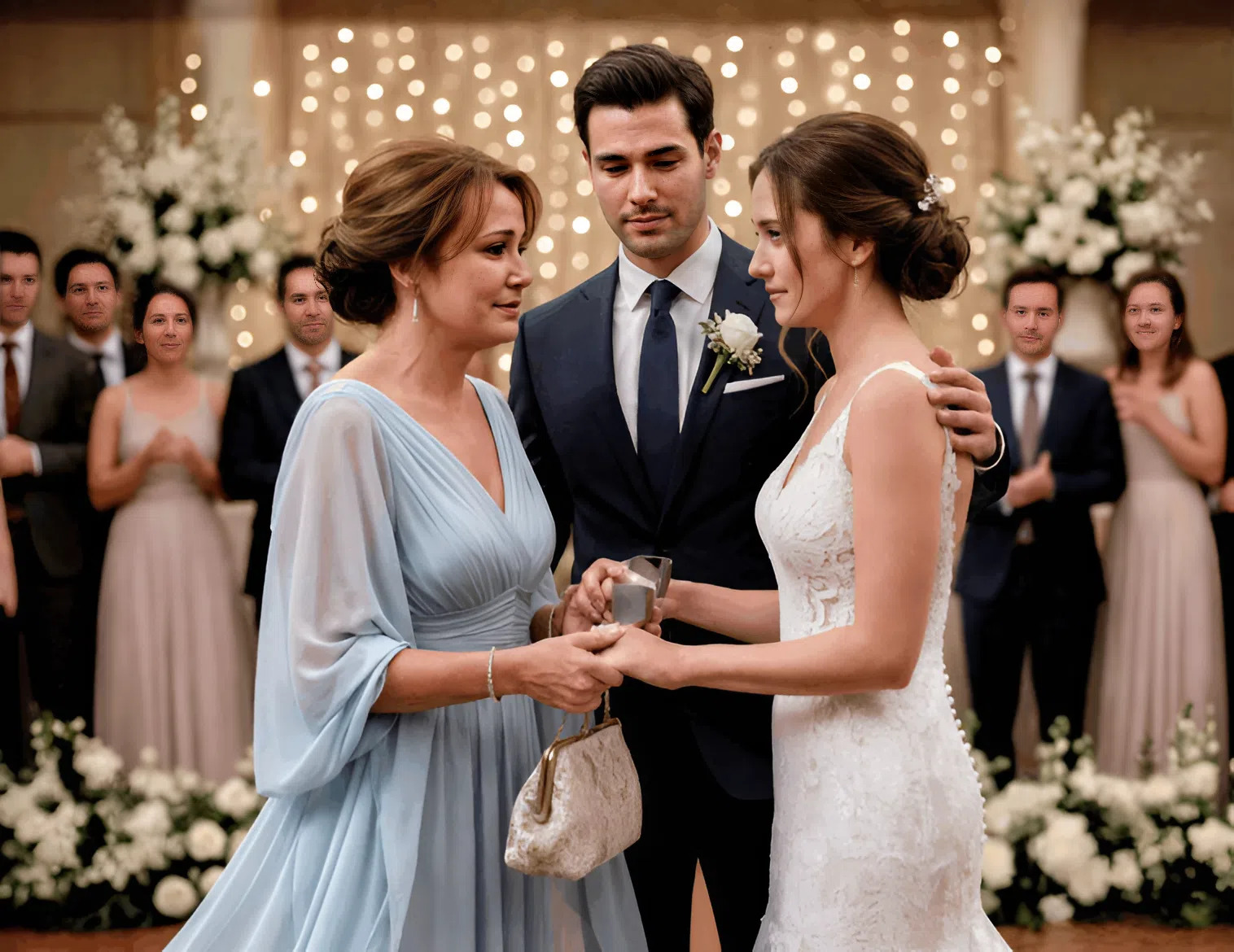
‘I… I was wrong. Forgive me.’
‘There is nothing to forgive,’ replied Don Manuel. ‘Let love speak louder than pride.’
Don Esteban embraced him, and applause filled the courtyard.
Diego knelt before his parents.
‘Their hearts are more precious than any title. I will prove it with my whole life.’
The music began to play again.
The mariachis played while the newlyweds danced under the orange sky.
Doña Beatriz, humbly and silently, served food to Maria’s family.
The music started up again.
The mariachis played while the newlyweds danced under the orange sky.
Doña Beatriz humbly and silently served food to Maria’s family.
And although the garbage truck was still standing at the gate, now it symbolised honour rather than shame.

Maria hugged her father tightly.
‘Thank you for everything, Dad.’
He smiled.
‘Your happiness is all I ever wanted.’
And in the fading light, amid tears and laughter, the story of the humble garbage collector who saved lives and preserved his daughter’s dignity became a legend in San Pedro del Rio.