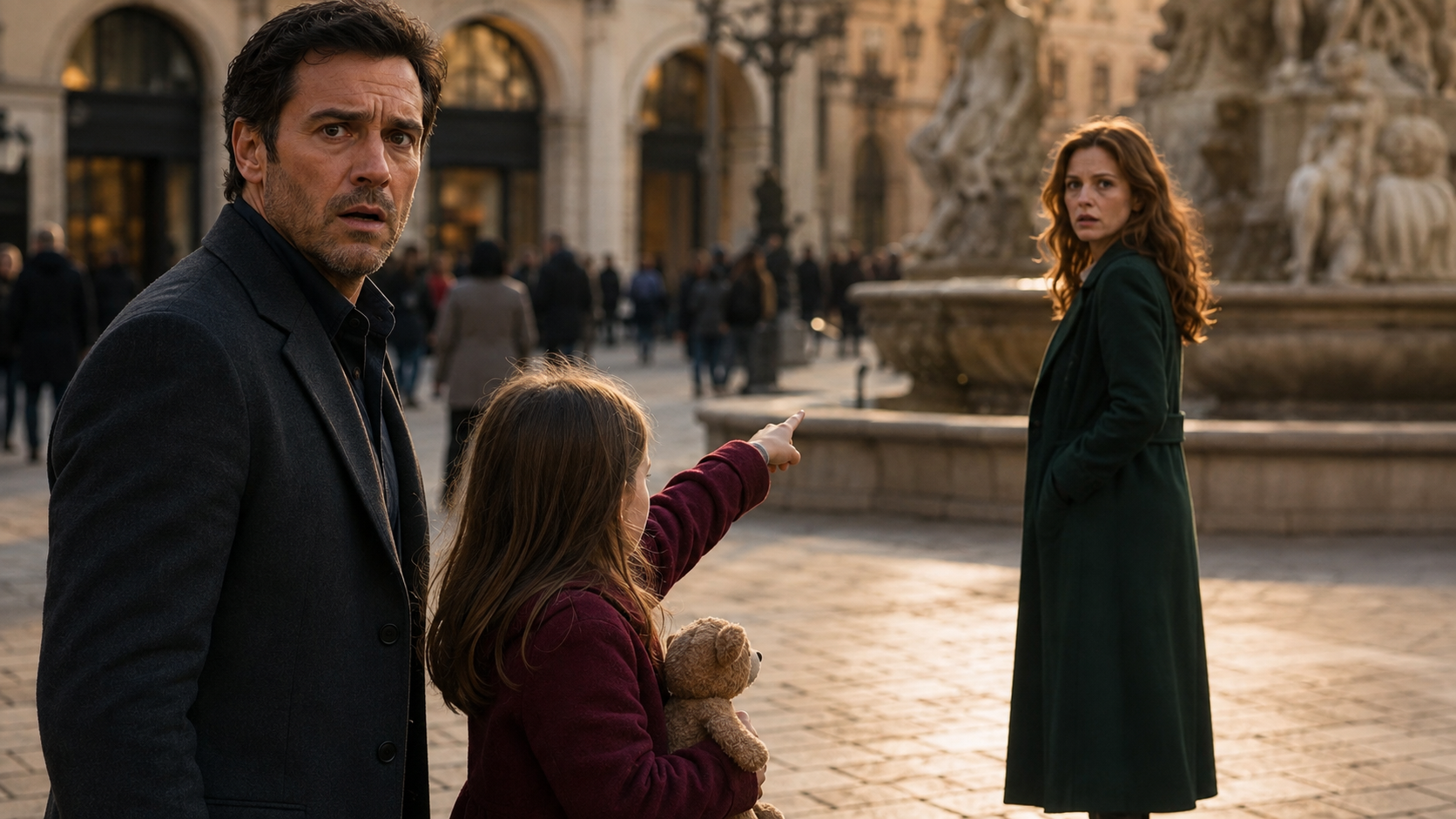
“Who was the director?”
“Dr. Malcolm Voss.”
Nora frowned.
“I know that name.”
Julian turned.
“From where?”
“My mother.”
She searched through photographs of the letters on her phone.
Then found one.
Nora enlarged the bottom of a page.
Her adoptive mother had written:
Dr. Voss told us that asking questions could destroy everything. We believed him.
Mara nodded.
“Voss ran the medical side of the adoption network. He later founded a private fertility clinic.”
“Is he still alive?”
“Yes.”
“Where?”
Mara’s expression darkened.
“About ten miles from here.”
They didn’t go to Voss.
Not immediately.
They gave everything to the police.
The old investigation was reopened.
Reporters discovered the story within forty-eight hours.
Then more families began calling.
One twin separated from a brother.
Three women whose birth records contained impossible dates.
A man whose mother had supposedly signed adoption papers six months after she died.
The story expanded far beyond Amelia.
St. Catherine hadn’t been an adoption agency.
It had been a marketplace disguised as charity.
For nearly sixteen years, desperate young mothers had been deceived.
Some were told their babies had died.
Some were told adoption was temporary.
Some had signatures forged.
Children were placed according to what wealthy applicants were willing to pay.
Twins were especially profitable when separated.
Dr. Malcolm Voss denied everything.
His attorneys called the allegations fantasies built from incomplete records.
Then someone broke into Nora’s house.
Nothing valuable was taken.
The television remained.
Jewelry remained.
Cash remained.
Only the wooden box disappeared.
That night Julian moved Nora and Sophie into his house.
At two in the morning he found Nora sitting in the kitchen.
“You should sleep.”
“So should you.”
He sat opposite her.
For a while they listened to the refrigerator hum.
Nora looked around the kitchen.
“Was this hers?”
“What?”
“The house.”
“Ours.”
She nodded.
“It’s strange.”
“For me too.”
“No, I mean… being here.”
She touched the edge of the table.
“She probably touched this.”
“Every day.”
Nora withdrew her hand.
Julian understood.
“People keep looking at you like you’re her.”
“You do.”
“I know.”
“Does it hurt?”
“Yes.”
Nora absorbed the answer.
“I’m sorry.”
“Don’t be.”
He looked at her carefully.
“You’re not Amelia.”
It was the first time he had said it and truly meant it.
Nora’s eyes lifted.
“You laugh differently.”
She smiled faintly.
“That’s your evidence?”
“You hate tea.”
“Tea tastes like somebody washed leaves in warm water.”
Julian laughed.
“Amelia owned twenty-seven kinds.”
“She sounds exhausting.”
“She was.”
Nora’s smile faded.
“I wish I’d known her.”
Julian looked toward the dark window.
“So do I.”
Then Nora said, “Tell me something she wouldn’t put in a photograph.”
Julian thought.
“She couldn’t whisper.”
“What?”
“She believed she could, but her whisper was basically talking with more air.”
Nora laughed.
“Another.”
“She was terrified of moths.”
“Seriously?”
“She once made me evacuate a hotel room because one was sitting above the door.”
Nora laughed harder.
“Another.”
So Julian told her.
Until sunrise.
Not about the woman in the coffin.
About Amelia.
The living one.
The ridiculous one.
The one who burned pancakes.
The one who cried at documentaries about whales.
The one who always bought books faster than she could read them.
The one Nora should have known.
And slowly, Amelia became something other than a mystery connecting them.
She became Nora’s sister.
Three weeks later police arrested Malcolm Voss.
The breakthrough didn’t come from Amelia’s files.
It came from Sophie.
The little girl was drawing at Julian’s dining table when she looked up.
“Mom?”
“Yes?”
“Why did Grandma put papers inside Teddy?”
Nora frowned.
“What?”
“My bear.”
Sophie lifted the battered teddy with the blue stitching on its ear.
“Grandma opened him before she died. She told me never to lose him.”
Nora and Julian exchanged a glance.
Nora carefully opened the old stitches.
Inside the bear was a plastic envelope.
The missing records had never been stored only in the wooden box.
Nora’s mother had made copies.
The envelope contained payments.
Names.
Birth records.
Private letters.
And a photograph of Malcolm Voss standing beside several St. Catherine employees.
On the back, Nora’s mother had written:
If Nora ever asks why she has no sister, tell her I was afraid. But don’t let fear erase the truth forever.
The documents were enough to connect Voss to the illegal adoptions.
They also placed him near Eleanor Rhodes’s home on the night Amelia died.