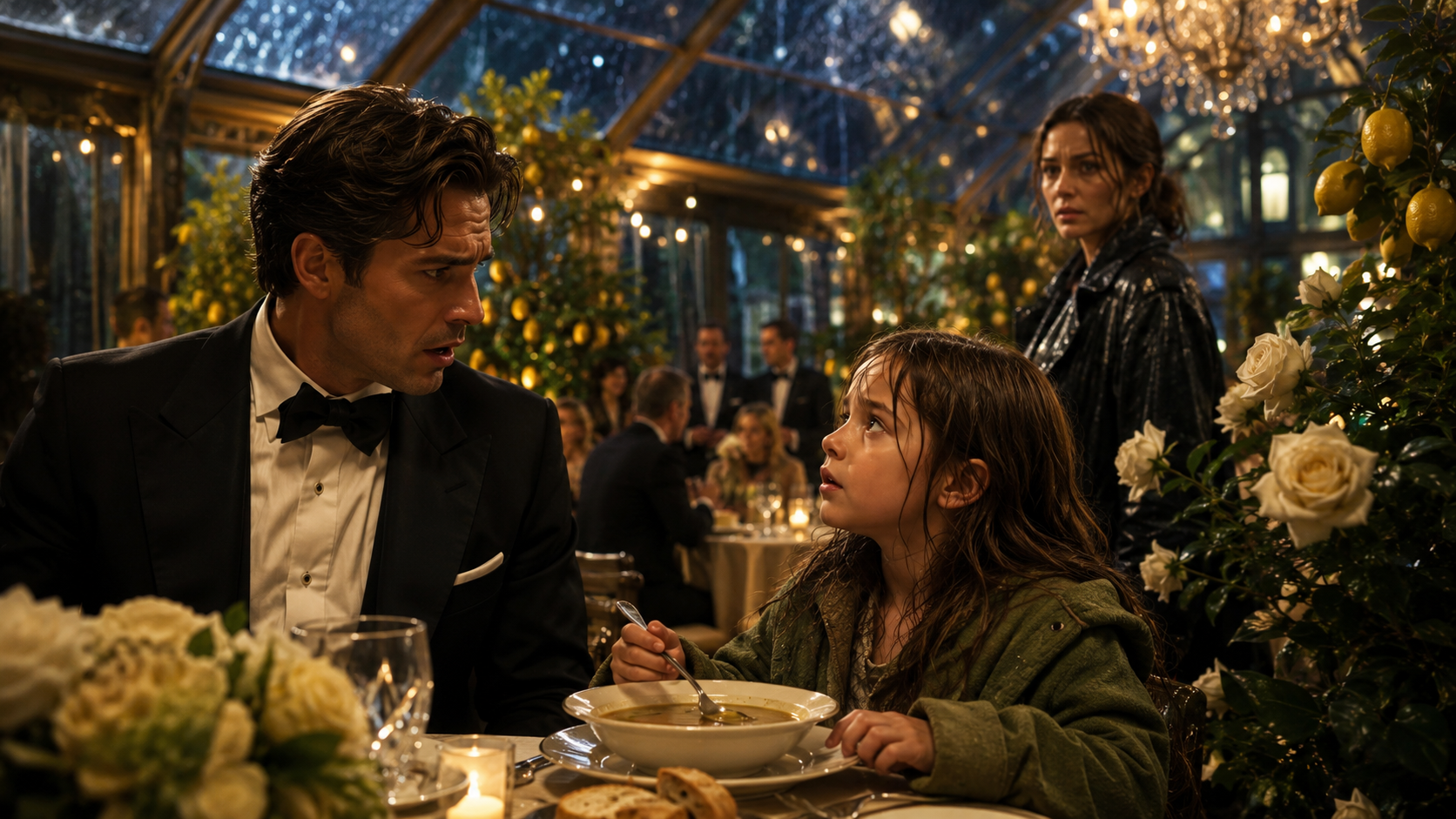
Mara stepped into view behind Adrian.
“The final system contains a pressure flaw in the eastern drainage channel because your engineers copied a preliminary version.”
Simone’s face changed.
Mara continued.
“The corrected calculation appears only in my registered notebook. Every Vale Garden built before 2016 requires additional pumping during heavy rain. The later hotels do not because someone accessed the corrected pages after the Lisbon flooding incident.”
A director looked toward Simone.
“Is that accurate?”
Simone remained silent.
Adrian spoke.
“I am suspending today’s merger announcement.”
Marcus struck the table.
“You do not have unilateral authority after material misconduct.”
“My signature is required under the acquisition agreement.”
“Then the board will vote to remove your signing authority.”
“Vote.”
Simone stared at him.
“You would risk forty thousand jobs.”
“No. We will create an employee protection structure before disclosing the investigation.”
“With what financing?”
“My voting shares.”
Mara turned toward him.
Adrian continued.
“I will place a controlling portion of my personal shares into a temporary trust guaranteeing payroll and operations during the investigation.”
Marcus looked stunned.
“You could lose control permanently.”
“Yes.”
“You built this company.”
Adrian looked at Lily, who was eating smoky oatmeal from a chipped bowl.
“No,” he said. “That is the question we are finally going to investigate.”
The board voted at seven fourteen.
By seven thirty, Adrian was suspended as chief executive.
Marcus became interim chairman.
Simone retained her position pending investigation by the company’s existing legal department—the same department that had approved the disputed documents.
At seven forty-two, Vale House released a statement describing Mara as a former romantic partner presenting “unverified personal and professional allegations.”
Adrian read it once.
Then he called a press conference.
Chapter Five
The Cost of the Truth
By noon, the entrance to the Halcyon Crown was surrounded by reporters.
Mara stood in a private room above the ballroom, watching satellite trucks fill the street.
“You do not have to stand beside me,” Adrian said.
“I know.”
“They will attack you.”
“They already have.”
“They will investigate every address, every debt, every mistake.”
Mara adjusted the sleeves of her borrowed jacket.
“They did that when I had no power to answer. At least today I will have a microphone.”
Lily sat with a hotel employee in another room, drawing pictures and eating strawberries.
Adrian had suggested keeping her at the hotel until reporters left the bakery.
Mara had agreed only after the employee showed identification, references, and the room’s security camera.
Trust, Adrian was learning, was not created by good intentions. It was created by allowing another person to verify them.
The ballroom where he had celebrated his triumph less than twenty-four hours earlier now contained rows of journalists.
Adrian approached the podium alone.
Camera shutters erupted.
He looked at the prepared statement written by the communications team.
It described misunderstandings, preliminary evidence, complex relationships, and the company’s commitment to transparency.
He folded it.
“My name is Adrian Vale,” he began. “For fifteen years, I have allowed the world to credit me with creating the architectural system known as the Vale Garden.”
The room quieted.
“I did not create it.”
A reporter shouted a question.
Adrian continued.
“The original designer is Mara Ellison. She developed the concept before Vale House completed its first hotel. I knew she had created the central idea. I believed, without verifying, that my company had acquired the rights legally.”
Mara watched from the side of the stage.
“That belief benefited me,” Adrian said. “I accepted praise I had not earned. Over time, I corrected the record less often. Eventually, I stopped correcting it at all.”
Simone watched the broadcast from Vale House headquarters.
Marcus instructed staff to prepare an emergency injunction.
Neither could stop what came next.
“Evidence now suggests Ms. Ellison’s signature was forged, her correspondence was intercepted, and her professional reputation was deliberately damaged to prevent her from challenging the company.”
The room erupted.
“Did you order the forgery?”
“Is the merger canceled?”
“Will you resign?”
“Is the child seen with you last night your daughter?”
Adrian gripped the podium.
“The child is seven-year-old Lily Ellison. I have reason to believe she is my daughter.”
“Did you abandon her?”
He looked directly toward the reporter who asked.
“I received a letter from her mother after Lily’s birth. I did not open it.”
The room became silent again.