Whether it was penance, loneliness, or finally a little honesty, Lila never knew.
The letter Marjorie wrote to Finn remained sealed in Lila’s desk.
When Finn turned sixteen, he asked for it.
He read it alone beneath the old maple tree behind the Lake Placid house.
When he came back inside, his face was thoughtful.
“What did she say?” Lila asked gently.
He sat at the kitchen table.
“She said she was sorry she made me feel like I didn’t belong. She said Dad would have been ashamed of her.”
Lila nodded.
“What do you feel?”
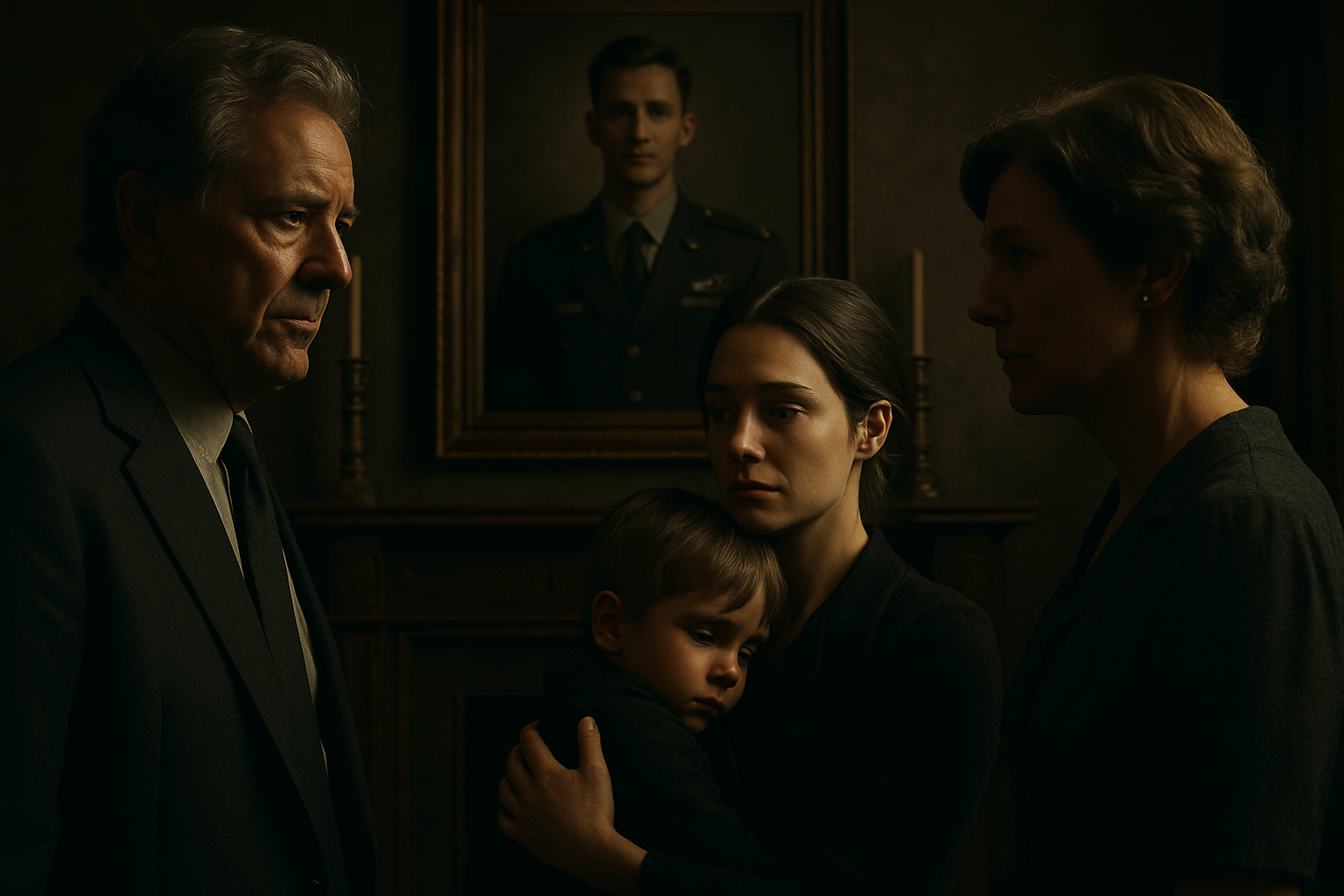
Finn looked toward Rowan’s portrait.
“I feel sad for her.”
“That is allowed,” Lila said, touching his hand.
“Do I have to forgive her?”
“No.”
He thought about that.
“I think I do. But I don’t want to forget.”
Lila smiled sadly.
“That is often the wisest kind of forgiveness.”
Years later, people would remember Marjorie’s scandal as a family power struggle.
They would whisper about the airport, the one-way ticket, the audit, and the luncheon where Gideon came home early and dismantled his sister in front of every guest who mattered.
But Gideon remembered something else.
He remembered Lila sitting on an airport bench with a sleeping boy and three battered suitcases.
He remembered the shame in her voice when she said she did not want to cause trouble.
He remembered Finn asking whether they were in trouble.
And he remembered realizing that the Vale name had never been protected by wealth, galas, foundations, or speeches.
It had been protected by the people willing to stand between cruelty and the vulnerable.
By a widow who refused to sign a lie.
By a driver who ran toward the truth.
By a dead son who left instructions because he understood that love sometimes needs paperwork too.
And by an old father who finally understood that family legacy means nothing if it cannot shelter the people grief leaves behind.
Lila never became loud.
She did not have to.
She became steady.
She raised Finn with dignity. She built a program Rowan would have been proud of. She entered rooms where people once looked past her and spoke with the quiet authority of someone who had survived the cruelest table and no longer needed permission to sit.
As for Gideon, every time he returned from a business trip, he no longer looked first for his driver.
He looked for his family.
Sometimes they waited together at the airport.
Lila with coffee in one hand.
Finn taller every year, waving the way his father once had.
And every time Gideon saw them, he remembered the day his sister tried to decide who belonged.
She had been wrong.
Because belonging was not something Marjorie could grant.
It had already been given by love, protected by law, and sealed in the memory of a son who had known exactly who his family was.