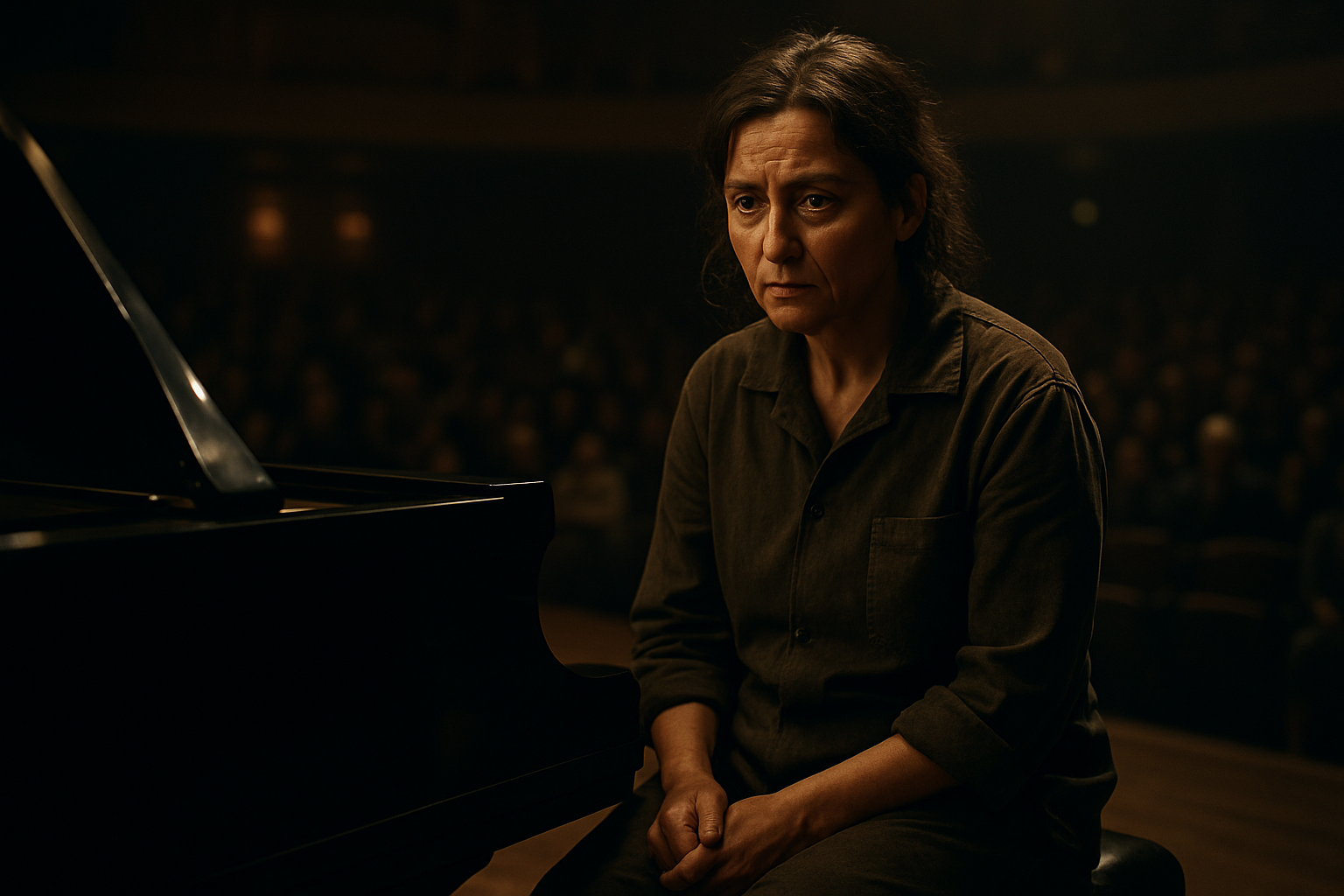
But to mourn the child who believed survival required betrayal.
The final notes rose and faded.
This time, the silence felt like prayer.
Then the audience stood.
I stayed seated, overwhelmed not by applause, but by the peace underneath it.
For years, I had believed my life had narrowed beyond recovery.
Work.
Sleep.
Bills.
Repeat.
I thought music had left me.
But beauty had not left.
It had waited in my hands.
Months later, the Amalia Torres Music Foundation moved into a permanent home in the North Borough. Nothing fancy. Warm yellow walls. Small practice rooms. Donated pianos that did not match. Radiators that clanged during lessons.
But every afternoon, the building filled with music.
Not perfect music.
Human music.
Scales stumbling upward. Violins squeaking. Children counting beats under their breath. Parents resting in folding chairs after long shifts while their children learned to turn sound into shape.
In the front room, above the largest piano, we hung a photograph of my grandmother.
She was younger than I remembered, standing beside her old upright, one hand resting on the wood like an old friend.
Beneath the photograph were her words:
For the children who must learn to dream in rented rooms.
On the first anniversary of the foundation’s opening, I arrived early for the student recital.
Rain tapped against the windows.
I unlocked the door, turned on the lights, and stood in the empty room.
Empty rooms once meant work waiting for me.
Trash to collect.
Floors to mop.
Surfaces to wipe before invisible people returned.
Now an empty room meant possibility.
Soon it would fill with children, missed notes, nervous bows, and applause that did not ask anyone to be rich before being heard.
I sat at the piano.
My hands still bore the marks of labor.
They always would.
I still cleaned some evenings, partly for money, partly because I refused to believe one honest kind of work canceled another.
I was a teacher now.
Sometimes a performer.
A woman strangers recognized.
But I was also the woman who had scrubbed office desks while humming lullabies.
There was no contradiction.
I began to play “The Rain Song.”
The melody moved gently through the room.
I imagined my grandmother beside me, correcting my posture, telling me not to rush sorrow because sorrow had earned its full measure.
Then the door opened.
Sofía stood there with her backpack, rain shining in her hair.
“Sorry,” she said automatically.
Then she caught herself.
“I mean… good morning.”
I smiled.
“Good morning.”
She stepped inside.
“Can I practice before everyone comes?”
“Of course.”
I moved over on the bench.
She sat beside me, placed her small hands on the keys, and began the first scale I had ever taught her.
Her fingers stumbled.
Corrected.
Continued.
Outside, rain fell soft and steady against the glass.
And I understood at last.
This was the ending my grandmother would have wanted.
Not a famous man ruined.
Not a poor woman turned into a miracle for strangers to applaud and forget.
Not even a stolen song returned to its rightful name, though that mattered deeply.
The real ending was this:
A child sitting at a piano without apology.
A room where no one had to prove they belonged before touching beauty.
A song once stolen, now multiplied.
And my grandmother’s music moving forward through hands that had not yet learned to be ashamed.