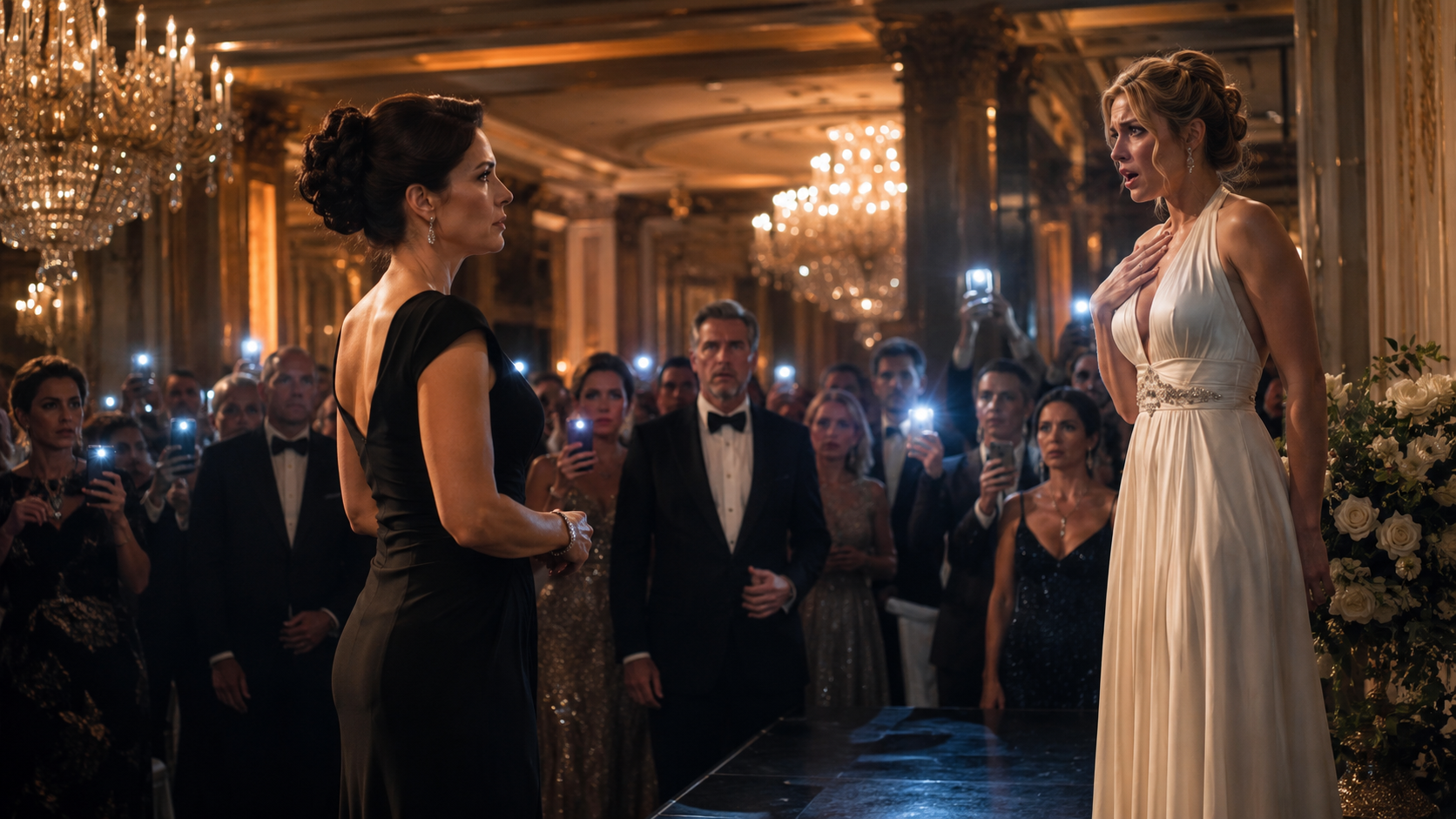
Guests who had praised her an hour earlier were now avoiding her eyes.
“This was supposed to be my night,” she whispered.
“It was.”
Vivienne looked at me, confused.
“You showed everyone exactly what kind of leader you intended to become.”
The investigation lasted eleven weeks.
Calder Vale denied wrongdoing until the audit committee released records showing that its executives had helped prepare false financial projections for the board. Vivienne’s fiancé admitted that his consulting company had received payments connected to the proposed sale.
My father resigned from the board.
My mother withdrew from public life.
Vivienne was not sent to prison, but she lost her position, her reputation, and most of the wealth she expected to gain from the acquisition.
People called it my victory.
It never felt like one.
There is no victory in discovering that the people closest to you considered your life’s work an inheritance they could divide before you were gone.
The board offered to make me chief executive again.
I refused.
Instead, I became chair of the independent technology trust and appointed an experienced operator named Priya Raman to run the company. She had spent twenty years managing infrastructure systems and had no interest in family mythology.
Together, we broke Marlowe Dynamics into two organizations.
The commercial division continued serving private clients.
Atlas became part of a protected public-benefit corporation that could never be sold without approval from engineers, municipal partners, and an independent safety council.
Six months after the gala, I returned to the same hotel.
The ballroom was empty.
Workers were preparing it for a medical conference. The silver constellations still covered the ceiling, but without the lights and cameras, the room looked ordinary.
I stood near the place where my table had been.
Daniel entered carrying two cups of coffee.
“Sentimental visit?” he asked.
“Inspection.”
“Of the carpet?”
“Of my memory.”
He handed me a cup.
“Any conclusions?”
I looked toward the stage.
For years, I thought power meant being the person standing under the brightest light. My father believed power came from ownership. Vivienne believed it came from making other people afraid to challenge her.
They were both wrong.
Real power was quieter.
It lived in the conditions you refused to compromise, the work you protected when no one was applauding, and the door you were willing to walk through without knowing whether you would ever be invited back.
“I should thank her,” I said.
Daniel nearly dropped his coffee.
“Vivienne?”
“She forced the company to become what it should have been from the beginning.”
“That is an unusually generous interpretation.”
“It isn’t generosity.”
“What is it?”
I looked one final time at the stage where my sister had tried to erase me.
“Closure.”
My phone vibrated.
For a moment, I remembered hundreds of screens illuminating the ballroom at once, each one carrying the name Vivienne had tried to remove.
This notification was different.
Atlas had successfully prevented a cascading power failure at a children’s hospital in northern Finland. Backup systems had activated seventeen seconds before the main grid collapsed.
No cameras recorded the moment.
No audience applauded.
Somewhere, doctors continued working without interruption, and patients never learned how close the darkness had come.
That was the legacy I wanted.
I finished my coffee and walked out of the ballroom without looking back.