She looked at the cabins, the gravel paths, the workshop doors thrown open, the veterans pretending not to be nervous, the women holding children close.
“So this is what you did with it.”
“Yes.”
“You could have bought half of Charleston.”
“I never wanted half of Charleston.”
Her mouth twisted.
“I thought Dad gave me the better life.”
“He gave you the finished thing.”
She looked down.
“I watched the video again. More than once.”
“Did it help?”
“No,” she whispered. “Then yes. Then it hurt worse.”
“That sounds honest.”
Her eyes shone.
“I hated you because he trusted you more.”
I did not soften the truth.
“He did.”
She flinched.
“But that does not mean he loved you less.”
She wiped at one eye angrily.
“I do not know what to do with that.”
“Then sit with it.”
For a while, neither of us spoke.
Then she looked toward the kitchen building.
“Do you need volunteers?”
I almost said no.
Memory rose fast: Maribel laughing in the lawyer’s office. Maribel sending attorneys. Maribel calling me rotten. Maribel trying to take soil from land she had mocked.
Then I thought of Ruth.
A woman is not bitter because she keeps what others planned to steal.
But keeping did not have to mean becoming cruel.
“What can you do?” I asked.
Maribel gave a weak laugh.
“Honestly? I can organize rich people.”
“That is a terrifying skill.”
“It works at fundraisers.”
I studied her.
“If you volunteer here, you do not get photographs. You do not make yourself the story. You do not treat anyone here like a prop.”
“I know.”
“If you insult one person, I will throw you out myself.”
“I know.”
“And Maribel?”
She looked at me.
“You start by washing dishes.”
For the first time since Dad died, my sister smiled without turning it into a weapon.
“Fair.”
The ribbon cutting happened at noon.
I stood on the porch with my mother on one side and Abel on the other. Maribel stood near the kitchen door, sleeves rolled up, hands damp from the sink, watching quietly.
Russell read the dedication.
“To Ruth Bell Whitaker, who bought land nobody valued and protected a future nobody else could see. To Harlan Whitaker, who understood too late that love must be spoken while the living can still hear it. And to every person who has ever been handed scraps by people too blind to know they were giving away seeds.”
When it was my turn, I unfolded Dad’s letter.
The paper had softened from being read so many times.
“My sister once called this place rotten,” I said.
A nervous ripple moved through the crowd.
Maribel lowered her head.
“She was wrong. But so was I. I thought this cabin meant my father had valued me least. I thought I had been handed what was left over.”
I looked toward the ridge.
“What I learned is that some gifts arrive wrapped in insult. Some doors look like exile until you open them. Some inheritances are not rewards. They are assignments.”
My mother wiped her eyes.
I looked at the people gathered in front of me.
“Dad wrote that wealth without character becomes a weapon. We are here because we choose to make it a tool.”
The applause came slowly.
Then stronger.
I did not feel triumphant.
I felt steady.
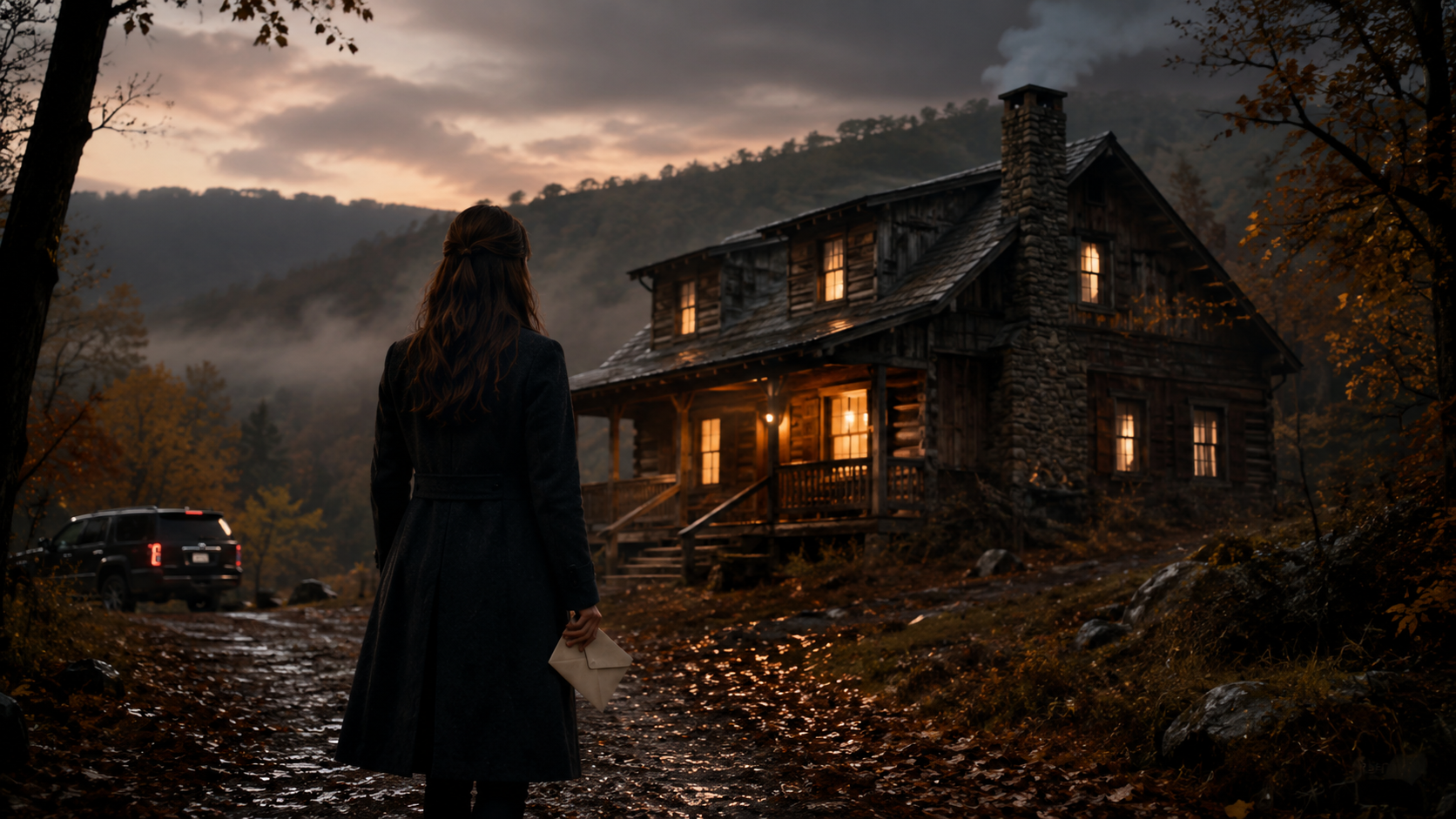
That night, after everyone left, I returned to the original cabin alone.
The fire was low. Ruth’s photograph sat on the mantel beside Dad’s. Outside, the new cabins glowed softly through the trees.
I made coffee and sat at the old kitchen table.
The floorboard beneath it was back in place.
I thought about Ruth hiding winter money there. Dad hiding maps and apologies. Maribel washing dishes in silence. Mother learning that regret could become labor if you let it.
The cabin still creaked in the wind.
The porch still needed work.
The road still turned to mud after rain.
It was not polished.
It was not easy.
It was not the life Maribel had laughed at because she could not recognize value unless someone expensive named it first.
But it was mine.
And for the first time, that did not mean I had won something from my sister.
It meant I had stopped losing myself to people who could not see me clearly.
I lifted my mug toward Ruth’s photograph, then toward Dad’s.
“You were right,” I said softly. “The valuable things were hidden where they laughed first.”
Outside, the Ozark night settled around the cabin, deep and alive.
I listened.
This time, I heard home.