Frede and Keaton had been inseparable since kindergarten—the kind of boys teachers secretly hoped other students would emulate. They were hardworking, modest, and quietly kind, never doing anything for applause. At sixteen, growing up in households where money was always tight, they still somehow managed to give more than they had.
Frede was the thoughtful one—soft-spoken, observant, always willing to stay after school to tutor younger kids, and he refused to take money for it. Keaton was the gentle giant—tall, full of easy laughter, the kind of guy who spent his weekends coaching Little League instead of chasing varsity glory. Their families struggled, but their compassion never did. If anything, their tough beginnings shaped them into steady, patient young men who noticed when others were hurting.
One Tuesday afternoon, they were walking home along the wooded back road behind Jefferson High when Keaton kicked a pebble and said, “You think Coach will let us miss practice Friday?”
Frede raised an eyebrow. “Why?”
“The community center needs help with the donation drive.”
Frede grinned. “This is exactly why you’re my best friend.”
They laughed and kept moving, the cool autumn breeze rustling through the trees. The leaves were just starting to change when a thin, cracked voice floated up from the slope beside them.
“Help…”
They both froze. Then Keaton dropped his backpack and bolted toward the sound without a second thought. Frede followed right behind him.
At the bottom of the embankment lay an elderly man, groceries scattered around him—eggs smashed into the dirt, milk spilled into the ground, a canvas bag torn down the side. He reached out weakly, blinking against the sunlight.
Keaton knelt beside him. “Sir, can you hear me?”
The old man swallowed. “Fell… dizzy spell. Name’s Bernard,” he rasped.
Frede uncapped his water bottle and gently lifted Bernard’s head. “Here. Sip slowly.”
Bernard drank, coughed, then let out a tired breath. “Been down here… an hour, maybe. Maybe longer.”
“We’re calling an ambulance,” Keaton said, reaching for his phone.
“No.” Bernard lifted a trembling hand to stop him. “No hospital. Just… help me get home.”
Frede picked Bernard’s cane up from the dirt and pressed it into his palm. Keaton met Frede’s gaze, and without a word, they came to the same decision.
“We’re not leaving you here,” Keaton said. “We’ll walk you home ourselves.”
Bernard tried to argue, but there was no strength left in his voice. Frede slipped an arm under one elbow, Keaton under the other, and together they helped him to his feet. He felt almost weightless.
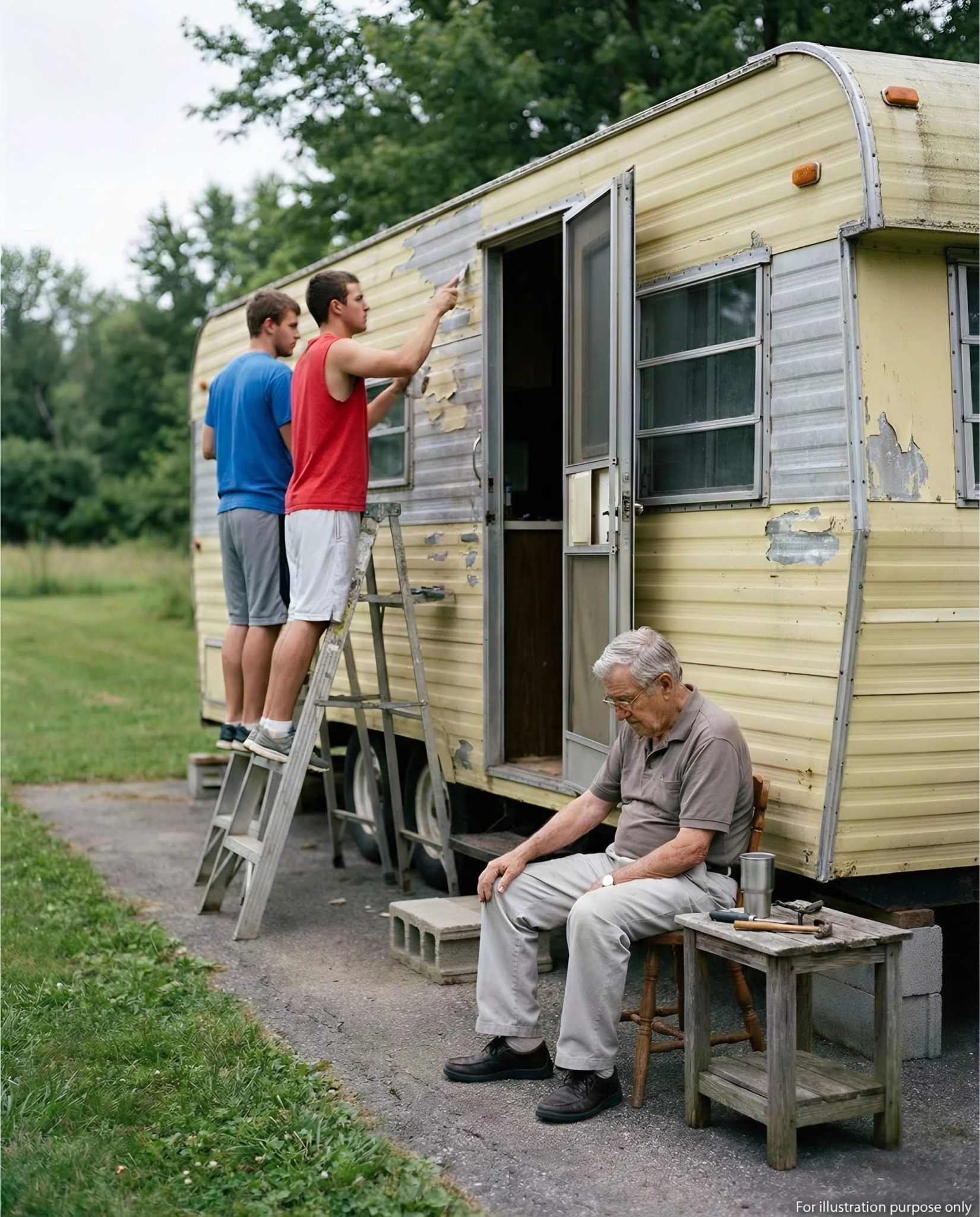
Ten minutes later, they reached his place—if it could be called that. A worn trailer sagging on cinder blocks, windows patched with cardboard, the roof held together by tarp and sheer determination.
“This is it,” Bernard murmured, his cheeks flushing. He fumbled in his pockets, pulled out his wallet, opened it. Empty. He glanced around, then hobbled inside and returned with a single red apple, its skin dulled with age.
“It’s all I have to give you,” he said.
Neither of them reached for it.
“We didn’t help you for money,” Frede replied softly.
Bernard’s eyes immediately filled with tears.
That evening, as they walked home, they couldn’t shake the image of the frail old man alone in that collapsing trailer.
The next afternoon, they went back—this time carrying bags of groceries, bought with every dollar they’d saved mowing lawns and washing cars. When Bernard opened the door and saw the food, he covered his mouth like he’d been struck.
“Boys… why would you do this?” he whispered.
“Because you need it,” Keaton said simply.
Bernard cried then, silently, his shoulders trembling.
From there, their visits became a habit—twice a week, sometimes more. They brought food, fixed leaks, patched the roof, cleaned up the yard. Over time, Bernard stopped being just someone they helped. He became someone they cared about. Someone they listened to. Someone they loved.
On warm days, they’d sit outside in mismatched chairs while Bernard shared lessons carved out of years of mistakes and regret.
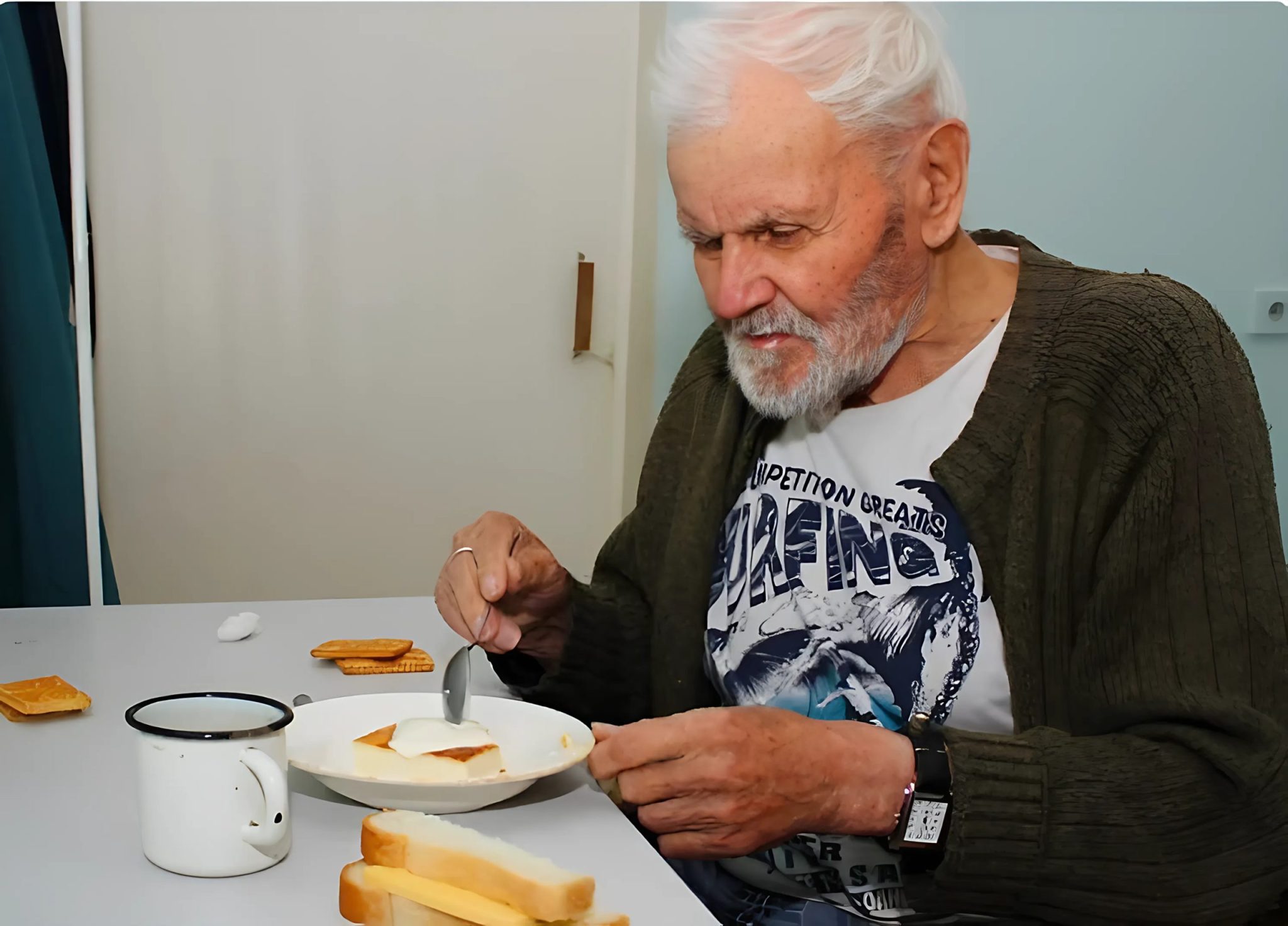
“A good man does what’s right when people are watching,” he told them one afternoon, hands resting on his cane. “A great man does what’s right when no one is.” He looked at each of them in turn. “You boys? You’re on your way to being great.”
Another day, as they worked on the roof, he called up, “Money doesn’t make you rich. People do. Love does.”
Keaton chuckled. “Pretty big talk from a guy living in a busted trailer, Mr. Bernard.”
Bernard laughed too, but there was a sadness tucked into it. “Life teaches you, son. Usually by taking things away.”
With each visit, the bond between them grew. Bernard became the grandfather they’d never had—listening to their dream of becoming teachers, urging them not to give up, reminding them that they mattered more than they realized.