The Boy With His Eyes

The Boy With His Eyes

“Is he my son?”

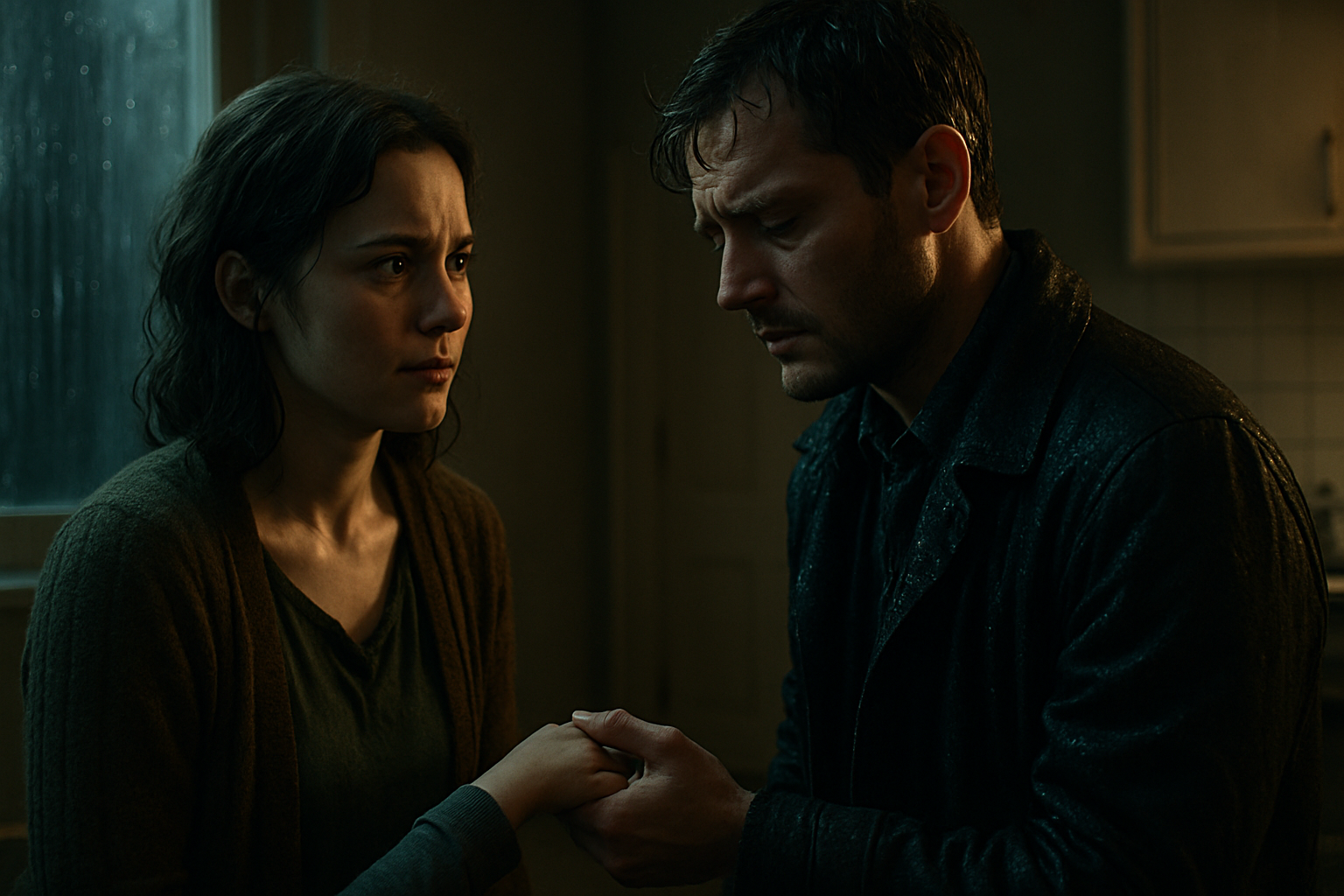
Elise Rowan held Graham Calder’s stare across the little kitchen.

Rain slid from his expensive coat and pooled on her worn floor. Behind him, the storm beat softly against the windows. In the hallway, a boy’s school shoes sat neatly beside the door.

Elise could have lied.

But lies had never survived between them.

“He is mine,” she said.

Graham’s face broke in a way she had never seen before.

“And you don’t get to be his father,” she added, her voice trembling now, “just because you finally noticed his eyes.”

He looked down at the child’s wrist, where a small crescent birthmark curved against pale skin.

The same mark Graham carried.

For the first time in all the years Elise had known him, the billionaire had no answer.

Their story had begun long before that storm.

Graham was sixteen when his mother dragged him to Baltimore for what she called “a strategic training year.” That meant tennis coaches. Math tutors. Investor dinners. Men in expensive suits studying him as if he were a winning ticket.

He was supposed to be a tennis star first.

Then a math prodigy.

Then a founder.

His mother changed the dream every time a richer room opened its doors.

Elise met him in eleventh-grade English at Whitcomb Academy, where scholarship girls like her sat beside boys whose shoes cost more than her mother’s rent.

Graham sat behind her and tapped his pen through the whole class.

After eleven minutes, Elise turned around.

“If your hands are that bored,” she said, “use them to take notes.”

Graham blinked.

No one talked to him like that.

Teachers forgave him. Coaches praised him. Girls watched him. Investors smiled at him like he already belonged to them.

Elise simply turned back around.

The next day, he borrowed her pen without asking.

The day after that, he followed her to the library and sat across from her as if fate had saved the chair.

“You always study like someone’s grading your breathing?” he asked.

“You always talk like silence owes you money?”

He grinned. “You’re mean.”

“You’re loud.”

“I’m interesting.”

“You’re exhausting.”

That should have ended it.

Instead, it began everything.

Soon Graham was appearing at Elise’s house after school. First for calculus. Then for group projects. Then for no reason at all.

Elise’s mother, Mae Rowan, fed anyone who stood still in her kitchen, and Graham quickly learned how to stand still.

Elise’s older brother, Jonah, came home from community college one evening and found Graham eating a second plate of fried chicken.

“You live here now?” Jonah asked.

“I was invited,” Graham said.

“No, you weren’t,” Elise called from the sink.

Graham lifted his fork. “The chicken invited me.”

Jonah tried not to laugh.

He failed.

After that, Jonah treated Graham like a stray dog the family had accidentally adopted. He challenged him at basketball. Warned him not to make Elise cry. Then sat with him on the back steps late at night, talking about music, cars, money, and all the ways young men pretend pain becomes purpose if they run fast enough.

For two years, Graham lived between two worlds.

In one world, his mother placed him in rooms where men said words like valuation and acquisition while looking at him like profit wrapped in skin.

In the other, Elise’s house smelled of garlic, detergent, old books, and safety.

Mae argued with the weather.

Jonah sang too loudly over the dishes.

Elise sat at the kitchen table with one foot on Graham’s chair and told him when he was being an idiot.

Which was often.

People thought they were dating.

They weren’t.

People thought they were only friends.

They weren’t that either.

There was no clean word for them. Naming it would have required courage, and neither of them trusted themselves with that much truth.

Graham knew he loved her at seventeen.

He knew it when she crushed a smug senior in debate with one raised eyebrow and a speech about poverty.

He knew it when she showed up at his tennis match with a homemade sign that read, HIT THE BALL, GENIUS.

He knew it most clearly on a cold night when his mother forgot his birthday because she was closing a deal in Seattle. Elise arrived with Jonah, three cupcakes, and a candle shaped like a question mark because the store had run out of numbers.

“You’re very annoying,” Graham told her as she lit it.

“You’re welcome.”

“I didn’t say thank you.”

“You will.”

He did.

Later, on the roof, with the city glittering around them and Jonah downstairs on the phone, Graham almost said it.

I love you.

The words rose all the way to his mouth.

Then Elise leaned her shoulder into his and said, “Don’t get soft on me, Calder.”

So he swallowed the truth.

He was terrified that if he changed the shape of them, he would lose her.

The end came quietly.

That made it worse.

Graham’s first company, a predictive media platform called Orion Bridge, won a national innovation grant. A billionaire investor named Lionel Vane offered seed money, a San Francisco office, and mentorship that sounded generous until lawyers read the fine print.

Graham’s mother cried for the cameras.

His coaches called it destiny.

Jonah slapped him on the back and said, “Don’t forget us when your suits cost more than my car.”

Elise said nothing for almost a full minute.

“When?” she finally asked.

“Three weeks.”

She nodded, rinsed a plate that was already clean, and did not look at him again for the rest of dinner.

Their last night was supposed to be normal.

It wasn’t.

They sat on the roof with cheap takeout, two stolen beers Jonah would have pretended not to notice, and every unsaid thing pressing between them.

“You’ll love California,” Elise said.

“No, I won’t.”

“You’ll have investors and parties and famous people pretending your jokes are good.”

“My jokes are good.”

“They’re expensive. That’s different.”

He looked at her. Really looked.

“Come with me.”

She laughed once because she thought he was joking.

He wasn’t.

“Graham.”

“I mean it.”

“I have school. My mom. Jonah. A life.”

“You could have one there.”

“Yours?”

He did not answer fast enough.

That was the trouble with Graham even then. He wanted fiercely, but fear made him selfish. He wanted Elise in his future, but he had not imagined what she would lose to stand there.

Elise saw the hesitation.

“Exactly,” she whispered.

He should have apologized.

Instead, he kissed her.

She should have stopped him.

She didn’t.

The kiss was not gentle. It was two years of restraint losing the fight. What followed was not cheap or careless. It was beautiful, frightening, and already grieving itself.

For a few hours, there was no company. No investor. No mother. No future waiting with a knife.

Only Graham.

Only Elise.

Only morning light creeping under the curtains like a witness.

Then Graham ruined it.

He woke before her, panicked at the tenderness in the room, and reached for a joke because jokes were armor.

“You steal blankets like a criminal,” he said.

Elise opened her eyes.

“That’s what you want to say?”

“I’m reporting facts.”

She sat up, pulling the sheet around herself.

The look on her face was not anger.

Anger would have been kinder.

It was disappointment settling somewhere he could not reach.

At the airport, he promised to call when he landed.

She said okay.

His mother waved impatiently from security. His new manager shouted that they were late.

Graham turned back.

The words were there again.

I love you.

Elise looked at him as if she knew exactly what he was failing to say.

“Go become famous,” she said.

So he did.

Nine years later, lying awake on Elise’s couch while the storm faded to a cold drizzle, Graham understood that fame was the least impressive thing he had ever achieved.

Morning smelled like coffee and judgment.

Graham opened his eyes to find a boy sitting at the kitchen table in a school sweater, eating cereal while reading a thick book about deep-space observation.

The boy looked up.

“You snore,” he said.

Graham sat up carefully. “Good morning to you too.”

“It was informational, not rude.”

Elise stood at the counter, hair twisted into a knot. She failed to hide her smile.

Graham stared at the boy.

Eight years old.

Gray-blue eyes.

That crescent birthmark.

His heart did the math before his mind would allow it.

The boy saved him the trouble.

“You’re staring because you think I might be yours,” he said calmly.

Elise set her mug down too hard.

“Miles,” she warned.

“It’s fine, Mom. He was going to ask badly. I made it more efficient.”

Graham almost laughed, but his throat hurt.

“How old are you?” he asked.

“Eight.”

“When is your birthday?”

“March third.”

Graham closed his eyes.

The date struck like a bell.

He had done the math all night. March third made denial impossible.

When he opened his eyes, Miles was watching him with curiosity instead of fear.

“You’re a bad liar,” the boy said.

“I didn’t lie.”

“You said nothing. Your face tried to.”

The school bus came seven minutes later.

Miles put his bowl in the sink, packed his book, and paused near Graham.

“Goodbye, sir.”

“Goodbye, Miles.”

The door closed.

The house settled.

Elise leaned against the counter and waited. She knew silence could punish Graham better than shouting.

He stood.

“Why didn’t you tell me?”

Her face changed so fast he wished he could pull the question back.

“Because nine years ago,” she said, “I watched you tell a reporter on national television that fatherhood looked like a prison sentence.”

Memory hit him.

A rooftop bar. Cameras. Applause. A woman asking if the handsome young founder wanted a family someday.

Graham, twenty-two and drunk on attention, had laughed.

That life isn’t for me. I’d be terrible at it.

The clip had gone everywhere.

“I was twenty-two,” he said weakly.

“I was nineteen and nine weeks pregnant.”

The kitchen went still.

Elise’s voice stayed even, which told him the wound had never healed.

“I called you anyway. I told myself cameras make men stupid. You didn’t answer. I called again. You didn’t answer. That afternoon your face was on a segment from overseas with a woman in a red dress touching your mouth like she owned it.”

“Elise—”

“So I sat on the bathroom floor for an hour. Then I got up. I made an appointment. I applied for help. I told my mother. And I started raising my son.”

He wanted to explain.

His schedule. His handlers. His mother. The loneliness. The women who meant nothing because they were not Elise.

But explanations were not answers.

“I’m sorry,” he said.

Elise looked toward the stairs.

“Be sorry quietly. He doesn’t need another adult making feelings his job.”

Graham stayed one night.

Then three.

Then the reporters found them.

A neighbor’s niece recognized the black SUV outside Elise’s row house and posted a blurry photo. By noon, entertainment accounts had linked it to Graham’s security team. By three, a long-lens camera caught Graham walking Miles home from school.

The resemblance was clear enough to need no confirmation.

By dinner, the internet had named the scandal for them.

SECRET SON.

BILLIONAIRE DAD HIDES FAMILY.

WHO IS ELISE ROWAN?

Elise put her phone face down and pressed both hands flat beside it.

She did not cry.

Graham wished she would. Tears would have given him something to comfort. This calm made him useless.

Miles came downstairs.

“They found us,” he said.

“Yes,” Elise replied.

“Are we leaving?”

Elise glanced at Graham before she could stop herself.

He saw how much she hated needing him.

“I have a secure apartment in Harbor East,” he said. “Private elevator. Garage access. We can stay there until it cools down.”

“Your world,” she said.

“Temporarily.”

“Your world is never temporary. It spreads.”

He had no answer.

She was right.

Miles adjusted his backpack. “Statistically, controlled relocation is safer than emotional resistance.”

Elise stared at him. “You are too young to sound like a crisis consultant.”

“I read.”

They packed for a week.

Graham’s apartment looked like money had tried to imitate comfort and missed. High ceilings. Cold furniture. Windows wide enough to make the harbor look staged. Fresh flowers on the table. A refrigerator stocked with sparkling water, berries, and food no child wanted.

Miles walked through the living room with his hands behind his back.

“This place has no personality.”

“It has good security,” Graham said.

“That’s not the same thing.”

Elise laughed before she could stop herself.

Graham looked at her and wanted, desperately, to hear that sound again.

Life in the apartment became an awkward experiment.

Graham did not know how to live with people without arranging services around them. Elise had no patience for men who mistook money for effort.

He bought Miles a drone, a telescope, a marble chessboard, and a limited-edition space model that cost more than Elise’s first car.

Miles examined them gravely.

“You don’t have to buy me things.”

“I wanted to.”

“Why?”

Because I missed eight birthdays and do not know how to survive the guilt.

But Graham only said, “I thought you’d like them.”

“I already have a chessboard. Marble chips easily.” Miles looked at the drone. “Poor battery life. The telescope is acceptable.”

“Acceptable,” Graham repeated.

“The mirror alignment is manual. You’ll need help.”

“I can help.”

“Do you know how to calibrate a Newtonian reflector?”

Graham hesitated. “No.”

Miles nodded. “I’ll teach you.”

That evening, they sat on the floor with telescope parts spread between them. Graham tightened the wrong screw twice. Miles corrected him without mockery, which somehow felt worse and kinder.

“You don’t have to be perfect,” Miles said after the third apology.

Graham looked at him.

“Is it that obvious?”

“Yes. But I’m eight, not a board of directors.”

The sentence hit him hard.

Later, Miles pointed the telescope toward a break in the clouds.

“Look.”

Graham leaned in and saw a cluster of stars sharpen into impossible clarity.

For one quiet moment, he was not a scandal or a billionaire or a man who had lost nine years. He was a father looking through a telescope his son had taught him to use.

“That’s incredible,” he whispered.

“I know,” Miles said, and laughed.

It was brief. Bright. Unguarded.

Graham stayed bent over the eyepiece because his eyes had begun to burn.

At the door that night, Miles asked, “Are you planning to leave again, or should I emotionally prepare differently this time?”

Graham understood then that children ask questions adults spend whole lives avoiding.

“I don’t know how to answer that yet,” he said.

Miles nodded, disappointment moving over his small face.

“That’s still an answer.”

Four days later came the gala.

Graham’s publicist, Beatrice Lane, insisted they attend. Absence looked like guilt. Silence looked like shame. Elise wanted to tell Beatrice where to put her strategy, but reporters had started shouting Miles’s name outside the building.

Hiding, Miles observed, made them look hunted.

So Elise wore a black dress she already owned and refused the stylist Graham offered. Miles wore a navy blazer Graham had bought without permission. It fit perfectly, which irritated Elise more than if it hadn’t.

The gala glittered under chandeliers like frozen explosions.

Graham stayed near Elise without crowding her. When men spoke over her, he drew her back into the conversation so smoothly they had to listen or look rude. When a woman from his past touched his arm too warmly, he stepped back.

“This is Elise Rowan,” he said. “She knows when I’m lying, so be careful.”

Elise lifted an eyebrow. “That’s my introduction?”

“It’s the highest compliment I have.”

She tried not to smile.

She failed.

For one dangerous hour, she saw the boy she had once believed in. Quick. Attentive. Brilliant when he used his brilliance to make someone feel seen.

Then a reporter slipped past the staff and moved toward Miles near the windows.

Elise saw the recorder first.

Graham saw Elise see it.

They both moved, but Miles turned before they reached him.

“Miles,” the reporter said, crouching as if exploitation became kind at child height, “do you think Graham Calder is your father?”

The room quieted with the awful hunger of people pretending not to listen.

Miles considered it.

“Biologically, that seems likely.”

The reporter blinked.

“Emotionally,” Miles continued, “he is under evaluation.”

Someone gasped. Someone else coughed to hide a laugh.

Graham froze two steps behind him.

“Do you want him to be?” the reporter asked.

Miles looked past her at Graham.

His face softened, just a little.

“He’s learning,” he said. “That matters.”

Then Beatrice appeared like a blade in heels and took him upstairs.

No one spoke about it that night.

Not in the car.

Not in the apartment.

Not the next morning when Graham made eggs that were almost edible and Miles said the seasoning was “less tragic.”

But something had changed.

Graham was no longer visiting the consequences of his past.

He was living inside them.

That made the fight worse when it came.

It began with a phone call Elise was not meant to hear.

Graham stood in the hallway, voice low, discussing a European acquisition tour, six months of appearances, a comeback documentary, and a board vote in London. His company might absorb Lionel Vane’s empire, or be swallowed by it.

Six months.

Maybe more.

Elise waited until he hung up.

“London?” she asked.

“It’s preliminary.”

“Is it happening?”

“I haven’t confirmed anything.”

“Be honest.”

He took too long.

Elise smiled without warmth. “There it is.”

“Elise, this is my company.”

“No. It’s your addiction with stock options.”

His face tightened. “That’s not fair.”

“Fair disappeared when you moved into my life during a scandal and let my son start hoping before you knew whether your calendar had room for him.”

“Our son.”

The words struck the room hard.

Elise went still.

“Don’t use him as leverage.”

“I’m saying you made a decision for both of us for eight years.”

“I made a decision for a baby.”

“You hid my son from me.”

“You were on television laughing about children ruining men like you.”

“I was stupid.”

“You were absent.”

“I didn’t know!”

“Because you didn’t answer!” she snapped.

Then her voice dropped.

“And before that, I called you the night Jonah died.”

All anger left Graham’s face.

“What?”

“You promised you were coming.”

He stared at her.

Elise had carried that sentence for nine years, folded small and sharp inside her. Now it cut its way out.

“Jonah called me drunk from the docks. He was spiraling. He kept saying he had ruined everything and Mom would be better off without him. You were always the one who could talk him down.”

Graham backed up one step.

“I called because I was scared,” she said. “You said you were leaving your investor dinner. Thirty minutes later, you texted that Lionel had flown people in from Tokyo and you couldn’t walk out.”

Her voice shook.

“I stayed on the phone with Jonah until he hung up. He got in the car anyway. He died before sunrise.”

Graham covered his mouth.

“You never told me,” he whispered.

“You never asked.”

It was the most damaging thing she had ever said to him because it was simply true.

He sat down hard on the sofa.

The genius. The billionaire. The man whose choices moved markets.

Suddenly, he looked nineteen again.

“I’m sorry,” he said.

Elise laughed once, bitterly.

“I know. That’s the worst part. I think you are.”

She looked toward Miles’s closed bedroom door.

“I hated you for years. Then I hated myself because I still loved you. Then I had Miles, and love became a luxury I didn’t have time to examine.”

“Elise—”

“No. You wanted honesty? Here it is. I did not keep Miles from you because I was cruel. I kept him from you because every piece of evidence said you would choose the bigger room, the bigger check, the brighter camera. You chose Lionel over Jonah. You chose fame over my calls. You chose jokes over love on our last morning. So when I found out I was pregnant, I chose Miles over the hope that you might become brave.”

Graham did not defend himself.

That somehow made her angrier.

“So what now?” she asked. “Do we destroy each other forever because we happen to love each other?”

Graham looked at Miles’s door.

“No.”

“How do you know?”

He did not answer.

Twenty minutes later, Miles was gone.

His backpack was missing. His shoes were gone. His telescope notebook was not on the desk.

Elise’s mind went white.

“He heard us,” she whispered.

Graham was already reaching for his jacket.

They searched for four hours in cold rain.

Graham called security, building staff, police contacts, everyone who answered because billionaires have numbers ordinary mothers do not. Elise drove with both hands locked on the wheel, checking the science museum, the library, the park Jonah once took Miles to, the school courtyard, the waterfront.

She refused to cry. Crying would blur the streetlights, and she needed to see.

The fifth place was the Patterson Observatory, a small public dome attached to an old science center. Miles had once mentioned the side gate latch was broken. Elise had reported it twice.

The city had done nothing.

That night, she was furious and grateful.

She found him inside the locked perimeter, sitting on a bench, backpack between his feet, face turned toward the clouded sky.

She called Graham.

“He’s here.”

Graham arrived seven minutes later, soaked and breathless. No driver. No umbrella. No security. Just a man terrified enough to run.

Miles did not look surprised.

“I calculated you’d check here eventually.”

Elise sat beside him and wrapped an arm around his shoulders.

“You scared me so badly I forgot how to breathe.”

“I’m sorry.”

“Don’t apologize yet. I’m still too mad to accept it properly.”

Miles nodded.

Then, in a small voice, he asked, “Am I the reason you fight?”

“No,” Elise said instantly. “Never.”

“If I wasn’t here,” Miles said, looking at Graham, “maybe you wouldn’t have to keep trying.”

Graham crouched in front of him, rain dripping from his hair.

“Miles, listen to me. You are not the problem. You are not the wound. We were broken before you existed. None of that belongs to you.”

Miles searched his face.

“Are you going to leave?”

Graham looked at Elise.

She looked back, exhausted beyond anger.

“No,” he said. “Not for Lionel. Not for London. Not for a board. Not for anything that asks me to be the man I was before I knew you.”

Miles considered this.

“Promises are data only after they are kept.”

Graham nodded.

“Then I’ll keep giving you data.”

They went home after midnight.

Miles fell asleep in the car, one hand curled around his wrist. Graham carried him inside without asking permission, and Elise let him.

The sight nearly undid her.

After Miles’s door closed, Elise stood in the hallway.

“I can’t do this if you’re temporary.”

“I know.”

“I can’t survive loving the version of you that only appears during emergencies.”

“I know.”

“You keep saying that.”

“Because I’m done arguing with the truth.”

He did not kiss her.

That mattered.

The old Graham would have reached for romance to soften accountability. This Graham stood there and let the pain remain.

“I’m going to fix what I can,” he said. “And live with what I can’t.”

The next morning, Orion Bridge’s board received a three-sentence email.

Graham declined the European tour.

Postponed all comeback appearances.

Removed himself from negotiations involving Lionel Vane until an independent review examined conflicts of interest dating back to the company’s first funding.

By noon, business channels called it career suicide.

By dinner, Beatrice arrived with legal counsel, two crisis advisors, and the face of a woman trying not to murder her most valuable client.

“You can’t walk away from a billion-dollar transaction,” she said.

Graham sat beside Miles, who was doing homework and pretending not to listen.

“I didn’t walk away. I paused it.”

“You paused it by accusing your founding investor of misconduct.”

“I requested a review.”

“With the subtlety of a brick.”

Elise, making tea, said, “He’s always been dramatic.”

Graham looked at her. “Thank you?”

“It wasn’t praise.”

Beatrice rubbed her forehead.

“Lionel is already leaking that you’re unstable because of the paternity scandal.”

“Good,” Graham said. “Then he’ll underestimate me.”

That was when Elise understood.

He had not acted out of panic.

He was thinking.

Truly thinking.

Not about escape. Not about cameras. About cause and consequence.

Three days later, a file arrived from Clara Finch, an old assistant who had worked for Graham’s mother in the early years. She had kept copies, she said, not because she was brave, but because she was afraid someone would blame her someday.

Inside were call logs, emails, texts, and calendar notes from the week Jonah died.

Elise saw her own number repeated across the page.

Incoming call. Declined.

Incoming call. Declined.

Incoming call. Routed to assistant.

Beside one entry was a note from Graham’s mother, Celeste Calder.

Do not disturb him. Vane dinner takes priority.

Graham read the line once.

Then again.

His face did not change, but his hands curled slowly against the table.

Clara’s voice shook.

“Ms. Calder told staff to screen all personal calls during the negotiations. Later, when Ms. Rowan kept calling, Mr. Vane complained it was distracting. Your mother said she would handle it.”

Elise’s throat tightened.

“Handle it how?”

Clara looked at both of them.

“There was a voicemail. A few weeks later. Elise said she was pregnant and needed to talk to Graham. Ms. Calder listened to it. Then she deleted it.”

For a moment, Elise heard nothing but blood rushing in her ears.

Graham stood so fast his chair scraped backward.

Clara flinched.

“I’m sorry.”

“No,” Graham said quietly. “You’re not the one I’m going to speak to.”

The confrontation happened that evening over video call. Celeste Calder refused to come to Baltimore unless cameras would be present, and Graham refused to leave.

She appeared on screen in pearls and perfect lighting, beautiful in the sharp way of women who treated age as an insult.

“Darling,” she said, “I assume this is about your theatrical email.”

Graham placed the folder where she could see it.

“It’s about Elise’s calls.”

Celeste’s eyes flicked once.

That was all.

“I don’t remember every call from nine years ago.”

“You deleted her voicemail.”

“I managed access to you during the most important week of your career.”

“She was pregnant.”

Celeste’s mouth tightened.

“She was a teenage girl from Baltimore with a crisis every other month. You were negotiating with men who could change your life.”

“My life was already changing. She was carrying my son.”

“You don’t know what she would have done to you. She would have trapped you in a small life.”

Elise inhaled sharply.

Graham spoke first.

“No,” he said. “You trapped me in a large one.”

Celeste went still.

“You taught me every room was more important than the people waiting outside it. You taught me to confuse applause with love and opportunity with obligation. I made my choices, and I’ll answer for them. But you helped build the machine that made abandoning people look like ambition.”

“Everything you have came from that ambition.”

Graham looked toward Miles’s closed door.

“Then I’ll learn what I can live without.”

He ended the call.

No explosion followed.

Just the quiet after a family myth cracks and shows the rot inside.

Elise should have felt victory.

Instead, she felt tired.

“I’m sorry,” Graham said.

“You keep apologizing for things other people did.”

“I’m apologizing because I let them decide who mattered.”

She looked at him for a long moment.

“That one counts.”

The weeks after did not heal everything.

Real healing, Elise learned, was repetition with better choices.

Graham went to Miles’s parent-teacher meeting and took notes so detailed the teacher looked nervous. He learned Miles was gifted, lonely, and prone to correcting adults with enough accuracy to make them resent him.

Graham asked what advanced science plan the school had.

The teacher said they were “monitoring.”

Graham frowned.

“He is not a weather system. He is a child. What is the plan?”

Elise had to turn away so the teacher would not see her smile.

Graham tried cooking and failed with confidence. He burned rice. Oversalted soup. Once produced something he called chili, though Miles said it “lacked structural integrity.”

Elise taught him how to chop onions.

Miles taught him how to pack a lunch without using truffle anything.

More importantly, Graham stayed.

He stayed through boring mornings and homework arguments. He stayed when headlines cooled. He stayed when Orion Bridge stock dipped. He stayed when Lionel threatened lawsuits. He stayed when Celeste gave a televised interview about “ungrateful sons,” and Elise warned him not to throw the remote because the wall looked expensive.

The independent review made Lionel’s empire bleed quietly.

It showed pressure campaigns. Manipulated clips. One infamous video of Graham being kissed by a politician’s wife outside a club had not been fake, exactly. The kiss had happened. But she had approached him while cameras waited, and Lionel’s media contacts spread the footage within minutes.

Graham had still been careless.

He admitted that publicly.

But the story shifted.

For once, he refused to let vindication become vanity.

At a press conference in Baltimore, not New York or London, Graham announced he was stepping down as CEO of Orion Bridge for one year while remaining majority shareholder.

Then he created the Jonah Rowan Foundation for Crisis Intervention and Youth Science Access with an initial pledge of two hundred million dollars.

Elise watched from the side of the room, Miles beside her in a suit he hated.

Graham did not perform grief for cameras.

He did not tell details that belonged to Elise’s family.

He simply said, “A young man I loved died after too many people, including me, failed to show up when showing up mattered. This foundation exists so fewer families have to learn what that failure costs.”

Reporters shouted about paternity. Lionel. Celeste. Redemption.

Graham looked into the cameras.

“Redemption is not a campaign,” he said. “It is what the people you hurt may or may not grant you after you stop making their pain about your image.”

Elise did not forgive him that day because of the money.

She forgave him slowly.

When he woke at six to help Miles finish a science fair model and never mentioned he had slept three hours.

When he listened to her talk about Jonah without trying to rescue the conversation.

When he admitted he feared Miles might one day decide he had arrived too late, and said he would love him anyway.

The word Dad came by accident on a rainy Tuesday.

Miles’s backpack zipper broke while they were rushing for school. Books slid across the floor. His telescope notebook fell open.

Elise bent to gather papers.

Graham tried to help and got in the way, because some skills resist billionaires.

“Move your foot,” Elise said.

“I’m helping.”

“You’re creating obstacles near the math homework.”

Miles grabbed the notebook, frustrated.

“Dad, can you hold this without bending the pages?”

Everything stopped.

Miles’s face went red.

“I mean—”

“I can,” Graham said, voice rough.

He took the notebook as if it were made of glass.

Elise looked at the wall because she needed a second to put herself back together.

Miles cleared his throat.

“We are still late.”

“Yes,” Graham said softly. “Extremely late.”

After they left, Elise stood in the entryway and cried.

For the girl she had been.

For the boy Graham had been.

For Jonah, who should have been there to tease them both.

And for Miles, who had carried everyone’s silence without becoming cruel.

That evening, Graham found Elise on the back steps of her South Baltimore row house. She had insisted they spend weekends there until the place felt like theirs again, not like a crime scene fame had invaded.

He sat beside her, close enough to comfort, not so close that he assumed he had earned it.

“I heard him,” she said.

“I know.”

“You looked like you might pass out.”

“I almost did.”

She laughed softly.

Graham looked at the patched fence, the wet grass, the string lights Miles had called “inefficient but acceptable.”

“I need to say something properly.”

“You practiced?”

“Four times.”

“Then proceed.”

His smile faded.

“I’m sorry for Jonah. Not because I caused what happened in some simple way. Not because guilt makes me noble. I’m sorry because you called me when you were afraid, and I let people convince me my future mattered more than your emergency.”

Elise stared at the grass.

“I’m sorry you learned not to trust me from evidence I provided,” he continued. “I’m sorry you raised Miles alone because the version of me you knew was too dangerous to depend on. And I’m grateful you protected him, even from me.”

For years, forgiveness had felt to Elise like lowering a weapon while the enemy still stood armed.

But Graham was not standing across from her anymore.

He was sitting beside her.

Unarmed at last.

“I forgive you,” she said.

His breath caught.

“I don’t forgive you because you fixed it. You can’t. I forgive you because I’m tired of holding pain like it proves I loved Jonah properly. I loved him. I miss him. I hate what happened. None of that requires me to keep hating you.”

Graham bowed his head.

Elise nudged his shoulder.

“Also, Jonah would haunt me for being this dramatic.”

“He would haunt me first.”

“He probably already has. That explains your cooking.”

Graham laughed then.

A real laugh.

And Elise leaned against him.

They did not become perfect.

Perfect was for press releases, not families.

They argued about discipline, screen time, money, privacy, and whether Graham’s idea of a “small educational gift” needed federal regulation.

Elise refused to marry him quickly just because the internet wanted a wedding.

Graham accepted that love was not a merger.

Miles adjusted slowly. Sometimes with trust. Sometimes with caution.

Always with data.

One year after the storm, the Jonah Rowan Community Observatory opened on a renovated rooftop above a youth center in East Baltimore.

The first night was cloudy, which Miles called “statistically rude,” but families came anyway. Children lined up for telescopes. Counselors staffed a crisis room downstairs.

Mae cried when Graham unveiled a small plaque with Jonah’s name and no self-congratulatory donor nonsense beneath it, because Elise had threatened to remove the entire wall if he made the memorial about himself.

Later, after the crowd thinned, Miles stood at the largest telescope with Graham beside him.

Elise watched as her son adjusted the eyepiece and corrected Graham’s hand position.

“You’re turning it too hard,” Miles said.

“I’m being gentle.”

“You’re being rich. Rich people think pressure solves mechanisms.”

Elise laughed.

Graham gave her a wounded look.

Miles stepped back.

“Look now.”

Graham bent to the eyepiece.

The clouds had broken just enough for the moon to appear.

Bright.

Scarred.

Whole, despite everything that had struck it.

He stayed there a long moment.

Then he looked at Miles.

“It’s beautiful.”

“I know,” Miles said. “But I like hearing you say it.”

Elise moved closer.

Miles, who once guarded every feeling like evidence in a trial, slipped one hand into hers without looking.

His other hand reached for Graham.

For a while, the three of them stood under the clearing Baltimore sky.

Their matching crescent birthmarks were hidden and visible at the same time.

Their shadows touched on the rooftop floor.

Miles looked up at them.

“I have a hypothesis.”

Elise smiled. “Of course you do.”

“That some families don’t start when people do everything right.” He glanced at Graham, then at her. “Some start when people stop running from what they did wrong.”

Graham swallowed.

“That’s a strong hypothesis.”

“It has supporting evidence,” Miles said.

Elise squeezed his hand.

“Then we’ll keep collecting more.”

Graham looked at her over their son’s head.

This time, there was no airport.

No investor dinner.

No camera.

No mother.

No fear standing between what he felt and what he said.

“I love you,” he told her.

Elise’s eyes filled, but her smile held.

“I know.”

Miles sighed.

“That was emotionally predictable.”

Graham laughed.

Elise laughed too.

And somewhere in that sound was Jonah, and Mae’s warm kitchen, and the old rooftop where everything had almost begun right the first time.

The past did not disappear.

It stayed.

But it no longer stood at the door like a storm demanding to be let in.

They had opened that door once.

This time, they knew what to keep.

What to forgive.

And what never to abandon again.