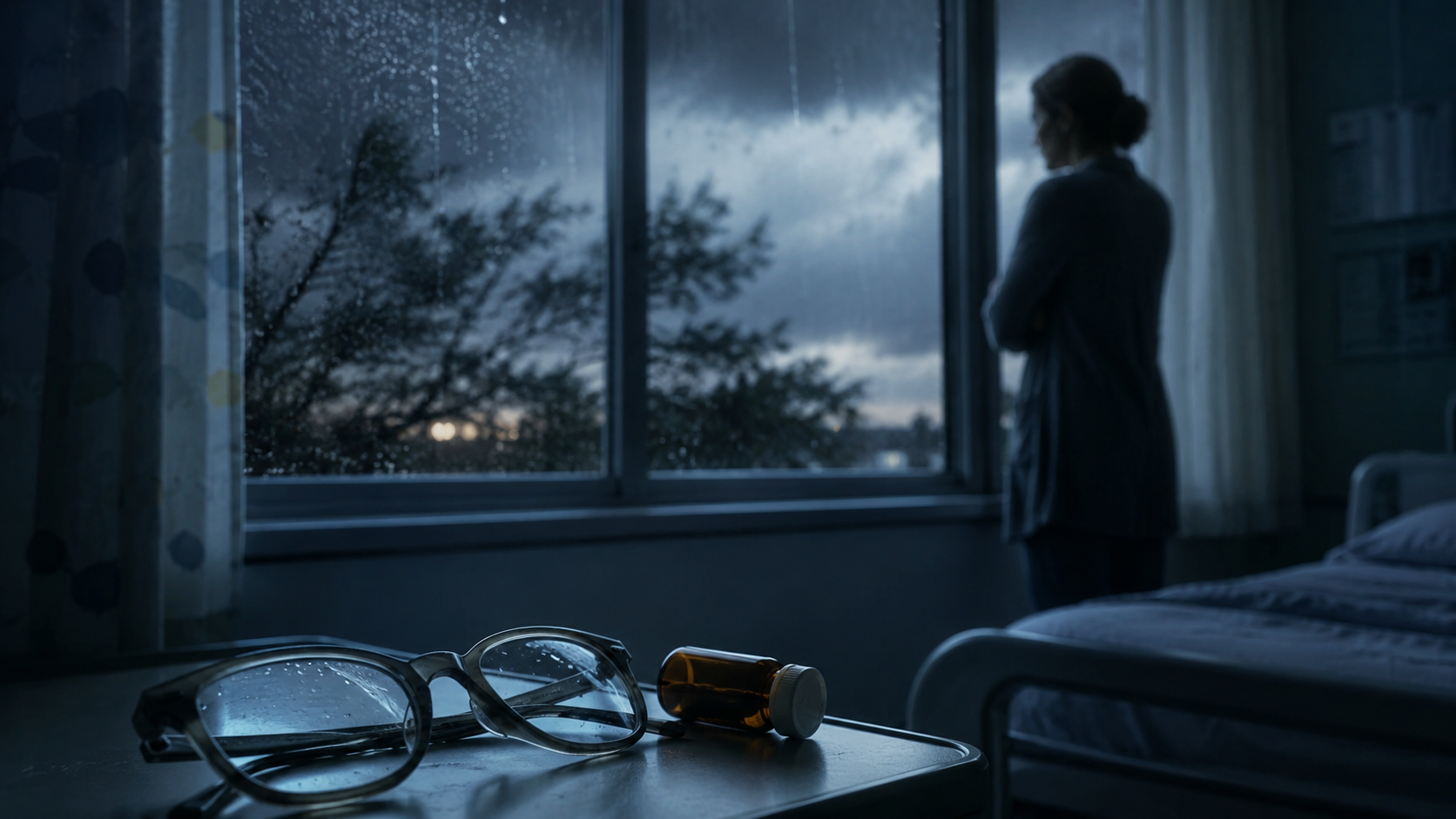
“We’re telling you what Noah said,” Dr. Ward replied.
“He loves Noah.”
“We haven’t accused him of anything.”
Rachel laughed bitterly.
“You called security.”
“Because Noah expressed fear.”
Rachel paced the consultation room.
“No. Absolutely not. Grant has been with us through everything.”
Mara sat quietly near the wall.
Rachel turned toward her.
“And you started this?”
Mara did not answer immediately.
“I noticed Noah responding visually.”
“My son is blind.”
“I don’t think he is.”
Rachel stared.
“You have no idea what we have been through.”
“I know.”
“No, you don’t.”
Rachel’s eyes filled.
“You didn’t hold him while he screamed because the lights went out inside his head. You didn’t watch him crawl across the bathroom floor because he was afraid to stand. You didn’t hear him ask whether he would remember what my face looked like when he grew up.”
Mara swallowed.
“You’re right.”
Rachel’s anger faltered.
“I don’t know what that was like.”
She continued carefully.
“But I also saw him track movement several times.”
Rachel shook her head.
“You’re wrong.”
“I hope I am.”
The door opened.
A hospital safeguarding officer entered.
Behind her stood Noah.
He was holding Dr. Ward’s hand.
His gray glasses were gone.
Rachel rushed toward him.
“Noah.”
He looked directly at her.
Not approximately.
Not toward her voice.
At her.
Rachel stopped.
Her mouth opened.
No sound came out.
Noah began crying.
“Mom.”
Rachel covered her mouth.
“You can see me?”
He nodded.
Her knees nearly collapsed.
She dropped to the floor and pulled him against her.
“You can see?”
“I’m sorry.”
“Why are you sorry?”
“I’m sorry.”
She held his face.
“Why did you tell us you couldn’t?”
Noah looked toward the door.
Even before Grant appeared on the other side of the hallway glass, Rachel understood.
Grant stood between two security officers.
He was no longer smiling.
“I never threatened him.”
Grant sat at the opposite end of a conference table.
Police had been called.
The hospital had already confiscated the bottle of eye drops.
Rachel sat beside Noah.
Mara remained only because Noah asked her to.
Grant looked at his sister.
“You know me.”
Rachel said nothing.
“You know I would never hurt that boy.”
“What did you tell him?”
“Nothing.”
Noah stared at the floor.
Grant leaned forward.
“Noah.”
The boy flinched.
A police officer immediately stepped between them.
“Do not address the child.”
Grant sat back.
His jaw tightened.
Rachel looked at her son.
“Please.”
Noah’s eyes filled with tears.
“Tell me.”
For several seconds he could not speak.
Then words began coming out in pieces.
The first time had been eight months earlier.
Grant had driven him home from soccer practice.
Noah had complained that his eyes felt strange.
Everything looked blurry.
Grant told him it was probably exhaustion.
That night he gave Noah eye drops.
The next morning the blur was worse.
A week later Grant told him the doctors thought his vision might disappear completely.
That part was a lie.
No doctor had said it.
Then came the threats.
Not violent threats.
Worse.
Careful ones.
Grant told Noah his mother’s heart was weak.
He said stress could kill her.
He said Rachel had already almost died after Michael’s accident.
He told Noah that if doctors believed Noah could still see, they would perform dangerous surgery.
If Noah resisted, Rachel would blame herself.
If Noah told anyone about the drops, police might arrest Rachel because the medicine belonged to her.
Every lie was designed for an eleven-year-old mind.
And every lie connected to the same fear.
Losing his mother.
“So I pretended,” Noah whispered.
Rachel looked shattered.
“All this time?”
Noah nodded.
“At first I really couldn’t see well.”
“What about now?”
“I can see.”
“How much?”
Noah looked around the conference room.
“The clock says six seventeen.”
Rachel sobbed.
For months she had guided him through doorways.
Fed him.
Read books aloud.
Described sunsets.
And he had been watching her the entire time.
Terrified to admit it.
Grant shook his head.
“This is insane.”
The officer placed the confiscated bottle on the table inside an evidence bag.
“You recognize this?”
“Lubricating drops.”
“The preliminary screening says otherwise.”
Grant’s expression changed.
Barely.
But Rachel saw it.
“What is it?”
The officer hesitated.
“We’ll need full laboratory confirmation. But the bottle appears to contain a medication capable of causing severe pupil dilation, blurred vision and light sensitivity.”
Rachel turned slowly toward her brother.
Grant said nothing.
“Why?”
His silence became an answer.
“Why would you do this?”