Inside were folders, each one carefully labeled.
JONAH — SCHOOL
JONAH — MEDICAL
JONAH — SAVINGS
My breath caught.
There were years of papers inside.
Report cards.
Scholarship forms.
Notes from teachers.
Grocery receipts.
Samuel had been helping this boy build a future, piece by piece.
Quietly.
Faithfully.
Then I found the notebook.
A simple black spiral notebook tucked beneath the folders.
I opened it.
The first page read:
Things Jonah pretends are okay when they are not.
My throat tightened.
Underneath, Samuel had written:
Says he already ate when food is low.
Gets headaches when stressed but hides them.
Panics if adults yell suddenly.
Loves astronomy.
Acts older when scared.
Does not trust kindness quickly.
Needs encouragement more than he admits.
I sank into Samuel’s chair.
And cried again.
Because this was love.
Not loud love.
Not dramatic love.
Patient love.
The kind that notices.
I turned the page.
Things he should hear more often:
You are not a burden.
You deserve good things too.
Resting is not weakness.
None of this was your fault.
By then I was sobbing openly.
My husband had spent years becoming someone’s safety net. And somehow, even after death, he was still trying to teach me how to care for the boy he had left behind.
A floorboard creaked.
I looked up.
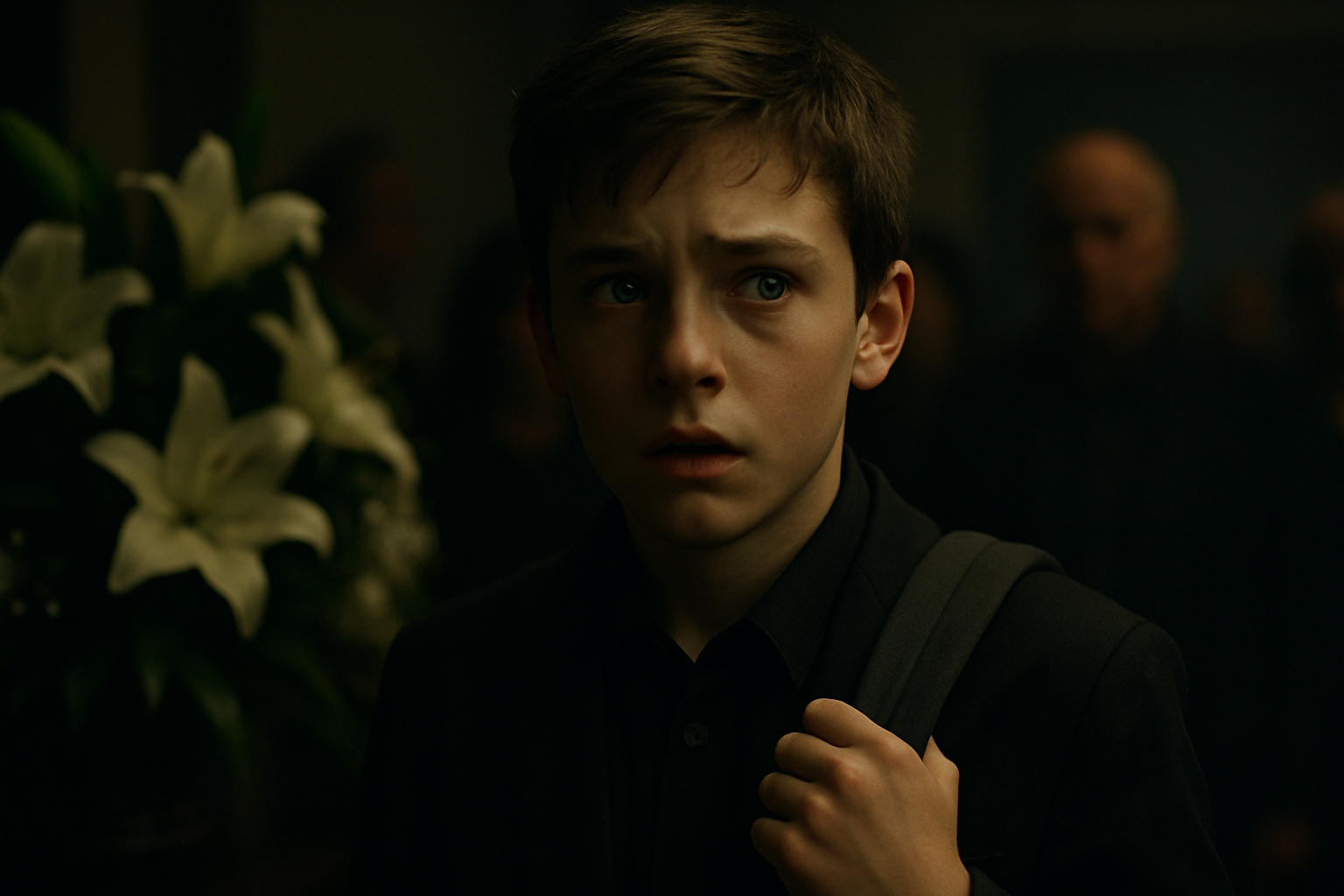
Jonah stood frozen in the doorway.
He stepped back at once.
“Sorry. I didn’t mean to interrupt.”
“It’s okay.”
His eyes dropped to the notebook in my hands. Embarrassment flashed across his face.
“You found that.”
I nodded.
“He paid attention to you.”
Jonah gave a tiny shrug, but his face tightened with emotion.
“He remembered things nobody else did.”
Silence settled between us.
Then I asked the question that had been sitting in my heart since the funeral home.
“Why you, Jonah?”
He frowned. “What do you mean?”
“Samuel helped people all the time. But this…” My voice trembled. “This was different.”
Jonah stared at the floor.
Then he answered so softly I almost missed it.
“Because the first night we met, I lied to him.”
I blinked. “What?”
“At the hospital.” His hands twisted together. “The vending machines only took cash, and Mom hadn’t eaten all day. I told him I wasn’t hungry because I didn’t want him spending money on us.”
My chest ached.
“But he bought food anyway,” Jonah said.
He swallowed hard.
“And when he handed it to me, I started crying.”
A pause.
“Not because of the food.”
His voice cracked.
“Because nobody had noticed before.”
I covered my mouth.
And then I understood.
Samuel had seen him.
Not as a charity case.
Not as a project.
As a child trying too hard to survive alone.
Jonah looked toward the family photographs lining the office shelves.
“I think he understood lonely people.”
My eyes followed his to a picture of Samuel laughing on a beach years ago, wind in his hair, sun on his face.
Then I whispered the painful truth aloud.
“I don’t think I realized how many lonely people he was carrying.”
Jonah looked back at me carefully.
“He carried them because he knew what it felt like.”
I frowned.
“What do you mean?”
The boy hesitated.
Then, quietly, he said, “He told me once that before he met you, he didn’t think anyone would ever choose to stay.”