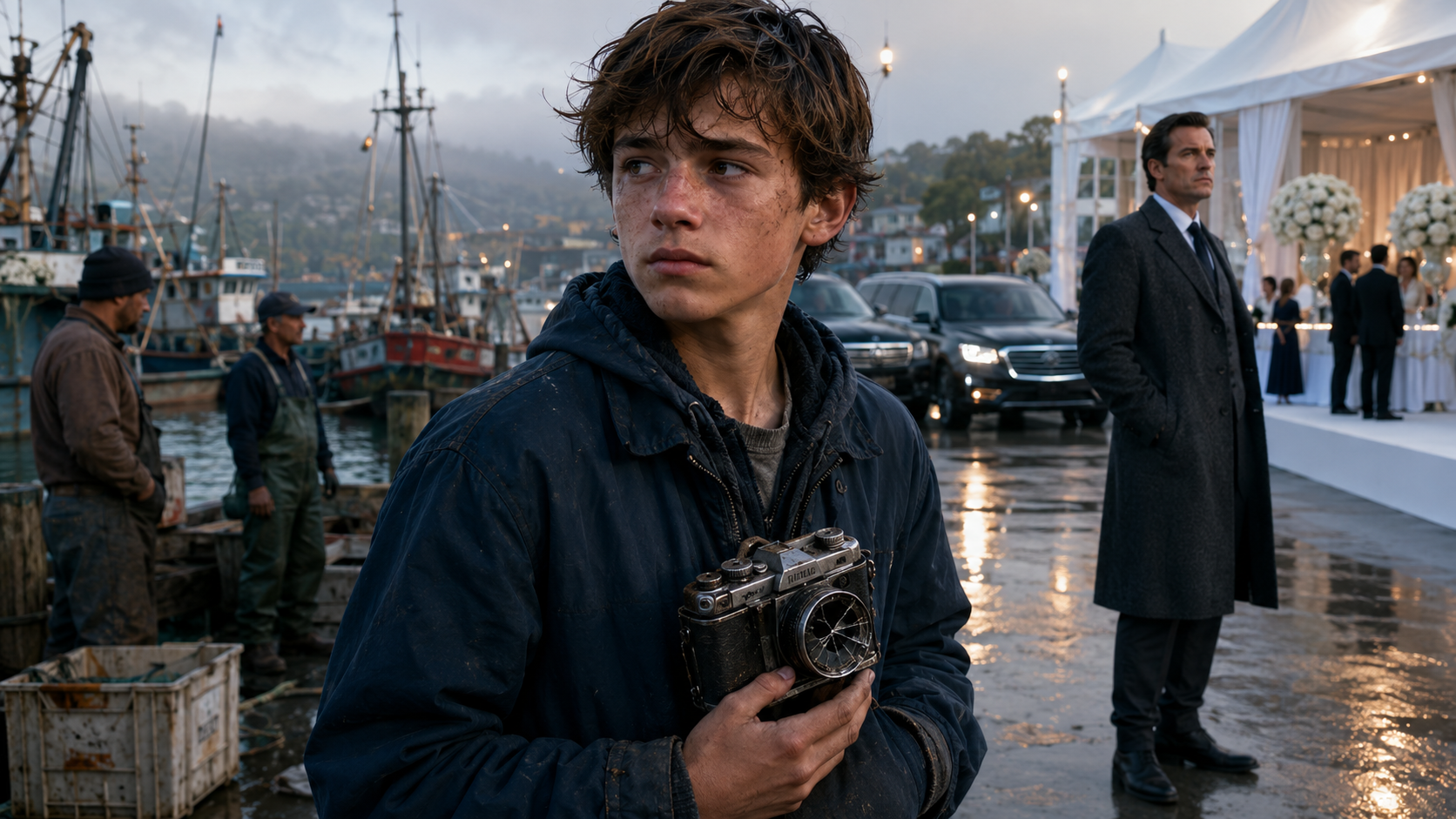
“The eastern pier will remain operational.”
Tomas stared at him.
Sebastian continued.
“Arden Maritime will submit an alternative plan with protected commercial berths, a public market, affordable workshop leases, and a permanent community advisory board.”
The coastal planning director nodded slowly.
It was the first hopeful expression Leo had seen that morning.
Julian’s anger finally broke through his fear.
“You think one emotional story gives you the right to take this from me?”
Sebastian’s gaze became cold.
“You never owned the harbor.”
“I assembled this deal.”
“You assembled property options. The city owns the waterfront, the fishermen hold valid operating rights, and my company controls the financing you required.”
Julian looked at Leo.
Resentment twisted his face.
“This happened because of you.”
Leo met his stare.
“No. It happened because you thought nobody important was watching.”
The words settled over the pier.
Sebastian looked at his son.
There was sadness in his expression, but also pride.
Julian opened his mouth, perhaps to argue again.
Tomas interrupted him.
“You wanted the harbor to look empty.”
The old fisherman stepped beside Leo.
“Now everyone can see exactly what was missing from your plan.”
One by one, the workers who had remained silent began moving the barriers.
The fishermen crossed toward their boats.
Security guards stepped aside.
A woman from Julian’s event team removed the silver fabric hiding the eastern pier.
Morning light spread across the weathered boards.
Engines started.
Ropes were untied.
The harbor came alive again.
Sebastian placed a hand on Leo’s shoulder.
“Let us get that cut cleaned.”
Leo looked down at the broken camera.
“Mom would have hated this.”
“The camera?”
“The entire event.”
Sebastian almost smiled.
“She would have photographed it.”
Leo looked toward Julian, standing alone beside his perfect platform.
“Yes,” he said. “She would have.”
Three months later, the city rejected the Voss redevelopment proposal.
A revised plan was approved the following spring.
The luxury marina became a mixed-use public harbor. Old warehouses were restored as workshops, classrooms, seafood markets, and small business spaces. Fishing families received long-term berth protections. A waterfront gallery was created inside the former customs building.
Its opening exhibition featured Elena Arden’s photographs.
At the center of the gallery stood a glass case.
Inside it rested her damaged camera.
Leo had refused to repair the cracked lens.
Beside the case was a small card explaining that the camera had recorded thousands of moments before it was broken by someone who believed its owner did not matter.
Leo visited the gallery on opening morning.
He wore the same worn jacket.
Tomas found him standing beside the display.
“You could have bought a new one,” the fisherman said.
“I did.”
Leo lifted a newer film camera.
“Then why keep the broken one?”
Leo looked through the gallery windows toward the crowded pier.
Children were watching boats return.
Workers were unloading crates.
Tourists stood beside families who had lived in Grayhaven for generations.
The harbor had not been polished into silence.
It was loud.
Imperfect.
Alive.
Leo smiled.
“Because some broken things still have work to do.”
Tomas considered the answer.
Then he nodded.
Together they walked outside.
Leo raised the new camera and focused on the people crossing the pier.
Before pressing the shutter, he remembered something his mother had told him years ago.
A place remembers everyone.
Now he finally understood.
Places did not remember through buildings, signs, or expensive monuments.
They remembered through the choices people made when they believed nobody powerful was watching.
And sometimes, all it took was one quiet witness to make the truth impossible to hide.