By spring, Finn had grown an inch and developed a passionate interest in baseball despite being, by his own cheerful admission, terrible at hitting.
On the first warm Saturday in April, I watched him stand at home plate in a helmet too large for his head.
He missed the first pitch by a mile.
Then the second.
On the third, the ball clipped the bat and rolled a few feet into the dirt.
Finn ran as if he had launched it into the major leagues.
He was out by ten feet.
But he came back grinning, flushed, alive in his body.
No careful breathing.
No twisted fingers.
No watching the nearest adult for danger.
Just a boy in dusty cleats, proud of a terrible hit.
That was the victory I had not known to ask for.
A week later, a letter arrived from Adrian.
It came through his attorney, reviewed by Finn’s therapist, Dr. Lian Park. There was one page for me and one sealed page for Finn if I chose to give it to him.
I read mine first.
Adrian wrote that prison was different than he expected, which sounded so much like him I nearly stopped reading.
Then the letter changed.
He wrote about counseling. About classes. About men who spoke of victims as numbers until someone made them say names.
He wrote Finn’s name.
He wrote mine.
He did not ask for money. Or sympathy. Or influence.
He wrote:
“I confused being admired with being loved. I punished you for seeing the difference.”
That sentence did not erase the gate. Or the courtroom. Or Finn crying into my coat.
But it placed responsibility where it belonged.
I brought Finn’s letter to Dr. Park.
She read it first, then asked Finn whether he wanted to hear what his father had written.
“Is it mean?” he asked.
“No,” she said. “It is an apology. You do not have to read it today.”
He looked at me.
“Can Mom read it and tell me if I want to?”
So I read it aloud in the soft room with the blue couch and basket of fidget toys.
Adrian’s letter to Finn was shorter.
He wrote that he was sorry for frightening him. Sorry for saying cruel things. Sorry for making him feel responsible for adult problems.
Then came the line that mattered most.
“You were never a brat. You were a child. I should have protected you.”
Finn stared at the carpet.
“Do I have to forgive him?” he asked.
“No,” I said before anyone else could answer. “You don’t have to do anything on anyone else’s schedule.”
Dr. Park nodded.
“Forgiveness is not rent you owe because someone apologized.”
Finn liked that line.
He repeated it in the car.
“Forgiveness is not rent.”
“No,” I said. “It isn’t.”
“What if I forgive him later?”
“Then we’ll talk about what that means.”
“What if I don’t?”
“Then we’ll talk about that too.”
He looked out the window.
“I’m glad he said I wasn’t a brat.”
My throat tightened.
“Me too.”
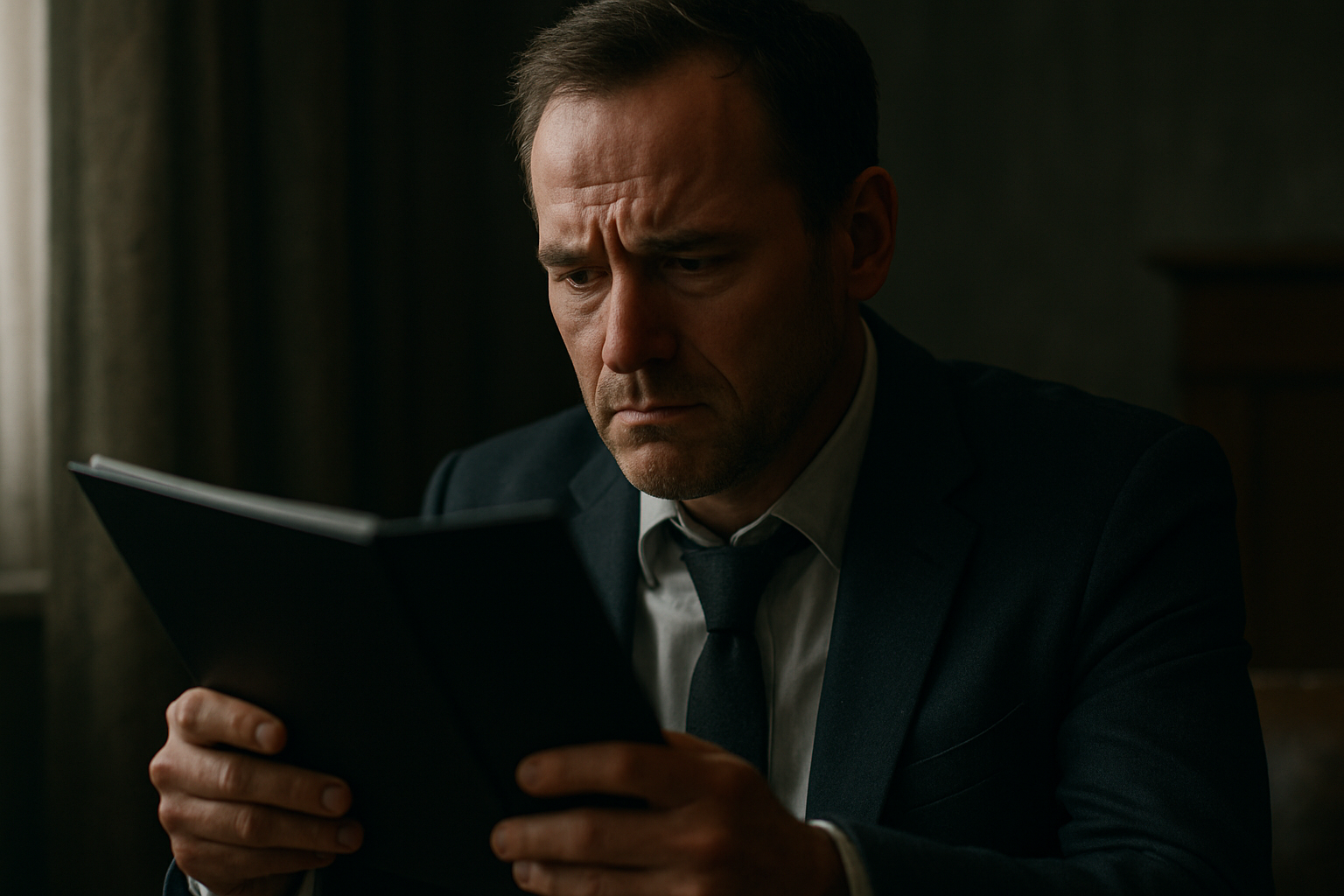
The black folder stayed in my closet for almost a year.
At first, I kept it because cases were still open. Later, because I did not know what else to do with the object that had divided my life into before and after.
On the anniversary of the hearing, I took it down.
Finn found me sitting on the bedroom floor with the folder open in my lap.
“What’s that?”
“Old papers.”
“From court?”
“Yes.”
“Are you sad?”
“A little,” I said. “Also grateful. Also tired of carrying them the same way.”
He sat beside me.
“Can papers be heavy?”
“Very.”
He picked up the folder and studied it.
“It looks like a villain folder.”
I laughed.
“It kind of does.”
“What are you going to do with it?”
“I don’t know. I don’t want to keep it like a trophy. But I don’t want to pretend it didn’t matter.”
Finn thought hard.
“Maybe keep one paper and recycle the folder.”
“Which paper?”
“The one that says we got to come home.”
So that is what we did.
I kept a certified copy of the order that gave us the house and protection.
The rest had been scanned, filed, and duplicated by attorneys.
The physical folder went into the recycling bin, tucked between cereal boxes and school worksheets.
It looked strangely powerless there.
That evening, we invited Anika, Dr. Park, and Mrs. Bellini from next door for dinner.
Mrs. Bellini was the neighbor who had taken us in the night Adrian locked the gate. She was seventy-three, five feet tall, and made soup that could convince a grieving person to eat.
She had never asked for details.
She had simply wrapped Finn in a blanket and said, “You are safe in my house.”
We ate pasta on the back porch under the maple tree.
Finn told everyone about his latest baseball almost-hit.
Anika brought lemon cake.
Mrs. Bellini announced my basil needed more sun and that she would be taking over its care before I murdered it.
After dinner, while Finn chased fireflies, Anika stood beside me at the porch railing.
“You ever think about going back?” she asked.
“To forensic accounting?”
She nodded. “You were good.”
“I was angry.”
“You were both.”
Three months later, I opened a small practice helping people in divorce and custody disputes understand financial documents before those documents became weapons.
Not a charity.
Not a crusade.
A practice.