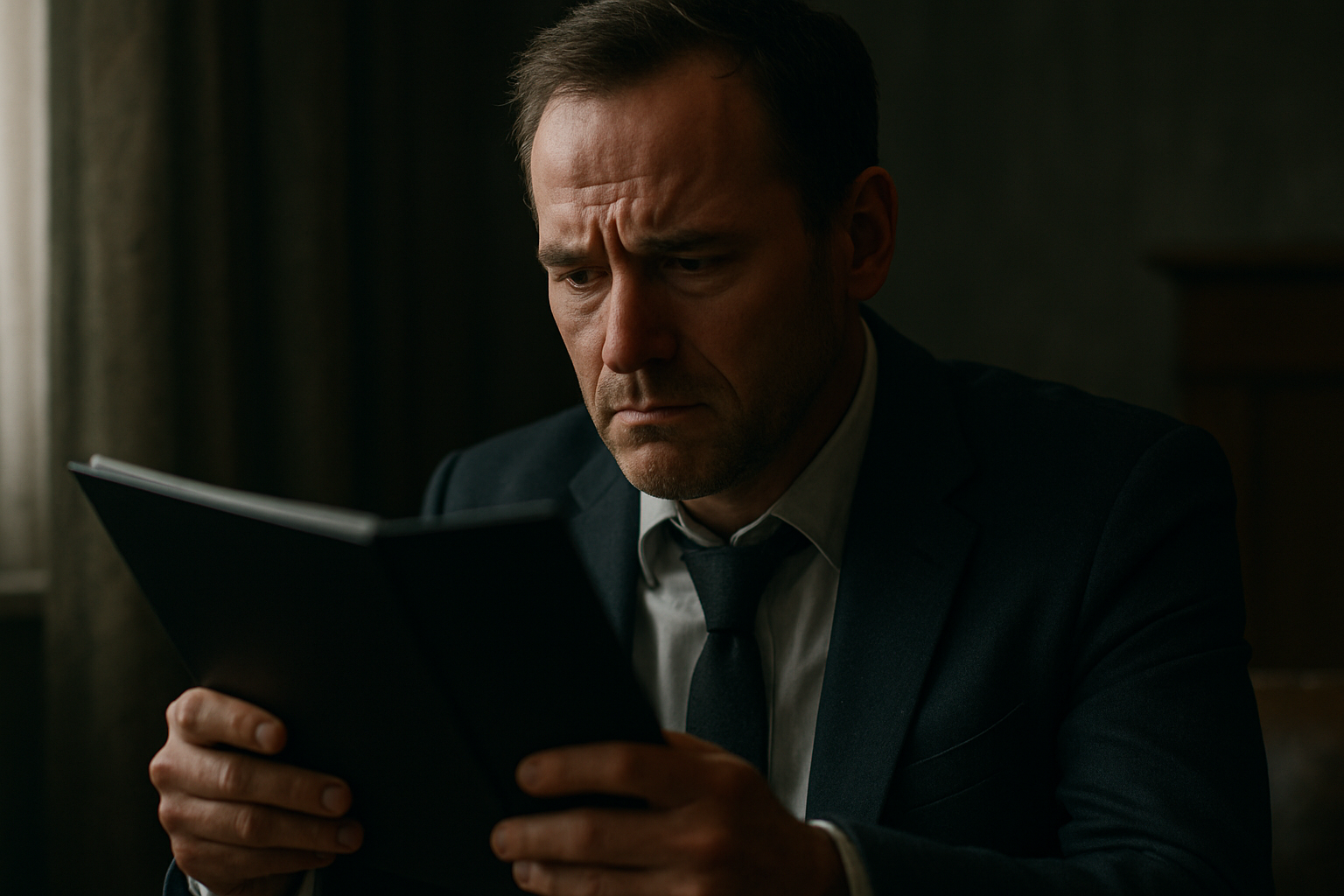
Judge Rowan asked questions. I answered only what I could prove. Calder objected, then objected less, then stopped pretending he understood what was inside the folder.
Adrian’s confidence thinned into anger.
Serena’s beauty, once so polished and expensive, began to look fragile under the fluorescent lights.
At last, Judge Rowan closed the folder.
“This court will not enter final judgment today.”
Adrian surged forward.
“You can’t do that. We had an agreement.”
“No,” the judge said. “You had proposed findings based on representations that now appear materially incomplete. I am ordering an immediate freeze on disputed assets connected to the entities listed in this filing, pending further review. I am appointing a neutral forensic accountant at Mr. Vale’s expense, subject to reallocation after findings. Temporary exclusive use of the marital residence is awarded to Mrs. Vale and the minor child, effective immediately.”
The words landed slowly.
At first, I did not understand them as victory.
I had trained myself not to hope for anything that could be taken away.
Then Finn’s hand moved inside mine.
Home.
Not because the house mattered more than peace. Not because walls could undo what had happened.
But Adrian had used that house like a weapon. He had locked us outside beneath a stormy sky and told Finn to ask me why I had lost everything.
Now the court was saying what I had not been able to say at the gate.
We had not lost because we were worthless.
We had been robbed.
Judge Rowan continued.
“Temporary sole physical custody is granted to Mrs. Vale pending evaluation. Mr. Vale will have supervised visitation only until further order. I am referring the financial materials to the district attorney, the state medical board, and appropriate federal authorities. Mr. Calder, I strongly suggest you advise your client not to make any further statements in this courtroom.”
Adrian stared at the judge as if she had betrayed him personally.
Men like Adrian often believe rules are decorative until they are applied to them.
Then they call it injustice.
“This is insane,” he said.
The bailiff took one step closer.
Judge Rowan’s face did not change.
“Mr. Vale, I will not warn you again.”
Calder leaned in and whispered to him.
Adrian jerked away.
In that small recoil, I saw the beginning of collapse.
Adrian had built his world out of useful people. Lawyers. Investors. Girlfriends. Appraisers. Doctors. Friends who liked power and mistook it for safety.
But usefulness has an expiration date.
When the room turns, people stop standing beside you and start measuring the distance to the exit.
Serena was already measuring.
When Judge Rowan rose, the air had changed forever.
Adrian’s face had lost its color. Calder packed his briefcase with stiff, angry hands. Finn leaned into my side as if he had finally remembered his body was allowed to be tired.
I bent close.
“Ready?”
He nodded.
We were halfway down the aisle when Adrian spoke behind us.
“You think this is over?”
I stopped.
Every part of me wanted to keep walking.
But threats do that. Even when you know better, your body remembers the old rules.
I turned.
Adrian stood beside the defense table, tie crooked, eyes bright with the rage that used to come right before he lowered his voice at home.
“You humiliated me,” he said.
“No,” I answered. “I documented you.”
His lips parted.
For once, nothing came out.
Then Finn looked at him.
His voice was small, but it did not shake.
“I’m not a brat.”
Something broke in that room.
Not loudly. Not dramatically.
But I felt it, the way you feel a thread snap when it has been pulled too hard.
Adrian stared at his son as if he did not recognize him.
The Finn he knew was quiet. Careful. Apologetic.
This Finn had been born in a courtroom, not because a judge gave him permission, but because the truth had made a little room around him.
“Finn—” Adrian began.
“Do not address him,” I said.
The bailiff stepped between us.
I put my hand on Finn’s shoulder and guided him through the double doors.
Only when they closed behind us did my knees weaken.
The hallway smelled of floor polish, old paper, and vending machine coffee. People moved around us carrying their own tragedies in manila folders.
Custody schedules.
Restraining orders.
Unpaid support.
Broken promises.
For months I had imagined this moment would feel like triumph.
Instead, it felt like stepping out of a burning building and realizing smoke was still in your lungs.
Finn pressed his forehead into my coat.
“Can we go home?”
The question nearly ended me.
For six months I had said soon, maybe, we’ll see. Those thin words parents use when the truth is too sharp for a child.
Now I cupped the back of his head.
“Yes,” I whispered. “Not today, because the locks have to be changed first. But yes, baby. We can go home.”
His shoulders rose and fell.
He did not cry.
That worried me more than tears would have. Tears move pain outward. Silence stores it.
Then I heard a woman behind me.
“Mara.”
I turned.