My mouth fell open. “What?”
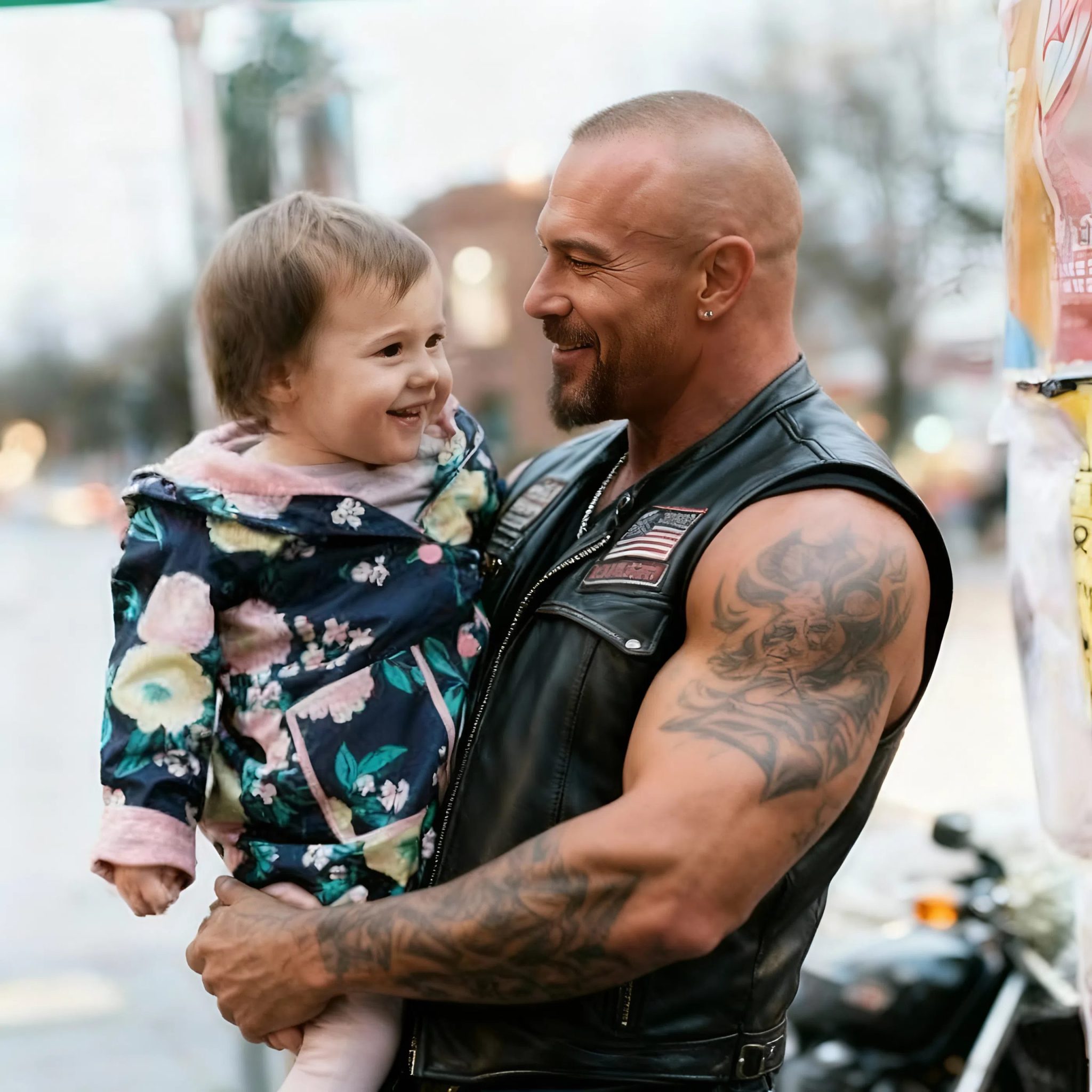
“I drove three states away. Changed my name. Started a new life. Told myself my son was better off without me. That someone would adopt him and give him the life I couldn’t.” His voice was thick with emotion. “And they did. A wonderful couple adopted him. Gave him everything I couldn’t. Loved him the way I didn’t know how to.”
“But?”
“But I thought about him every single day for twenty-seven years. Every. Single. Day. I wondered if he was happy. If he was healthy. If he hated me. If he knew I existed.” He looked down at Mina. “Three years ago, he found me. Tracked me down through military records. Showed up at my door and asked me one question: ‘Why wasn’t I enough?’”
I felt like I’d been punched in the stomach. “What did you tell him?”
“I told him the truth. That it wasn’t about him. That he was perfect and innocent and deserving of love. But that I was broken. That I didn’t know how to be a father. That I was drowning and I chose to save myself instead of learning to swim.” He looked back at me. “Do you know what he said?”
I shook my head, unable to speak.
“He said ‘I spent my whole life thinking something was wrong with me. Thinking I was unlovable. Thinking if my own father couldn’t love me, how could anyone else?’ He’s been in therapy for fifteen years. Struggled with addiction. Nearly died twice from overdoses. Because he grew up believing he was unwanted.”
“Oh God,” I whispered.
“Sarah, I’m not telling you this to make you feel worse. I’m telling you this because I wish someone had stopped me that day. Wish someone had grabbed me and said ‘You’re drowning but you don’t have to drown alone. Let me throw you a rope.’” He held Mina out toward me. “This is me throwing you a rope. Don’t do what I did. Don’t leave her wondering for the rest of her life why she wasn’t enough.”
I stared at my daughter. She was reaching for me, saying “Mama” over and over. And for the first time in fifteen months, I felt something other than resentment and exhaustion. I felt heartbreak. For her. For what I was about to steal from her.
“I don’t know how to be a mother,” I said through tears.
“Nobody knows how to be a parent,” the biker said gently. “We’re all drowning in different ways. But the difference between drowning alone and drowning with help is everything.”
“I don’t have help. I don’t have anyone.”
“You have me.” He said it simply. Like it was obvious. “And you have my club. We have forty brothers who help single parents. We run a support network. Free childcare. Mental health resources. Financial assistance. Whatever you need.”
“Why would you help me? I abandoned my baby. I’m a monster.”
“You’re not a monster. You’re a drowning woman who made a desperate choice. There’s a difference.” He shifted Mina again. “My son forgave me eventually. But it took twenty-seven years and nearly losing him twice. Don’t make Mina wait that long. Don’t make her spend her childhood wondering why she wasn’t enough.”
I reached out with shaking hands. Mina lunged toward me, wrapping her small arms around my neck. And I felt it. That thing everyone said I would feel. That overwhelming love that was supposed to come naturally but never had. It came now. Late. Delayed. But real.
I held my daughter and sobbed. “I’m so sorry. I’m so sorry, baby girl.”
The biker put his hand on my shoulder. “The fact that you came back means something. It means you’re not ready to give up. You just need help.”
The officers approached cautiously. “Sir, we need to take her statement. We need to—”
“She’s coming with me,” the biker said firmly. “I’m taking her to a crisis center that specializes in postpartum depression and parental burnout. I’ll make sure she gets help. And I’ll make sure Mina is safe.”
“Sir, we can’t just—”
“I was a social worker for fifteen years before I retired. I know the system. I know what happens to mothers like Sarah when they go through the system. They get their kids taken away and they never get them back. They get labeled and judged and destroyed.” His voice was steel. “This woman needs help, not punishment. And if you try to arrest her, you’ll have forty bikers down here in twenty minutes ready to fight for her rights.”
The officers looked at each other. Finally, one nodded. “We’ll need to file a report. And we’ll need to do a welfare check within twenty-four hours.”
“Done,” the biker said. “You have my word she’ll get help.”
He led me to his motorcycle. Handed me a helmet. “Your car?”
“Three blocks away.”
“We’ll get it later. Right now, you’re coming with me. You and Mina both.” I climbed onto the back of his bike, holding Mina tight. And this stranger, this biker I’d been terrified of twenty minutes ago, drove us to a crisis center I didn’t know existed.

He stayed with me through the intake process. Stayed while I talked to a counselor. Stayed while I broke down and admitted everything—the dark thoughts, the resentment, the fantasies of disappearing. And he didn’t judge. Didn’t condemn. Just listened.